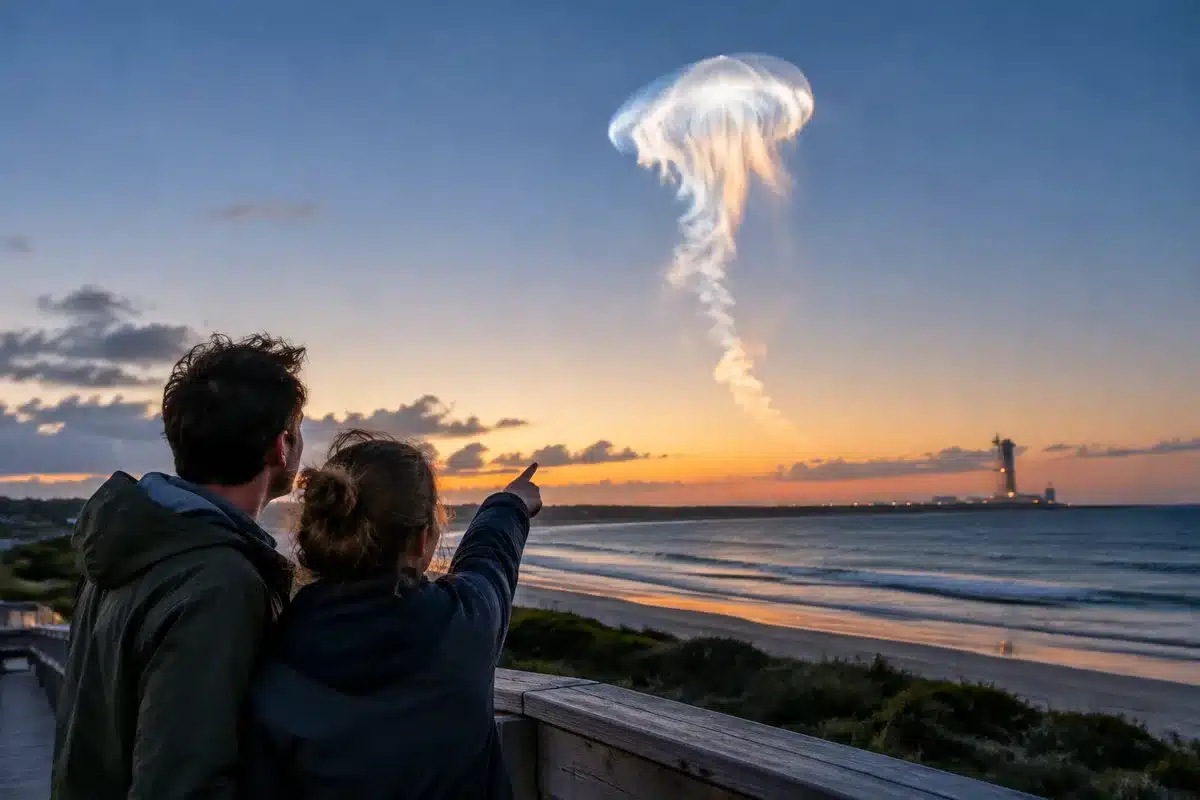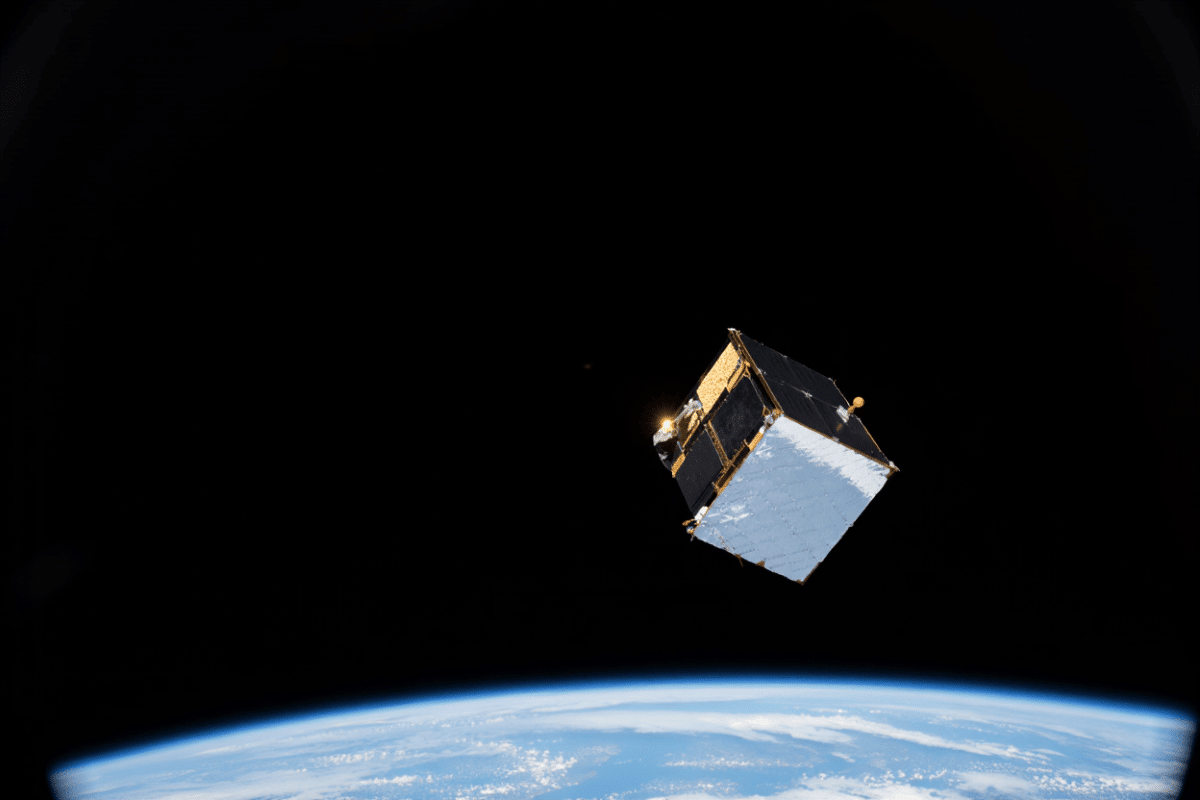
The FCC on July 9 formally authorized Reflect Orbital to launch Eärendil-1, a space mirror satellite designed to test the ability to reflect sunlight into nighttime regions on Earth. The California-based startup received approval to test technology that could eventually reshape how the night sky looks and functions, according to SpaceNews.
Eärendil-1 will carry a thin-film reflector measuring 18 meters (roughly 60 feet) on each side, deployed in low Earth orbit at an altitude of 600 to 650 kilometers. The 142-kilogram spacecraft is scheduled to launch later this year and will test Reflect Orbital’s ability to direct reflected sunlight to specific areas on Earth for several minutes at a time, with the light beam covering a 5-kilometer-wide area on the ground.
The company sees applications ranging from construction sites and search-and-rescue operations to boosting energy production at solar farms by reflecting sunlight after dark. “We’re grateful to the FCC for recognizing the importance of testing novel technologies in space,” Ben Nowack, chief executive of Reflect Orbital, said in a statement to SpaceNews. “This license is the first step toward rigorously testing our technology’s efficacy and the safeguards we have developed.”
But the approval has drawn fierce opposition from the astronomical and environmental communities. Reflect Orbital’s application generated nearly 1,900 comments to the FCC, mostly critical of potential impacts. The company’s long-term vision—operating more than 50,000 satellites by 2035 to create a global constellation delivering sunlight on demand—has alarmed researchers about the consequences for astronomy and nocturnal ecosystems.
According to the European Southern Observatory, the full constellation would increase background sky brightness at its Chile facilities by a factor of three to four, fundamentally limiting the ability of telescopes to detect faint objects. One astronomy model cited by Space Daily estimates the system could raise natural night-sky background brightness by 200 to 300 percent. Tony Tyson, distinguished research professor at UC Davis and chief scientist of the Vera C. Rubin Observatory, told the National Academies in June that the Reflect Orbital plans were “even crazier” than broadband satellite constellations astronomers have already worried about for years, expressing concern that the thin-film reflectors would scatter sunlight over a wider area than intended. “Imagine the sky full of moons,” he said, according to SpaceNews.
Environmental and scientific groups have also warned that reflected sunlight from such a constellation could disrupt the diurnal cycles of plants and animals, and pose potential safety hazards through sudden flashes, glare, or sweeping illumination patterns, according to DarkSky International. The FCC, however, largely concluded in its order that any impacts on optical astronomy fall outside its regulatory jurisdiction. “We find that concerns about Eärendil-1’s impacts on optical astronomy fall outside our review and authorization of the space station and are not a basis for denial of or additional conditions on Reflect Orbital’s operations,” the commission stated, as reported by SpaceNews. The FCC noted that the company has committed to collaborating with NASA and the National Science Foundation to protect optical astronomy.
Sources
- SpaceNews — FCC approval date, satellite specifications (18-meter reflector, 600-650 km altitude), launch timeline, CEO statement, astronomical concerns from Tony Tyson, 1,900 FCC comments, ESO statement on three-to-four-fold brightness increase, FCC’s jurisdictional conclusion
- Space Daily — 50,000-satellite constellation plan, 200-300% night-sky brightness increase estimate
- The Conversation — 5-kilometer light beam diameter, reflected sunlight coverage details
- DarkSky International — Environmental concerns regarding disruption of diurnal cycles and public safety hazards from light beams