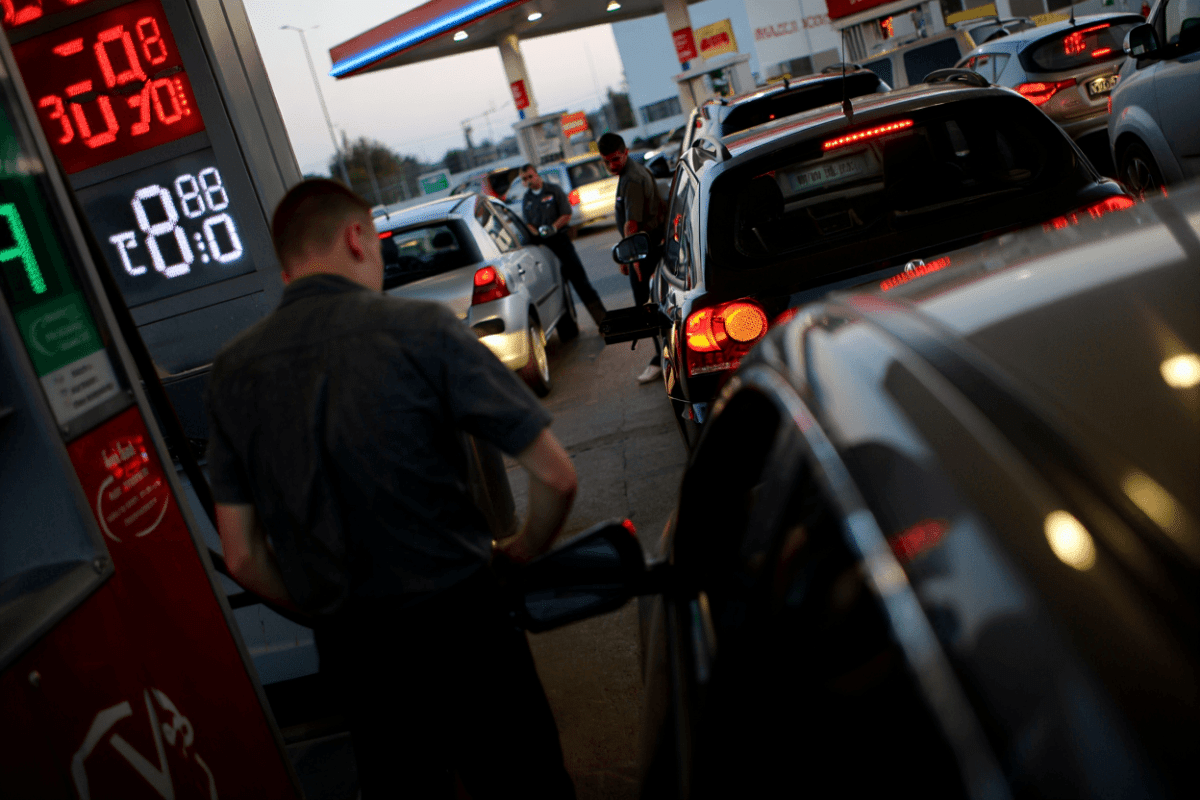
The national average gas price climbed to $3.88 per gallon on July 10, 2026, as renewed tensions between the United States and Iran rattled energy markets. The increase follows President Trump’s July 8 announcement that the U.S. ceasefire with Iran was “over,” triggering fresh concerns about oil supply disruptions in a region that handles roughly one-fifth of the world’s energy trade.
Crude oil prices jumped more than 4 percent on July 8 after Trump’s declaration, according to Reuters and Al Jazeera. The surge reflected investor fears that escalating hostilities could threaten shipping through the Strait of Hormuz, a critical chokepoint for global petroleum flows. Earlier in the year, Iran had closed the waterway in response to U.S. and Israeli military strikes, a move that sent oil prices soaring and contributed to the broader fuel crisis that has gripped the nation since late February 2026.
Before the Iran conflict began in late February, gas prices hovered just below $3 per gallon, according to the New York Times and Investopedia. The jump to $3.88 represents a climb of roughly 30 percent from pre-war levels, though prices have moderated from their peak of around $4.50 earlier in the spring. As of July 7, 2026, the average U.S. gas price was up 20.5 percent year-over-year, according to LendingTree data.
The Strait of Hormuz remains central to price movements. The waterway carries over 20 million barrels of oil per day, making it vital to global energy security. When tensions rise, traders price in the risk of disruption, pushing crude oil futures higher and eventually raising the cost at the pump. Goldman Sachs estimated that Persian Gulf oil flows had retreated to the low-70s percentage of normal capacity, according to Reuters reporting on the latest tensions.
Trump’s announcement came after days of escalating military exchanges between U.S. and Iranian forces. NPR reported that crude oil prices jumped and stock prices fell after the president declared an end to the ceasefire, adding fresh uncertainty to an already shaky global economy. The timing is significant: earlier in June, a tentative deal to end the U.S.-Israel war on Iran had sent oil prices tumbling and gas prices falling below $4 a gallon for the first time since March, raising hopes for relief at the pump.
The renewed conflict underscores how fragile the energy market recovery has been. Even as shipping companies had begun moving tankers back through the Strait of Hormuz and markets had stabilized, geopolitical risk remained priced into every barrel. Analysts cautioned that any prolonged return to hostilities could reignite the supply fears that drove prices to multi-year highs earlier in 2026.
Sources
- AAA Gas Prices — national average price of $3.8840 per gallon on July 10, 2026
- Reuters — oil price movements and ceasefire announcement coverage; Goldman Sachs Persian Gulf flow estimates
- NPR — Trump’s ceasefire declaration and oil price jump on July 8-9, 2026
- Al Jazeera — oil surge following U.S. strikes on Iran; Strait of Hormuz disruption context
- The New York Times — pre-war gas price levels (just below $3 per gallon in late February 2026)
- Investopedia — pre-conflict baseline price of $2.98 per gallon
- LendingTree — 20.5% year-over-year gas price increase as of July 7, 2026
- Wikipedia — Strait of Hormuz closure and its role in the 2026 fuel crisis
- Congress.gov — Strait of Hormuz impact on global oil prices and supply