Delta Air Lines beat second-quarter earnings estimates and reinstated its full-year 2026 profit guidance on Friday, signaling confidence that strong premium travel demand and aggressive pricing can overcome historic fuel costs weighing on the airline industry.
The carrier reported adjusted earnings per share of $1.56, above the consensus estimate of $1.48, and adjusted revenue of $17.67 billion versus $17.53 billion expected, according to CNBC and Yahoo Finance.
Delta reaffirmed its full-year 2026 adjusted earnings forecast of $6.50 to $7.50 per share, which the company had set in January. The guidance assumes the airline will grow earnings by 20% despite a “multi-billion fuel headwind,” CEO Ed Bastian said in a statement to Yahoo Finance.
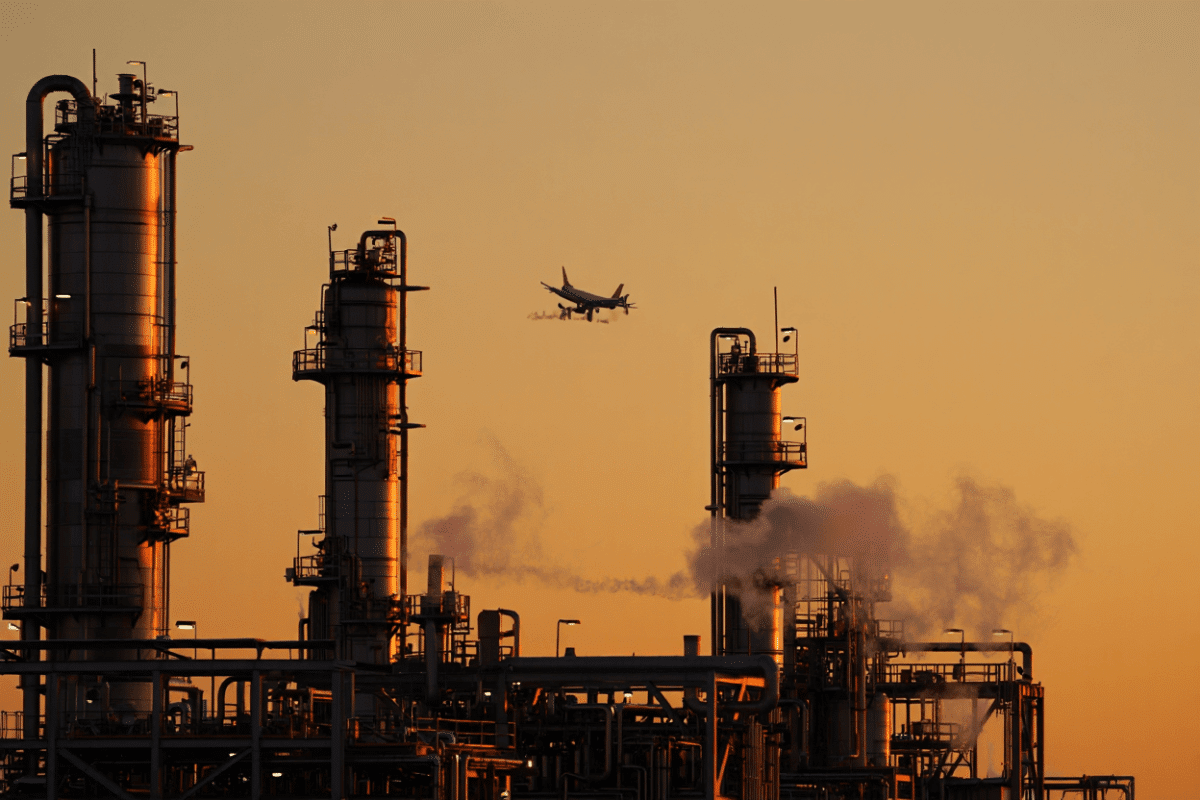
The refinery advantage proved crucial. Delta’s Trainer, Pennsylvania refinery—the only fuel-production asset among major U.S. airlines—generated $2.09 billion in revenue for the quarter, up 83% from a year earlier, according to CNBC. This offset some of the damage from the airline’s adjusted fuel expense of $4.4 billion, up 77% year-over-year, as reported by Yahoo Finance.
Premium seating drove the earnings beat. Revenue from premium cabins like Delta One and first class totaled $6.92 billion for the quarter, while main cabin revenue came in at $6.85 billion, per CNBC. American Express remuneration hit $2.4 billion, up 16% from a year ago, and premium corporate sales rose 25%, according to Yahoo Finance.
Bastian told CNBC he expects higher fares to persist despite recent declines in oil prices. “I think it’s sustainable,” he said, citing robust demand, more diverse seat options, and a more disciplined airline industry that has learned not to expand capacity as soon as fuel prices fall.
For the third quarter, Delta projected earnings per share of $2.00 to $2.50, with revenue expected to rise in the mid-teens compared to the July-through-September period of 2025, according to CNBC and Yahoo Finance.
Delta’s guidance reinstatement stands in contrast to competitors. American Airlines cut its 2026 profit guidance in April due to high jet fuel prices, and United Airlines slashed its 2026 earnings outlook in May, according to earlier reports on airline guidance. The industry-wide fuel shock has prompted IATA to forecast that global airline profits will fall to $23 billion in 2026, down from a previously projected $41 billion, with fuel costs expected to reach $350 billion across the sector, per Al Jazeera and S&P Global reporting in June.
Delta’s refinery gives it a structural advantage peers lack. Unlike American, United, Southwest, and other carriers—which abandoned fuel hedging years ago after losses—Delta maintains what amounts to a natural hedge through its fuel production. When oil prices surge, the refinery’s profit margins expand, offsetting higher operational fuel costs. In Q2, this dynamic allowed Delta to extract approximately $300 million in fuel cost offsets, according to reporting on the airline’s quarterly performance.
Sources
- CNBC — Delta’s Q2 earnings beat, full-year guidance reinstatement, premium revenue breakdown, refinery performance, and CEO commentary on airfare sustainability
- Yahoo Finance — Adjusted EPS and revenue figures, fuel expense detail, American Express remuneration, corporate sales growth, and Q3 guidance
- Al Jazeera — Global airline profit forecast for 2026 and industry fuel cost projections
- S&P Global — IATA profit forecast and jet fuel price outlook for 2026