Millions of Americans have until July 10 to file a claim for potential COVID-era tax refunds stemming from a federal court ruling that the IRS improperly charged penalties and interest during the pandemic. The deadline to claim a COVID tax refund marks the final day taxpayers can preserve their right to seek relief under the Kwong v. United States decision, according to the National Taxpayer Advocate.
A federal judge ruled in November 2025 that the IRS should have suspended tax filing and payment deadlines during the COVID-19 disaster declaration, which lasted from January 20, 2020, through May 11, 2023. Under IRS rules, taxpayers receive an additional 60 days after a disaster ends to file returns or make payments, pushing that deadline to July 10, 2023. Since taxpayers generally have three years to file a refund claim after submitting a return—or two years after paying a tax, penalty, or interest bill—the deadline to request relief is July 10, 2026, according to CBS News and the Taxpayer Advocate Service.
“Relief will not happen automatically,” National Taxpayer Advocate Erin Collins stated in an April 2026 blog post. “To protect their rights, most taxpayers must file a claim for refund – generally on or before July 10, 2026.” Millions of Americans may be eligible, including individuals, small businesses, large corporations, estates, and trusts affected by penalties or interest charged during the disaster period.
Eligible taxpayers include those who were assessed penalties for late filing or late payment, those charged interest that accrued during the pandemic period, and those who paid overpayment interest between 2020 and 2023. Taxpayers can review their IRS account transcripts—which show tax payments, penalties, and interest charges—to determine eligibility through the IRS website using ID.me authentication, according to Time Magazine.
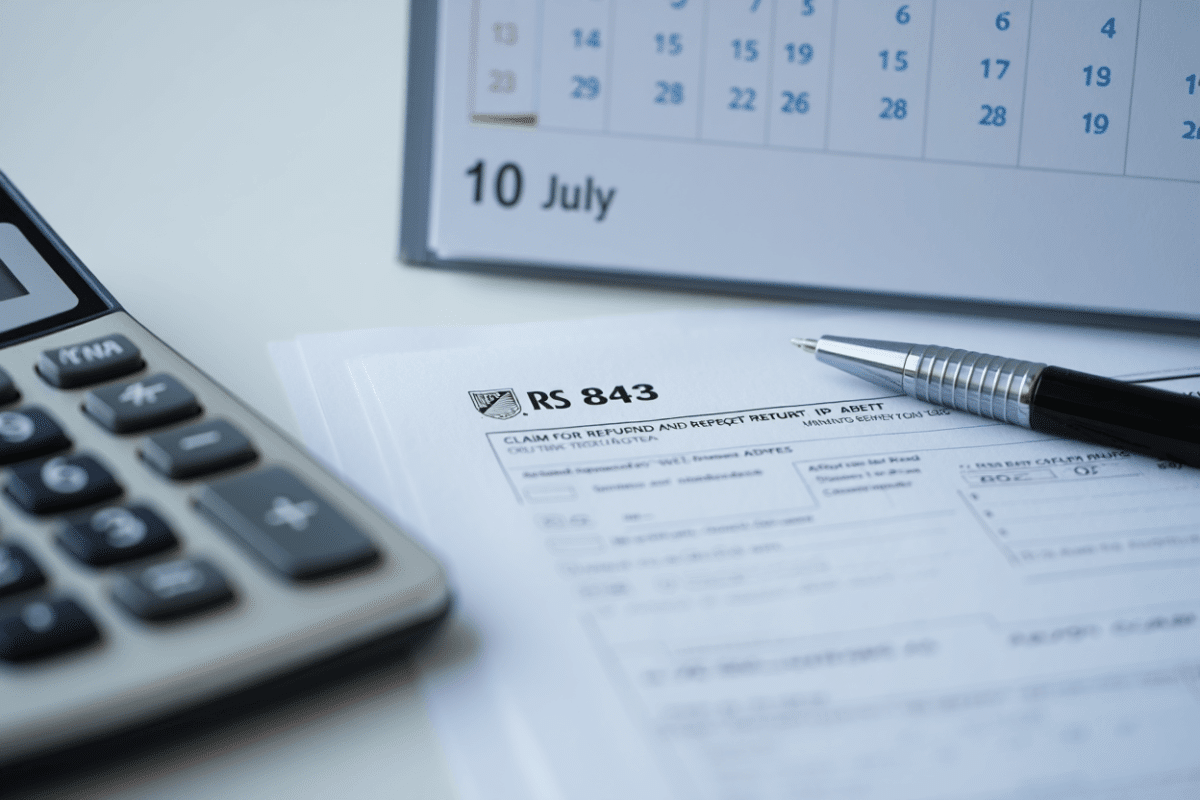
To claim a refund, taxpayers must file Form 843, Claim for Refund and Request for Abatement. The IRS recently expanded filing options: on July 1, 2026, the agency added an online submission tool through its mobile-friendly forms portal, allowing taxpayers to submit claims electronically instead of exclusively by certified mail, according to NBC 6 South Florida and Time. Those filing electronically must log in via their IRS online account and upload necessary documentation. Paper forms can still be mailed, though the Taxpayer Advocate Service recommends using certified mail to prove timely submission, since the IRS does not confirm receipt of paper claims.
When completing Form 843, taxpayers should write “Protective Refund Claim Pursuant to Kwong Case” or similar language across the top of the form. This language is critical because the legal outcome remains unsettled: the Department of Justice is appealing the November 2025 ruling. A protective claim preserves a taxpayer’s right to seek a refund while litigation is pending. “Filing a claim does not guarantee relief,” Collins warned in her CBS News statement. “But missing the deadline may permanently prevent taxpayers from receiving a refund to which they may ultimately be entitled.”
The form can be downloaded from the IRS website at irs.gov. Taxpayers should fill in details about the specific penalties and interest, the tax periods involved, and the dates at issue. If filing by mail, the completed form should be sent to the IRS service center address provided on the IRS website, ideally before July 10, 2026.
Sources
- CBS News — reported on the court ruling, the three-year deadline calculation, and filing instructions for Form 843
- Time Magazine — detailed the Kwong v. United States ruling, eligibility criteria, and the IRS’s July 1 online filing expansion
- NBC 6 South Florida — explained the COVID disaster period, refund eligibility, and online and mail filing methods
- Taxpayer Advocate Service (IRS) — provided official guidance on the July 10 deadline, protective claims, and Form 843 filing requirements
- CNBC — confirmed the Form 843 deadline and the three-year statute of limitations