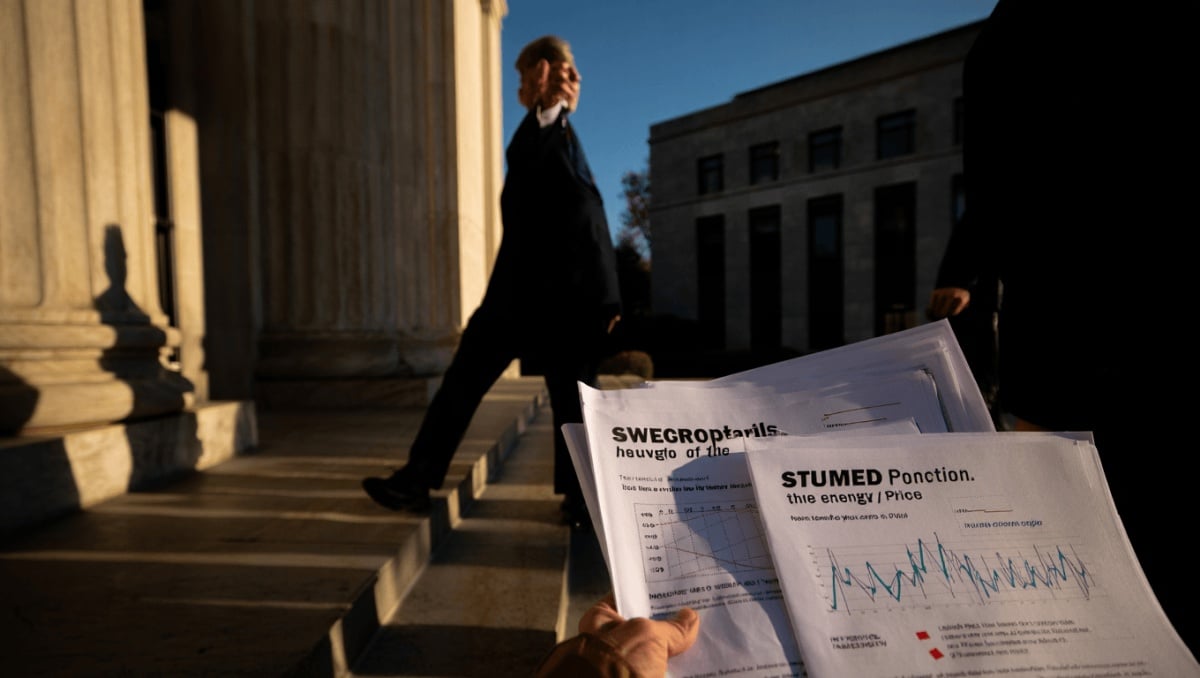
Minutes from the Federal Reserve’s April policy meeting show officials are increasingly worried that rising energy costs and tariff-driven price pressure could stall progress toward the Fed’s 2% inflation goal — a concern that reshapes the outlook for rate cuts and keeps markets on edge. That immediate risk matters for household budgets, borrowing costs and the timing of any future policy moves.
The Federal Open Market Committee left the target range for the federal funds rate at 3.50%–3.75% in April, but the meeting record published this week makes clear policymakers view recent price moves as a live threat to disinflation.
Committee participants pointed to a jump in the Fed’s preferred inflation measure, the PCE index, which was estimated at about 3.5% in March — up from roughly 2.8% in February. Officials tied the pickup largely to supply disruptions and higher oil and fuel costs after the conflict in the Middle East tightened energy flows.
Many Fed members warned that persistent conflict, or even a short-lived shock with longer-lasting price effects, could keep cost pressures elevated. That would make a return to the Committee’s 2% objective slower than previously anticipated, the minutes say.
Policymakers also flagged the differing durability of inflation drivers: they expect the upward pressure from energy prices to persist in the near term, while inflation linked to tariffs is seen as likely to fade this year unless tariff levels are raised again.
Three regional Fed officials dissented on language in the post-meeting statement that they believed suggested a bias toward easier policy — a signal of internal disagreement about how to square the inflation risks with the case for eventual rate reductions. The dissenters included two named regional presidents and a third regional policymaker who favored sharper wording against an easing tilt.
What this means for consumers and markets
Higher oil and pump prices feed into transport and production costs, which can push up prices across many categories. For households, that translates to tighter budgets; for markets, a renewed chance that the Fed could raise rates rather than cut them later in the year.
| Key figures | Value |
|---|---|
| PCE index, March (approx.) | 3.5% |
| PCE index, February (approx.) | 2.8% |
| Federal funds target range | 3.50%–3.75% |
| Average U.S. gasoline price (AAA) | $4.55 / gallon (≈ +43% yr/yr) |
| Oil price vs. pre-conflict | Around $100/bbl vs. ~$70/bbl |
How markets are pricing the path forward
The CME FedWatch tool now shows a roughly even split between the odds of rates staying put and the possibility of further tightening before year-end. The market-implied probabilities published with the minutes indicate a majority chance that policy will remain at today’s level through December, but non-trivial odds of hikes have risen.
- Probability of rates unchanged through December: ~51%
- Chance of a 25-basis-point cut by December: ~1.6%
- Chance of a 25-basis-point hike: ~36.7%
- Chance of a 50-basis-point hike: ~9.5%
- Chance of a 75-basis-point hike: ~1.1%
Analysts say the environment facing the Fed’s next leadership will be politically and economically complex. EY-Parthenon’s chief economist warned that steady labor-market readings, coupled with rising price risks, raise the likelihood that the next move could be upward rather than downward.
Navy Federal Credit Union’s chief economist observed that the committee has already begun discussing the possibility of additional tightening and suggested the Fed may move to a neutral stance at an upcoming meeting before any change in direction later in the year. She added that a persistent conflict abroad and nervous bond markets increase pressure on the central bank to show commitment to reining in inflation.
The takeaway from the minutes is straightforward: near-term inflation dynamics — driven primarily by energy and influenced by tariff policy — have complicated the Fed’s decision calculus. That increases the chances that consumers will feel the effects of higher prices longer, and that markets may have to accommodate a bumpy transition toward the Fed’s inflation target.