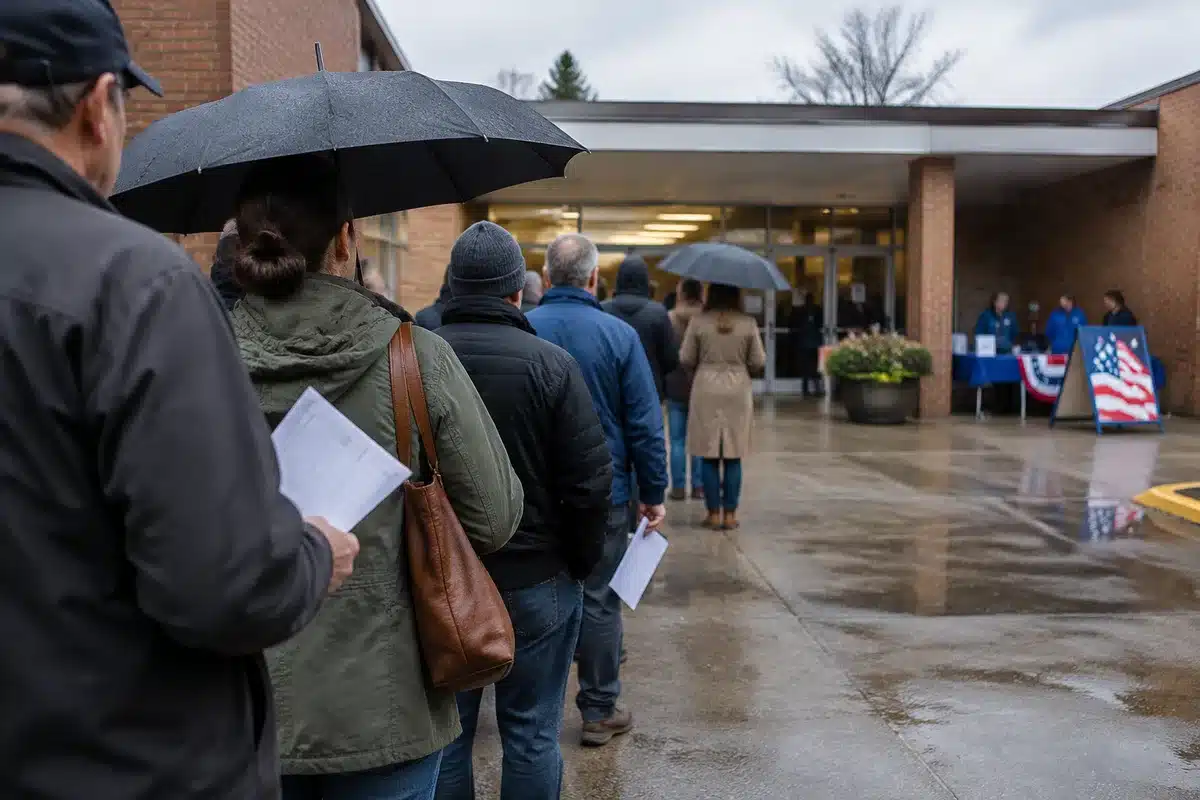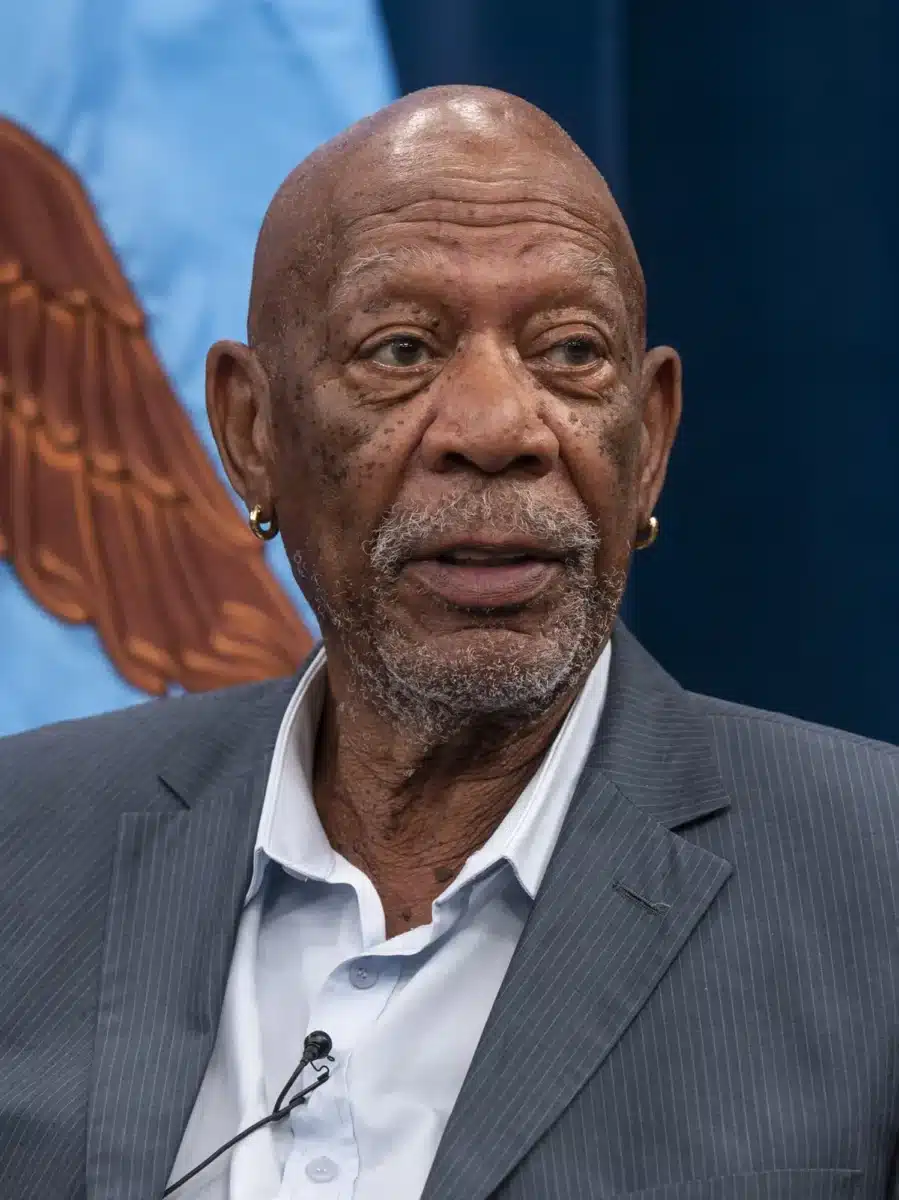
Donavan McKinney won Michigan’s 13th District Democratic primary on August 4, 2026, defeating two-term incumbent U.S. Rep. Shri Thanedar in a closely contested race that underscored progressive momentum against Democratic establishment figures. McKinney, a state representative from Detroit, received 51.9% of the vote (57,714 votes) to Thanedar’s 48.1% (53,494 votes), a margin of roughly 4,200 votes out of 112,000 cast.
The race pitted two Detroit Democrats with starkly different visions. McKinney, a democratic socialist and former SEIU healthcare organizer, ran on a platform of universal healthcare, environmental protection through a Green New Deal, and ending U.S. military aid to Israel. Thanedar, an Indian immigrant and former pharmaceutical entrepreneur with an estimated net worth of $40 million, emphasized his efforts to combat the Trump administration and had highlighted his experience with poverty to connect with voters in one of the nation’s poorest congressional districts.

The two candidates disagreed sharply on several key issues. While both supported Medicare for All, they diverged significantly on foreign policy. Thanedar had the backing of the pro-Israel American Israel Public Affairs Committee, while McKinney called for an end to military support for Israel. Thanedar had previously been affiliated with the Democratic Socialists of America but relinquished his membership after Hamas’s October 7, 2023, attack on Israel, saying the group did not sufficiently condemn the violence.
McKinney’s campaign also attacked Thanedar’s self-funded approach, arguing in advertisements that he “bought his seat” in Congress. According to campaign finance filings, Thanedar had invested more than $13.6 million of his own wealth across three congressional runs, and his 2026 campaign benefited from nearly $2 million in spending from a pro-crypto super PAC. By June, Thanedar had $5 million in cash on hand, compared to McKinney’s reported $1 million raised from individual donors during the same period.
McKinney had backing from prominent progressives, including U.S. Sen. Bernie Sanders, Detroit U.S. Rep. Rashida Tlaib, and U.S. Senate candidate Abdul El-Sayed. Justice Democrats, an organization with a history of unseating Democratic incumbents, and the Metro Detroit chapter of the Democratic Socialists of America also endorsed him. In his victory statement, McKinney said the result showed “why being always with the people is more than a slogan” and framed it as a roadmap for the Democratic Party to move forward.
In his support for Thanedar, House Minority Leader Hakeem Jeffries highlighted the incumbent’s record fighting the Trump administration, including an impeachment resolution he introduced against the president. Thanedar’s campaign emphasized constituent services, noting that his office had resolved 4,300 constituent cases and secured $45 million in funding for projects districtwide.
Part of a Broader Progressive Wave
McKinney’s victory fits into a larger 2026 pattern of progressive challengers defeating Democratic incumbents. In Michigan alone, progressive candidates won decisively on August 4: Abdul El-Sayed defeated U.S. Rep. Hayley Stevens in a close race for the Democratic Senate nomination, and community organizer William Lawrence defeated two establishment-backed candidates in the 7th Congressional District. According to reporting, overall eight House incumbents, including five Democrats, had lost primaries during the 2026 cycle as of early July, an unusually high tally.
Michigan’s 13th District is solidly Democratic, meaning McKinney is virtually assured of winning the general election in November against Republican T.P. Nykoriak, who ran unopposed in the GOP primary. The district encompasses parts of Detroit, Hamtramck, Highland Park, the Grosse Pointes, several Downriver communities, and western Wayne County.
McKinney’s victory also carries historical significance. Thanedar’s election in 2022 marked the first time Detroit lacked Black congressional representation since 1955. McKinney’s win restores that representation. Speaking at a news conference at Mayflower Church in Detroit on August 5, McKinney said he was proud to restore Black representation but emphasized his broader mission: “This is about restoring the right leadership, because at the end of the day, people are looking for actual folks that are going to do the job, who aren’t just going to give us the platitudes.”
Sources
- Detroit Free Press — McKinney’s victory, the race dynamics, Thanedar’s background and campaign finance, the ideological differences on Israel and other issues, and McKinney’s statement.
- BridgeDetroit — McKinney’s margin of victory (4,200 votes out of 112,000), his campaign platform and priorities, his news conference remarks, and historical context on Black representation in Detroit.
- NBC News, New York Times, Ballotpedia, Washington Post — Vote totals and percentages (McKinney 51.9%, Thanedar 48.1%), confirmation of the primary date (August 4, 2026), and the broader 2026 trend of progressive primary victories.
- Brookings Institution, Axios, PBS NewsHour — Context on the 2026 Democratic primary wave and the broader pattern of incumbent defeats by progressive challengers.