The Rivian R2 electric SUV is drawing strong early reviews for delivering a compelling blend of performance, practicality, and value at a $44,990 starting price, positioning itself as a serious challenger to the Tesla Model Y in the competitive midsize EV market.
Rivian began R2 deliveries on June 9, 2026, initially offering the all-wheel-drive Performance model with a Launch Package at $59,485. The company plans to introduce more affordable single-motor, rear-wheel-drive variants starting at $46,485 in 2027, along with additional trim levels throughout the year.
The Performance model delivers 656 horsepower and 609 foot-pounds of torque, accelerating from 0 to 60 mph in 3.5 seconds while offering 330 miles of EPA-estimated range. A single-motor RWD version arriving in 2027 will provide approximately 275 miles of range, according to InsideEVs testing data.
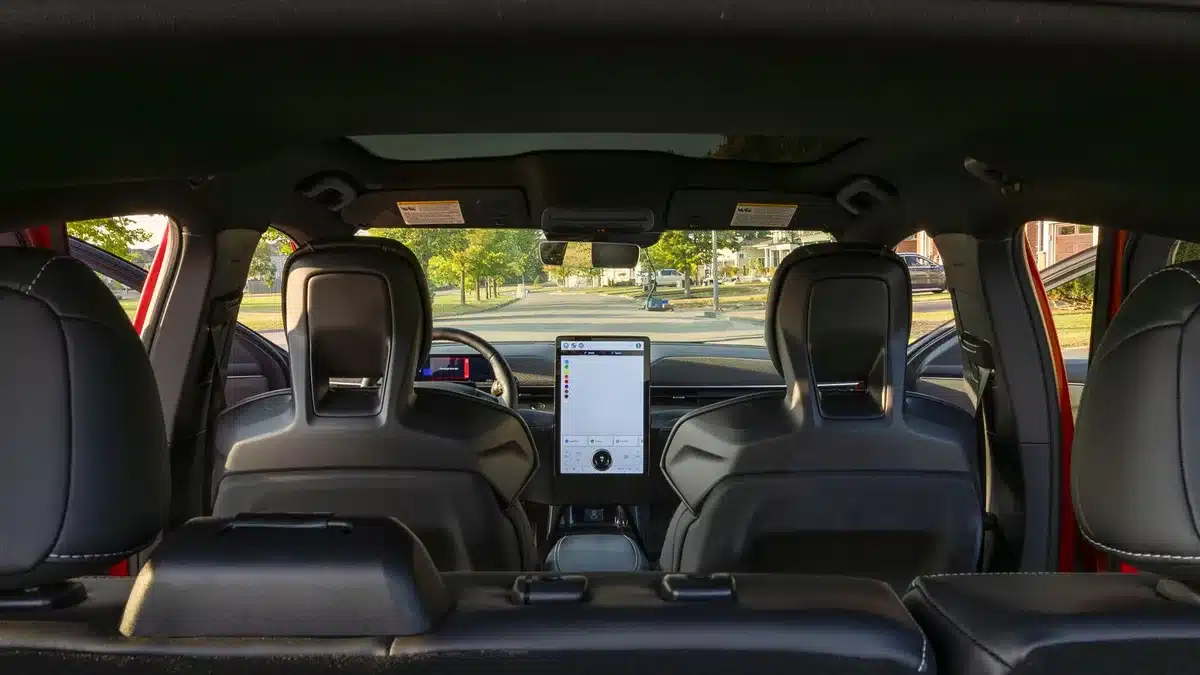
Early reviewers have highlighted the R2’s engineering philosophy, which emphasizes simplification and cost efficiency without sacrificing capability. Car and Driver noted that Rivian reduced headlight processor costs by $1.5 million by relocating controls from the headlight units themselves into the vehicle’s zonal electrical architecture—the same system used in the refreshed R1.
The vehicle’s design reflects a “do-everything” approach. InsideEVs reviewer Mack Hogan described the R2 as “the holistic fulfilment of an impossible promise,” citing its seamless transition between highway comfort, off-road capability, and spirited driving dynamics. The R2 offers 9.6 inches of ground clearance, approach and departure angles suitable for light off-roading, and a drop-down rear glass panel that opens the cabin to outdoor environments.
Rivian’s software-defined approach has drawn particular praise. The R2 includes Autonomy+ hands-free driving technology as standard in Performance models with the Launch Package, with point-to-point autonomous driving promised later in 2026. The vehicle also supports bidirectional charging, allowing owners to send power back to their homes—a feature that positions the R2 among the first U.S. EVs capable of true vehicle-to-home integration.
The R2 arrives in a crowded segment. The Tesla Model Y remains the sales leader, with a lower starting price, though reviewers note the R2 offers more interior space and cargo versatility. Car and Driver’s testing showed the R2 accommodated 11 carry-on suitcases compared to the Model Y’s seven, while matching cargo volume behind the rear seats. The R2’s boxy proportions and upright stance also provide more practical usability than the Model Y’s tapered shape.

A Refined Balance of Priorities
Reviewers have consistently noted that the R2 achieves a balance typically reserved for vehicles costing significantly more. Rivian’s strong Q2 earnings performance in July 2026 reflected investor confidence in the R2’s potential to drive profitability. Car and Driver’s testing team concluded that “the second Rivian model steps up to the Tesla Model Y plate and delivers a home run in its first at-bat,” citing the R2’s combination of space, comfort, performance, and value as unmatched in its size category.
The R2’s engineering also reflects a lean manufacturing philosophy. The vehicle uses a steel unibody with a battery pack that serves as both the floorboard and a stressed structural member, contributing to chassis stiffness that Rivian claims exceeds the larger R1’s. The suspension relies on conventional steel springs and struts rather than the air suspension found in pricier models, keeping costs down while maintaining ride quality across multiple drive modes.
Some trade-offs exist. Car and Driver noted that the R2 produces suspension noise over rough pavement comparable to older vehicles and lacks Apple CarPlay support, relying instead on Rivian’s proprietary software ecosystem. The steering-wheel-mounted Haptic Halo controls, while innovative, required some adjustment from testers unfamiliar with the system.
With affordably priced trims arriving in 2027 and production expected to scale significantly, the R2 is positioned to become the volume driver for Rivian’s path to profitability. The company aims to produce 20,000 to 25,000 R2s in 2026 and reach full production capacity of 155,000 units by the end of 2027.
Sources
- InsideEVs — First-drive review of the 2027 Rivian R2 Performance, detailed specifications, pricing, and engineering insights
- Car and Driver — Comprehensive tested review of the R2 Performance with acceleration, braking, and real-world cargo capacity data
- Rivian official website — R2 pricing, specifications, and launch details
- TechCrunch — R2 delivery timeline and production ramp information
- Reuters — R2 production start and 2026 delivery forecast