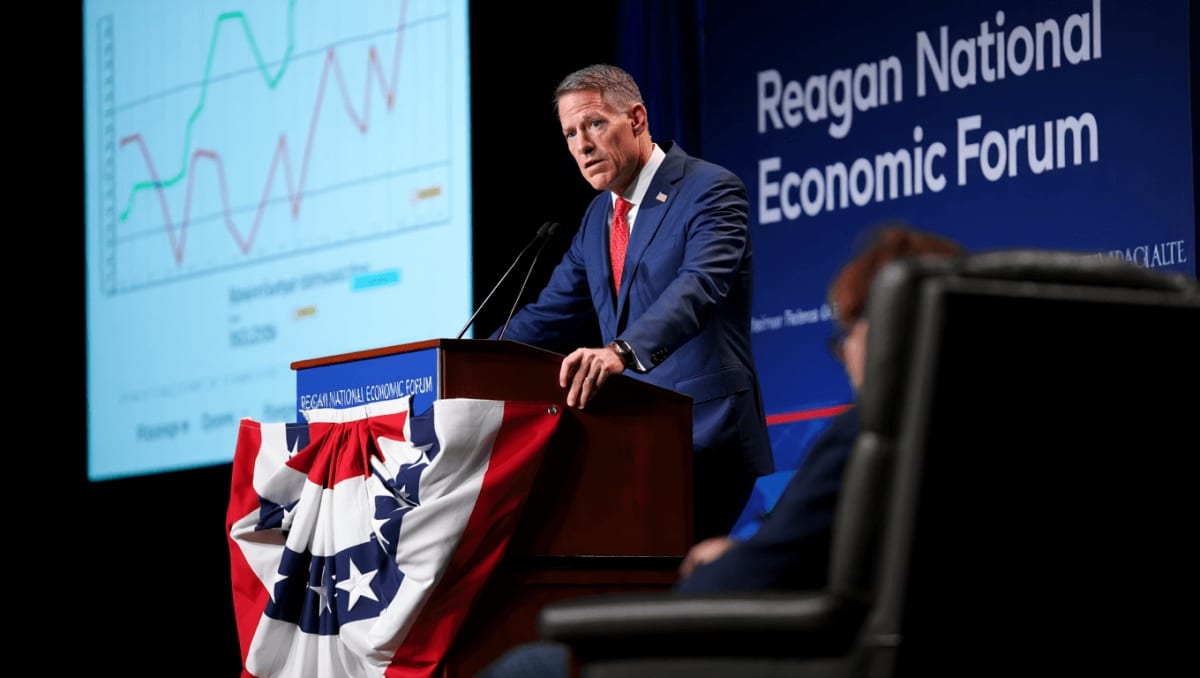
At the Reagan National Economic Forum, Treasury Secretary Scott Bessent outlined a sustained campaign of financial pressure on Iran that U.S. officials say has sharply curtailed Tehran’s revenue and offshore networks. The measures — a mix of port restrictions, targeted sanctions and aggressive action against foreign accounts and crypto holdings — are already influencing energy markets, bank behavior and the value of the dollar.
Administration officials and independent analysts describe Bessent’s approach as a concentrated use of financial tools to limit the Iranian state’s ability to move and monetize assets abroad. That strategy matters now because it affects global oil flows, investor confidence and the cost of living for ordinary consumers as talks and sanctions evolve.
The core elements of the campaign combine traditional sanctions with more forceful enforcement. Washington has tightened maritime and banking controls while expanding the reach of the Treasury’s enforcement arm.
- Port and oil restrictions: Measures aimed at interrupting exports and maritime logistics have reduced a key revenue source for Tehran.
- Targeted sanctions and enforcement: The Treasury’s Office of Foreign Assets Control (OFAC) has been modernized and used to dismantle networks that moved funds through shadow banking channels.
- Asset freezes and seizures: Authorities report freezing and, in some cases, seizing offshore accounts and digital-asset holdings, including substantial sums held in crypto.
- Direct pressure on proxy entities: Steps have focused on economic interests tied to the Islamic Revolutionary Guard Corps and other groups that benefit from state revenues.
Officials say these measures are designed to choke off funding for activities the U.S. deems malign, but they also carry broader economic consequences. By constraining alternative stores of value and closing off foreign conduits, the campaign has helped firm up demand for the U.S. dollar, a dynamic that influences exchange rates, trade costs and global capital flows.
Domestic economic fallout and market signals
While the Treasury pursues this financial pressure campaign abroad, the administration has simultaneously pushed domestic economic policies that proponents argue make the U.S. economy more resilient. Lower corporate tax rates, deregulation and expanded energy production have been cited by officials as supporting growth even as energy prices temporarily rose.
Recent data and market moves reflect a mixed picture: corporate profits and equity markets remain robust, consumers continue to spend, and long-term interest rates have eased in step with reports of resumed or potential negotiations. Energy prices have softened from recent peaks, a development officials link partly to diplomatic activity as well as tighter domestic production.
That combination — aggressive sanctions overseas and pro-growth policies at home — is being read by investors as a signal of policy coherence. Analysts caution, however, that sanctions enforcement can create friction for international banks and trading partners, raising compliance costs and complicating global transactions.
What this means for readers
The consequences of the Treasury’s campaign are not limited to geopolitics. Key impacts to watch over the coming months include:
- Short-term fluctuations in gasoline and heating costs tied to oil market reactions;
- Higher compliance burdens for businesses that operate across Gulf and global banking networks;
- Increased scrutiny of cross-border crypto flows and custody arrangements;
- Potential legal and diplomatic pushback from states and institutions whose assets are targeted;
- Broader currency effects as the U.S. dollar remains an attractive reserve asset amid geopolitical uncertainty.
Where negotiations and enforcement could head next
Officials at the forum said talks with Tehran remain a live issue and that diplomatic developments have already contributed to modest declines in oil prices and long-term rates. How discussions unfold will influence whether sanctions continue to tighten or are recalibrated.
Legal and operational challenges also persist. Seizing assets — particularly crypto stored across multiple jurisdictions — presents technical and jurisdictional hurdles, and affected parties may seek recourse through courts or through diplomatic channels.
For now, the Treasury’s campaign underscores a strategic shift: financial tools are being used more assertively as instruments of national security. Observers say that stance will keep shaping markets and policy debates as long as sanctions and negotiations remain central to U.S. strategy in the region.