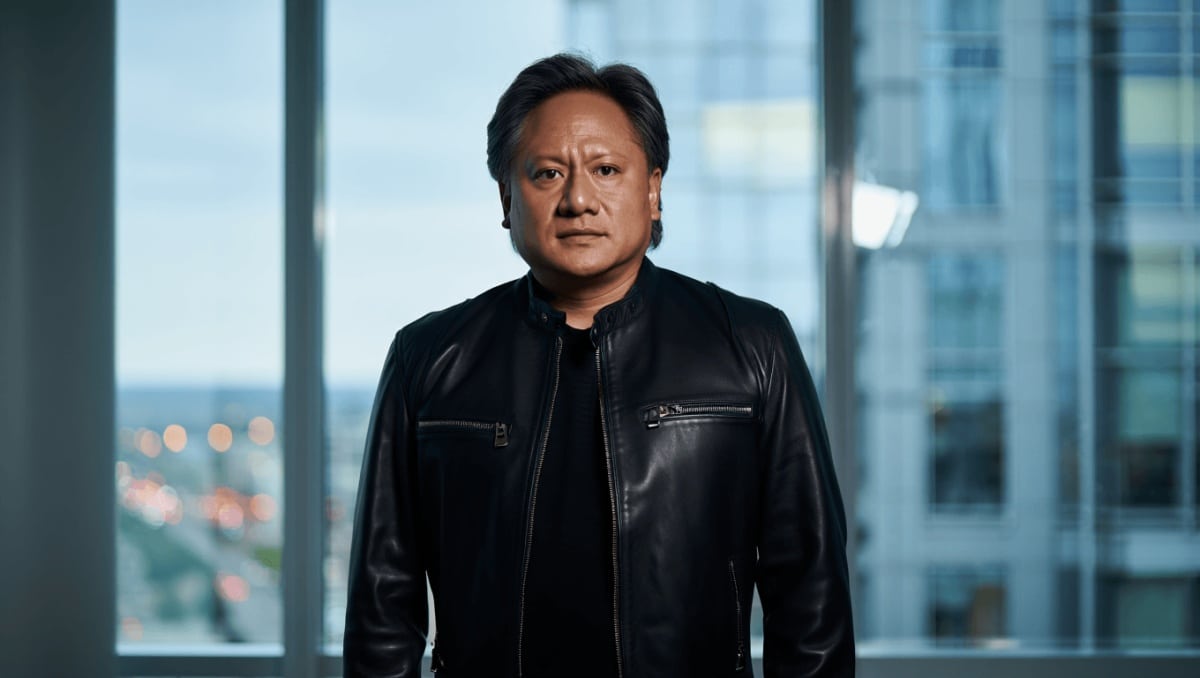
Nvidia CEO Jensen Huang has warned that U.S. restrictions on advanced chip exports may be producing the opposite of their intent: instead of starving China of critical semiconductors, the measures appear to have accelerated Beijing’s drive for self-reliance and helped Chinese firms expand abroad. His comments — made during a recent televised interview and following a high-profile visit to Beijing — underscore a policy dilemma Washington faces today between safeguarding national security and sustaining American technological leadership.
Speaking on a live business program, Huang said the United States must remain the global leader across the entire technology stack. At the same time, he argued, China has developed sufficient semiconductor capacity for many of its needs, and major local players have strengthened their positions as U.S. suppliers pull back.
The exchange touched on two competing concerns. Advocates of strict export controls contend that limiting sales of cutting‑edge chips is necessary to prevent adversaries from advancing military and AI capabilities. Critics warn that such controls can spur accelerated domestic development overseas, reducing U.S. leverage and creating new global competitors.
Huang also noted concrete business developments tied to the evolving policy landscape. U.S. regulators recently cleared licenses allowing Nvidia’s advanced H200 processors to be sold to a limited set of Chinese customers — a rare exception that reflects the tension between commercial demand and security review.
Why this matters now: export policy is shaping where hardware and software ecosystems grow, which companies win global contracts, and how quickly foreign firms can field advanced AI and imaging systems that compete with American suppliers.
Beyond market share, Huang emphasized Nvidia’s role in defense-related technology. He said parts of the world’s imaging and radar infrastructure run on chips designed by his company, and that those systems are frequently adapted for military uses. That crossover — commercial chips supporting critical defense capabilities — is central to why export rules are so contentious.
- For U.S. industry: restrictions can slow export revenue and complicate supply chains for American firms operating globally.
- For national security: limiting sales can reduce adversaries’ access, but may also accelerate their independent development of similar technologies.
- For global competition: stronger domestic suppliers in China are increasingly competing for markets previously dominated by U.S. companies.
| Area | Current state and implication |
|---|---|
| Chip supply | China has significantly increased domestic production and access, reducing dependence on some U.S. components. |
| Major Chinese firms | Companies such as Huawei have expanded device and infrastructure offerings and are competing internationally. |
| U.S. defense systems | Many imaging and radar platforms rely on commercially developed processors, creating interdependence between military and commercial tech. |
| Policy trade-offs | Export controls can protect short-term security interests but may encourage long-term self-sufficiency by rivals. |
The conversation reflects a broader debate inside Washington: how to craft export rules that deny critical capabilities to potential adversaries without unintentionally motivating them to achieve those capabilities at pace. Huang framed the issue as one of national strategy, arguing the U.S. should aim to “win” globally through innovation, exports, and standards — while acknowledging the reality that other nations are closing gaps.
Policy makers now face practical choices: tighten controls and risk accelerating foreign self-reliance, or allow selective commercial engagement that preserves American market influence but raises security concerns. The recent licensing decision for the H200 chips illustrates how those trade-offs are already being navigated case by case.
Whatever path Washington pursues, the immediate consequence is clear: export policy will shape the next phase of global technology competition, affect American jobs and revenues tied to chip exports, and influence which companies—domestic or foreign—set the standards for AI and advanced electronics worldwide.