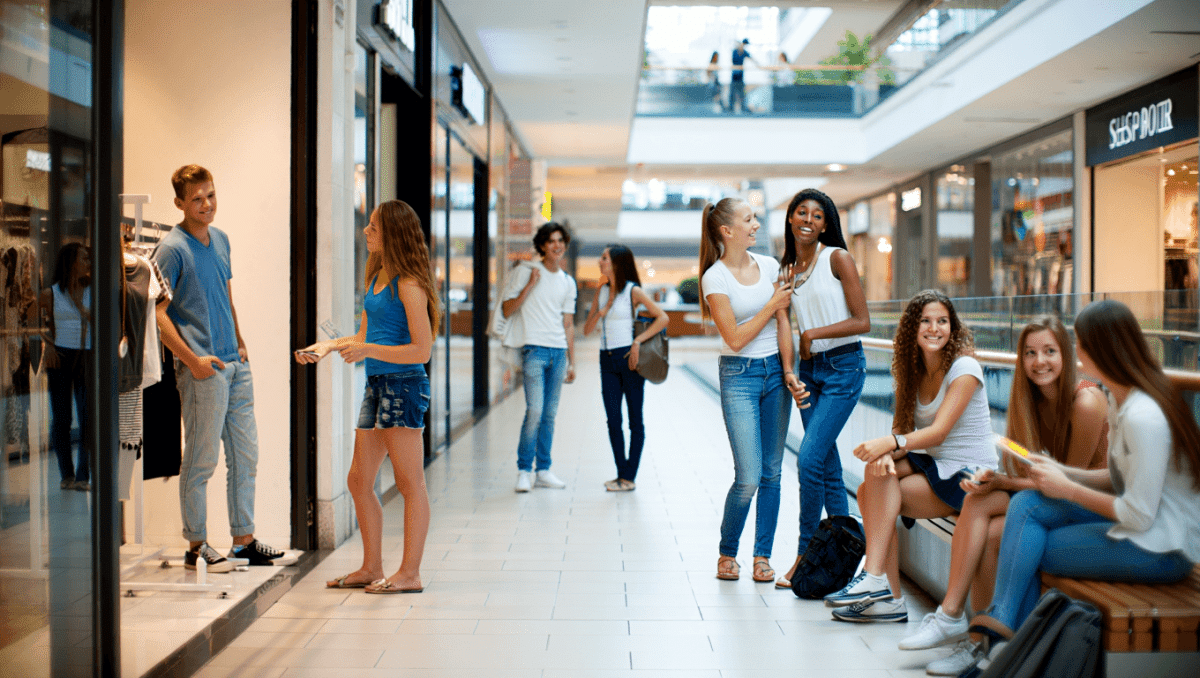
Young shoppers are quietly rewiring the business case for American malls: instead of treating stores as backup to online carts, many in their late teens and early 20s are choosing to shop, socialize and spend time in person. That shift is prompting landlords and retailers to refashion mall spaces around activities and social moments — a change that matters now as overall consumer spending stays unexpectedly resilient.
Mall operators say the strategy is less about merchandise and more about creating reasons to visit. Across the country, projects are adding everything from eye-catching dressing rooms designed for social media to climbing walls and curated food halls, aiming to turn visits into an outing rather than a transaction.
Gen Z’s buying power is growing fast. Industry forecasts from NielsenIQ project global retail spending by this cohort could top $12 trillion by 2030, outpacing other generations. Recent data from Circana also shows younger adults are more likely to shop in person: consumers aged 18 to 24 made about 62% of their general merchandise purchases in physical stores last year, compared with 52% for shoppers 25 and older.
Why retailers are listening
Retail sales in the U.S. have held up despite higher interest rates and economic uncertainty. Commerce Department figures released in April showed monthly retail receipts rose 0.5% and were roughly 4.9% higher than a year earlier — evidence that consumers are still spending, even if budgets feel stretched.
Macerich executive Cory Scott says younger customers increasingly prize the outing itself. He notes these shoppers often prioritize the atmosphere and social elements of a visit nearly as much as the goods they buy, which has pushed landlords to prioritize communal spaces and events.
- Experience-led design: interactive installations, photo-ready fitting rooms and pop-up activations that encourage sharing on social platforms.
- Activity anchors: attractions such as indoor climbing walls, mini-arenas for esports, or craft studios that extend dwell time.
- Food and social hubs: expanded food courts, communal seating and late-night dining to keep centers active beyond traditional shopping hours.
- Tenant mix changes: more lifestyle and service tenants — gyms, beauty studios, specialty eateries — replacing vacant fashion units.
Those adjustments are already visible in retailer expansion plans. For example, Burlington has said it will open more than two dozen new stores nationwide this month, signaling confidence in in-person demand.
Shoppers themselves describe a post-pandemic eagerness to reconnect. One young consumer told reporters that time spent isolated during quarantine made going out and meeting friends feel like a priority — an attitude that now factors into how they choose to spend free time and money.
What this means for communities and landlords
For mall owners, the shift presents both an opportunity and a risk. Upgraded public spaces and novel attractions can drive foot traffic and boost cross-shopping, but they require capital investment and a new approach to leasing and programming. Retailers that lean into experiential formats may see longer visits and higher per-visit spend, while those slow to adapt risk becoming irrelevant to younger patrons.
Longer term, the trend also affects local economies: increased mall activity can support jobs in hospitality, events and services even as traditional retail footprints shrink.
In short, the rise of experience-focused shopping shows that the future of retail won’t be binary. Brands and landlords that blend the convenience of e-commerce with the social and sensory appeal of places could be best positioned to capture Gen Z’s growing wallet share.