Federal drought plan cuts Colorado River water up to 40% for Arizona, California, Nevada, marking the most dramatic intervention yet. The U.S. Bureau of Reclamation unveiled a 10-year framework this week that would mandate reductions of 3 million acre-feet per year across the three Lower Basin states. That’s nearly double what the states themselves had proposed on May 1.
🔥 Quick Facts
- Federal cuts: Up to 3 million acre-feet per year for three states, representing 40 percent of combined allocations
- Review cycle: Plan would reassess water cuts every 2 years based on reservoir levels and conditions
- Lake Powell status: Currently at 24 percent capacity with April 2026 forecasts showing only 22 percent of average snowpack inflow
- Arizona’s burden: Mandatory 27 percent reduction equals 10 percent of the state’s total annual water use
Federal Government Steps In After State Talks Stall
After months of deadlocked negotiations between seven basin states, the federal government intervened with a dramatic proposal, according to announcements made Wednesday in Phoenix. Tom Buschatzke, director of the Arizona Department of Water Resources, disclosed the preliminary federal plan to water stakeholders, characterizing the potential cuts as “sobering.” The framework would apply either through existing Colorado River Compact law or state agreements.
The Bureau of Reclamation stated the approach aims to “provide stability while allowing flexibility to incorporate consensus-based recommendations as they develop.” Water releases from the two critical reservoirs would range from 5 million to 12 million acre-feet annually, though officials expect figures to trend toward the lower end given current drought conditions and poor snowpack projections.
States’ Own Plan Falls Far Short of Federal Requirements
On May 1, California, Arizona, and Nevada had jointly proposed voluntary water cuts of only 1.6 million acre-feet annually through 2028. The federal proposal now quadruples those targets, creating tension between state leaders and Washington. JB Hamby, California’s lead negotiator, cautiously welcomed the federal intervention, calling it “a smart approach” to both longer-term planning and adapting to variable hydrology with regular reassessment.
Arizona would absorb the heaviest immediate burden, agreeing to a 760,000 acre-feet mandatory reduction annually, while California faces 440,000 acre-feet cuts and Nevada 50,000 acre-feet reductions. The cuts reflect the “priority of the law of the river,” giving California senior water rights while Arizona and Nevada absorb disproportionate losses.
Critical Reservoir Levels Drive Federal Action
| Metric | Current Status |
| Lake Mead Level | 30% full (down from historical 98%) |
| Lake Powell Level | 24% capacity (April 2026) |
| Snowpack Forecast | 22% of average runoff expected |
| People Dependent on River | 40 million across seven states |
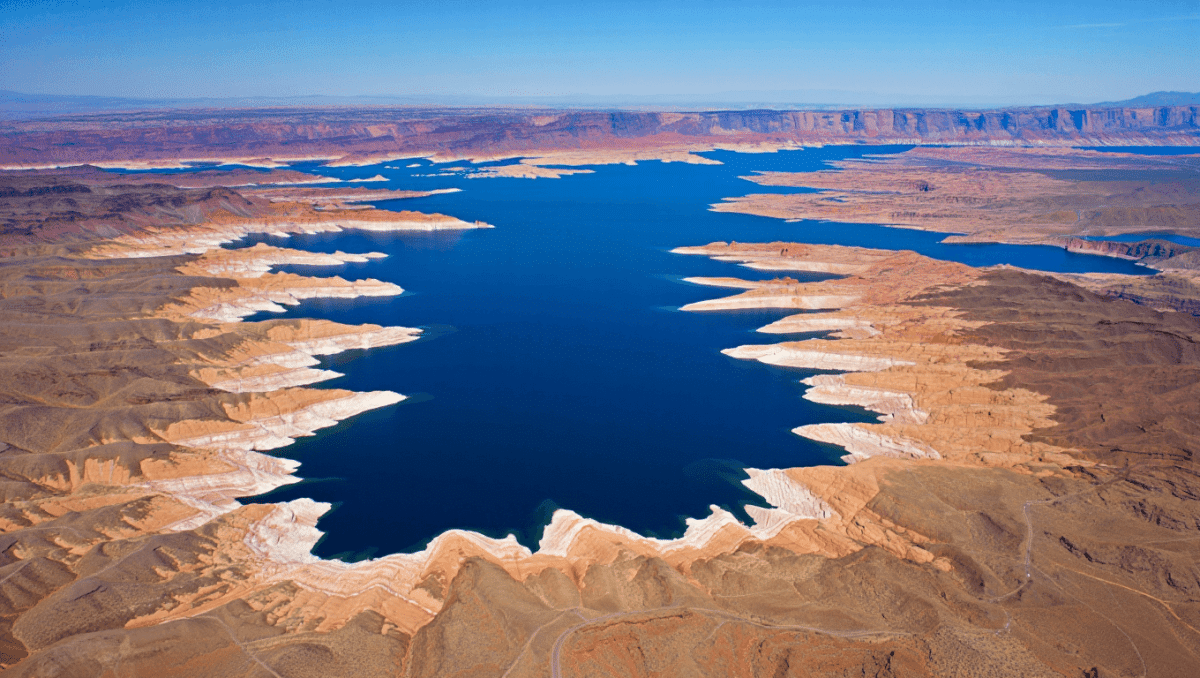
Lake Mead and Lake Powell have reached historic lows as the Southwest endures record-breaking drought intensified by climate change. Federal officials have begun emergency water releases from upstream reservoirs to prevent Lake Powell from dropping below critical power pool levels needed for Glen Canyon Dam hydroelectric generation. The April 24-Month Study projected Lake Powell could fall below 3,490 feet by August without intervention.
Arizona’s vulnerability is extreme, with Buschatzke warning that cuts approaching 40 percent could mean the Central Arizona Project (CAP), the critical canal transporting Colorado River water to central and southern Arizona, could “go to zero.” Such a scenario would devastate urban and agricultural communities across the state that depend entirely on this lifeline.
“That’s us, that’s Arizona, and potentially CAP going to zero. I think we all know that unless Mother Nature starts doing her job, it’s going to be closer to the bottom end of this range.”
— Tom Buschatzke, Arizona Department of Water Resources Director
Broader Implications for Western Water Management
The Colorado River Compact of 1922 originally allocated California 4.4 million acre-feet annually, Arizona 2.8 million, and Nevada just 0.3 million. This formula dramatically overestimated the river’s reliable flow, and since 2000, climate change has reduced annual runoff by roughly 20 percent. The river’s delta in Mexico has largely dried up, with the river itself now seldom reaching the sea.
Federal officials have indicated the implementation could proceed through existing law without full state agreement, signaling urgency and federal authority. The Trump administration has signaled the final rule would be announced sometime in summer 2026. This represents a historic shift toward federal control of what has historically been state-managed water rights, reflecting the emergency nature of the crisis.
Can Any Deal Prevent a West-Wide Water Crisis?
Tribal nations, which hold significant water rights, and Mexico, dependent on Colorado River treaty allocations, must also approve any final framework. The three-state proposal includes a new Tribal water pool in Lake Mead to help the federal government meet trust obligations to Arizona tribes. Christopher Kuzdas of the Environmental Defense Fund notes this is “one final overtime period” to determine how the Southwest will adapt to permanent drought.
Without dramatic voluntary reductions or federal intervention, catastrophic consequences loom including Glen Canyon Dam becoming unable to generate power, agricultural collapse across the basin, and potential disputes cascading into the courts. The federal drought plan now forces all parties to grapple with a harsh reality: the Colorado River simply cannot sustain current demands in a warming, drying West.
Sources
- Reuters – Federal plan cuts Colorado River water up to 40 percent with 3 million acre-feet annual reductions
- Los Angeles Times – Trump administration 10-year framework with biennial reassessment of water cuts
- Environmental Defense Fund – Lower Basin agreement on 3.2 million acre-feet reduction through 2028 with Tribal water protections