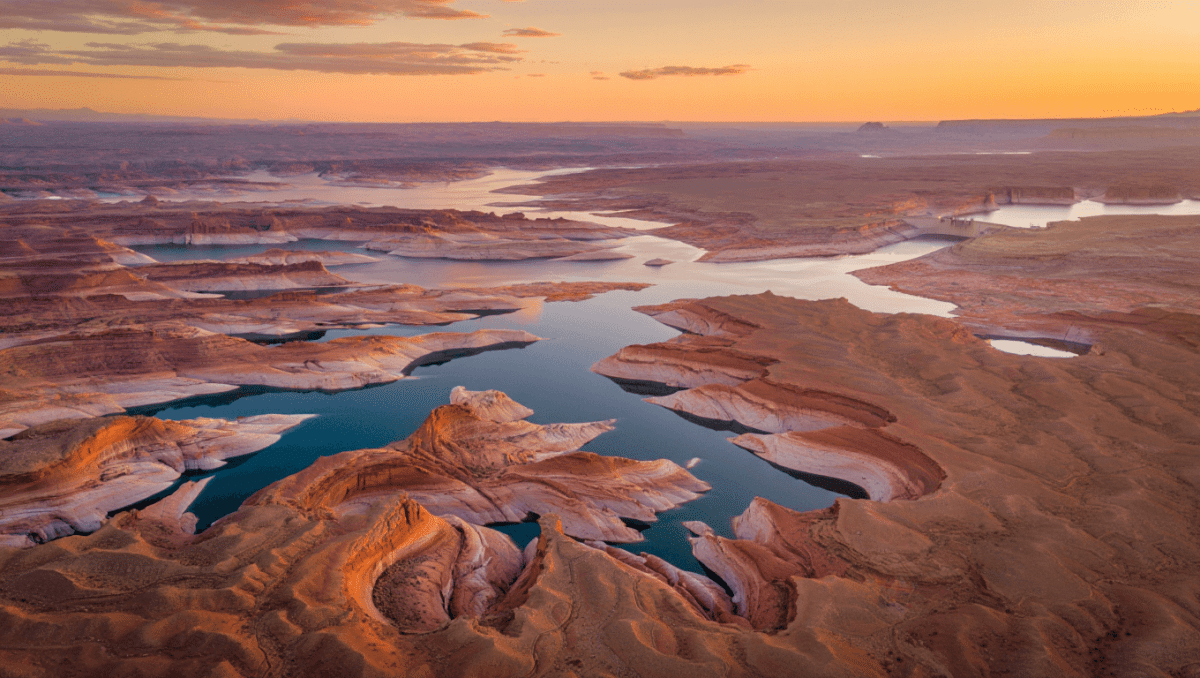
The U.S. Bureau of Reclamation just unveiled a dramatic new plan slashing 40% of water for Arizona, California, and Nevada. This federal proposal, announced today, threatens to cut 3 million acre-feet annually from the three drought-stricken states. The cuts aim to stabilize critically depleted Lake Mead and Lake Powell reservoirs facing their worst conditions in decades.
🔥 Quick Facts
- Maximum annual cuts: Up to 3 million acre-feet of Colorado River water from Lower Basin states
- Plan duration: 10 years with mandatory two-year review cycles, replacing the expired 20-year agreement
- Arizona’s specific burden: 760,000 acre-feet cuts per year, potentially zeroing out Central Arizona Project flows
- Water capacity comparison: 3 million acre-feet can supply 6 to 9 million homes annually
Federal Intervention Breaks Seven-State Deadlock
With a 20-year-old operational agreement expiring this year and negotiations between the seven basin states completely stalled, the federal government finally intervened last week. Arizona Department of Water Resources Director Tom Buschatzke revealed the plan during a Wednesday meeting, calling the proposed cuts “sobering.” The federal proposal nearly doubles the 1.6 million acre-feet cuts that the three Lower Basin states had offered voluntarily on May 1.
Federal officials indicated water cuts would follow the “priority of the law of the river,” the 1922 Colorado River Compact, which gives California the highest priority status. The Bureau of Reclamation stated the plan provides “stability while allowing flexibility” to incorporate state-based recommendations as they develop over time.
Arizona Bears Heaviest Water Security Weight
Arizona faces the steepest sacrifice under this plan, losing 760,000 acre-feet per year starting immediately. This cuts hit particularly hard on the Central Arizona Project (CAP), the 336-mile canal delivering Colorado River water to Phoenix and Tucson. Buschatzke warned explicitly, “That’s us, that’s Arizona, and potentially CAP going to zero.” California would reduce use by 440,000 acre-feet annually, while Nevada faces 50,000 acre-feet cuts per year.
| State | Annual Cut (Acre-feet) | 2028 Total (Million) |
| Arizona | 760,000 | 3.2 (with CA + NV) |
| California | 440,000 | Variable |
| Nevada | 50,000 | Variable |
| Upper Basin States | Zero (proposed) | No mandatory cuts |
The Gila River Indian Community holds the largest CAP water allocation and will face significant reductions. CAP assistant general manager Patrick Dent noted the new proposal brings cuts from “devastating, impossible to manage” levels to something “manageable.” This represents a strategic win compared to earlier federal proposals that demanded even harsher reductions.
“I think we all know that unless Mother Nature starts doing her job, it’s going to be closer to the bottom end of this range,” referring to Lake Powell releases potentially dropping to 5 million acre-feet annually.
— Tom Buschatzke, Arizona Department of Water Resources Director
Federal Funding May Follow if Upper Basin Cooperates
The Biden Administration’s Inflation Reduction Act allocated $4 billion for Colorado River conservation, but the Trump administration paused spending in early 2025. Now, $1 billion in federal funds may become available again. Approximately $454 million was recently approved by the Office of Management and Budget, with $354 million going to Lower Basin states and $100 million supporting Upper Basin conservation work.
Buschatzke called this announcement “a giant leap forward” in bringing the proposal together. Previous federal funds paid farmers to pause irrigation and funded city conservation programs, leaving saved water in Lake Mead and Lake Powell to prevent catastrophic drops. The Bureau of Reclamation confirmed it’s seeking cost-shares from states, though spending details remain “very much a work in progress.”
Will the Upper Basin States Accept Responsibility?
The federal plan creates a contentious imbalance: Lower Basin states take massive cuts while Upper Basin states face zero mandatory reductions. Colorado, Utah, Wyoming, and New Mexico have consistently refused to commit to mandatory cutbacks. Chuck Cullom, executive director of the Upper Colorado River Commission, blasted the proposal, calling the Lake Powell operations plan “insufficient” and warning it would “exacerbate potential conflict” between basins. The Lower Basin proposal explicitly states the impediment to a full seven-state agreement has been “Upper Division States’ refusal to commit to water use reductions.”
Meanwhile, tribal governments express deep concerns. Stephen Roe Lewis, governor of the Gila River Indian Community, warned that “all water users must play a role” and worried the plan creates “a system that rewards stubbornness and gamesmanship.” Tribal leaders want robust consultation before the plan moves forward, worried about inequitable risk distribution across Arizona beneficiaries.
Is Two-Year Plan Renewal Better or Worse? What Happens Next?
Unlike previous 20-year agreements, this 10-year plan resets every two years based on water levels. Water officials like University of Arizona researcher Sharon Megdal expressed puzzlement, asking “Why would they even want to set themselves up for that?” Critics worry about constant renegotiations and legal threats. However, water policy expert Eric Kuhn sees merit, suggesting the Bureau of Reclamation is simply trying “to deal with a very difficult situation” by managing unprecedented uncertainty from wildly varying river flows.
A full seven-state agreement remains technically possible but deeply unlikely. Buschatzke said he is “pretty skeptical,” noting “We’re too far apart and the time is too short” before the federal “record of decision” deadline in mid-July. State leaders are exploring bringing in a professional mediator to break the deadlock. Arizona could still pursue litigation against Upper Basin states if they fail to deliver promised water downstream, Buschatzke warned.
Sources
- Reuters – Breaking federal plan details with Tom Buschatzke statements on Arizona water cuts and Lake Powell operations
- Arizona Daily Star – Comprehensive analysis of Bureau of Reclamation proposal with stakeholder reactions and two-year renewal mechanism
- KJZZ – State-by-state breakdown of proposed cuts with expert perspectives on federal funding and Upper Basin negotiations