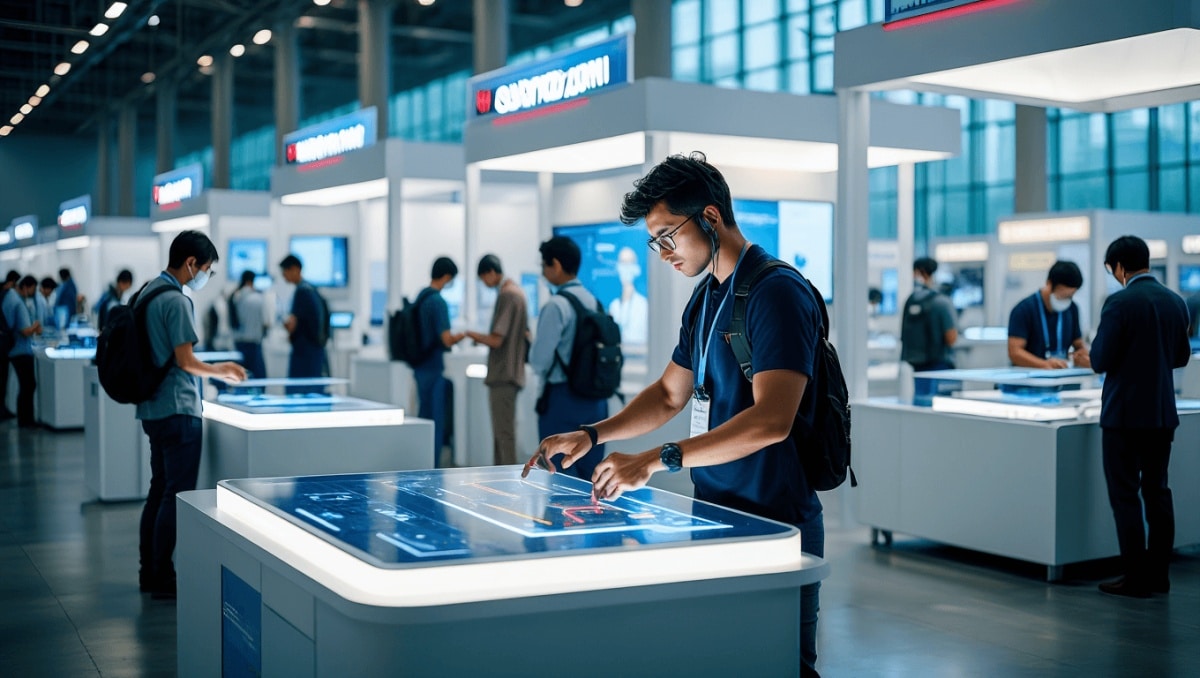
SusHi Tech Tokyo 2026 arrives with an unusually focused agenda: four tightly defined technology tracks, each anchored by working demos and conversations with the engineers and investors building them. The event, staged April 27–29 at Tokyo Big Sight, aims to show not just flashy prototypes but where technology is already changing industries — and what that means for cities, creators and companies today.
What’s standing on the floor
Organizers have organized the program around four core domains, emphasizing live proof points over broad trend-talk. Attendees can expect booth demonstrations, hands-on experiences and panels featuring executives and funders from leading companies and venture firms.
- AI — Practical deployments and infrastructure challenges, with speakers from major cloud and chip firms examining where generative systems are scaling and where operational risks remain.
- Robotics — Mobile, interactive robots operating in public spaces and discussions about software-defined vehicles from automotive and autonomy teams.
- Resilience — Cybersecurity briefings, climate investment panels and immersive disaster-simulation exhibits that translate policy into real-world preparedness.
- Entertainment — Japanese animation studios and startups exploring how AI is changing production, localization and global distribution of cultural content.
AI: moving from hype to plumbing
Panels bring together technical leaders from prominent hardware and cloud providers alongside venture figures focused on AI infrastructure. Presentations look at the parts of the stack that make large models usable in production and the operational hazards companies are confronting as they deploy them at scale.
On the exhibition floor, research labs and early-stage university teams sit beside established vendors, while a companion AI Film Festival in central Tokyo spotlights how machine learning tools are already influencing storytelling and visual culture.
Robotics: machines off the pedestal
Robots at SusHi Tech are not static prototypes behind glass; visitors can interact with devices in public circulation. Automotive and autonomy leaders are scheduled to discuss how software-first approaches are redefining vehicle design and transport services.
For industry watchers, the most immediate takeaway is that physical AI — systems that sense and act in the real world — is moving from experiments to demonstrable deployments.
Resilience: tested under pressure
Sessions cross cybersecurity, urban planning and climate finance. Security executives and infrastructure vendors discuss defensive strategies, while investors map where capital is flowing into climate adaptation.
Hands-on exhibits — including a virtual-reality disaster simulator and guided visits to Tokyo’s subterranean flood-control facilities — are designed to make abstract risks tangible for policymakers and planners.
Entertainment: local IP, global reach
Executives from major animation studios join startup founders to talk about scaling Japanese creative output for global audiences. Startups on the floor demonstrate tools that translate manga, generate music from prompts and convert intellectual property into animated formats ready for international distribution.
Remote attendance and access
Not everyone will be in Tokyo. Organizers are offering remote participation that goes beyond a passive livestream: remote guests can interact with exhibitors through on-site staff using telepresence devices that display a participant’s face and allow real-time conversations.
Streaming of scheduled sessions is available for ticket holders, though some sessions may be restricted from remote viewing.
City leaders convene on resilience
Running alongside the startup program, the Tokyo Metropolitan Government hosts a G-NETS summit bringing leaders from 55 cities across five continents to discuss urban resilience to climate and disaster risks. The forum, active since 2022, focuses on shared challenges in safeguarding citizens and infrastructure.
Audiences can observe the summit via the public video streams provided by the city in real time and afterward.
Why it matters now
SusHi Tech’s concentrated format makes it a practical barometer of what’s deployable today: which AI components are production-ready, how robotics are entering public space, where climate and cyber investments are heading, and how creative industries are adapting to automation and new distribution channels.
TechCrunch is covering the event as an official media partner. Its startup competition team will select one standout from the SusHi Tech Challenge to progress to the TechCrunch Disrupt Startup Battlefield 200 — a notable opportunity for early-stage companies seeking global exposure.
Event basics: SusHi Tech Tokyo 2026 runs April 27–29 at Tokyo Big Sight. April 27–28 are business-focused days and April 29 is open to the public. Live streaming and limited remote participation options are available; individual session availability may vary.