
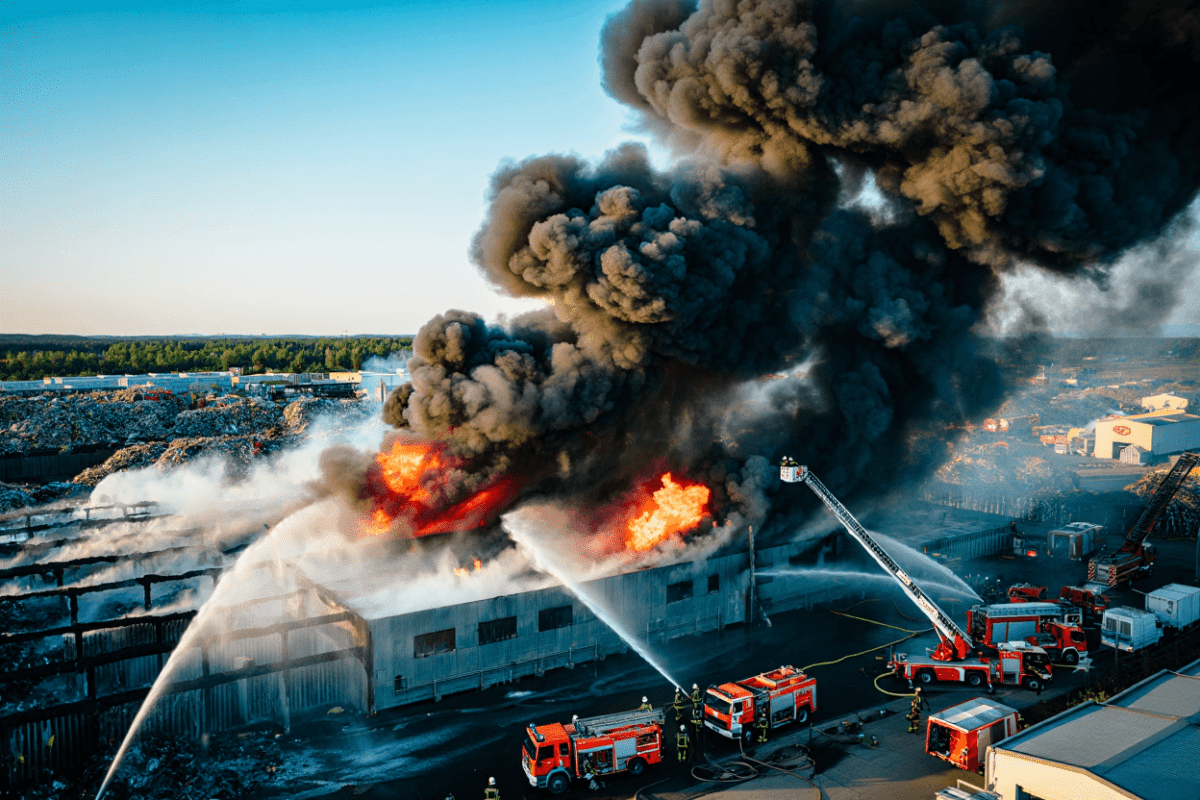
A three-alarm fire destroyed a commercial electronics and solar panel recycling facility in Salt Lake City on May 19, 2026, prompting more than 60 firefighting personnel to respond. The blaze at the facility near 369 South Orange Street generated thick black smoke visible across Salt Lake and Davis counties, raising serious questions about air quality and hazardous material exposure in the region.
🔥 Quick Facts
- Three-alarm fire broke out at electronics and solar panel recycling facility
- May 19, 2026: Fire ignited in outside storage area near I-80 and Redwood Road
- 60+ firefighters responded to the structure fire in western Salt Lake City
- May 20, 2026: Crews concluded operations; smoke plume visible from miles away
- Cause under investigation according to Salt Lake City Fire Department
Understanding the Facility and Initial Response
The commercial facility specializes in recycling electronics and solar panels, processing e-waste materials that contain hazardous substances. When the fire ignited in the outside storage area, flames spread rapidly across the recycling yard. Salt Lake City Fire Department dispatched multiple alarm units within minutes of the initial call, recognizing the severity and potential for rapid expansion given the combustible nature of accumulated recyclable materials.
The facility’s location near the Interstate 80 and Interstate 215 interchange made response challenging due to immediate traffic congestion. At least 60 firefighting personnel worked in coordinated teams to contain the blaze, utilizing elevated ladder trucks and high-volume water discharge operations. The fire produced thick black smoke that rose hundreds of feet into the air, creating a visible plume that could be observed from across the entire Salt Lake Valley region.
Smoke Impact and Regional Air Quality Concerns
The dense smoke traveled across the region, affecting air quality in both Salt Lake County and neighboring Davis County. Residents reported visibility reductions and concerns about breathing, particularly those with respiratory conditions such as asthma. The type of smoke generated from burning electronics and solar panel materials is especially concerning because e-waste contains heavy metals, including lead, cadmium, and mercury, which become airborne when burned.
Air quality monitoring stations recorded elevated particulate matter levels throughout the day. Local health authorities advised residents in the affected areas to remain indoors and use air purification systems where available. The smoke also created visibility concerns that extended beyond just air quality concerns, affecting transportation patterns across the valley. By evening on May 19, the smoke had begun to disperse, though lingering effects persisted through the following day.
Operational Data and Fire Suppression Efforts
The fire presented complex suppression challenges due to the materials involved. Firefighters employed a multi-pronged approach combining direct water application with foam suppression agents designed for heavy-metal-laden materials. The operation consumed significant water resources, with pumper trucks maintaining continuous spray to prevent reignition of scattered debris.
| Incident Metric | Value |
| Fire Alarm Level | Three-alarm incident |
| Personnel Deployed | 60+ firefighters |
| Ignition Date | May 19, 2026 (late morning) |
| Location | 369 South Orange Street, Salt Lake City |
| Fire Origin | Outside storage area of facility |
| Operations Concluded | May 20, 2026 (afternoon) |
| Cause Status | Under investigation |
| Smoke Visibility Range | Salt Lake and Davis counties |
The operation lasted approximately 20+ hours from initial ignition to final extinguishment and safety clearance. Firefighters worked in rotating shifts due to the intense heat and hazardous conditions. Respiratory protection was mandatory for all personnel operating near the plume. Water pressure maintenance proved critical, as the facility’s original fire suppression infrastructure proved insufficient for a large-scale three-alarm incident.
“Significant smoke in the area. Avoid if possible due to traffic congestion.”
— Salt Lake City Fire Department, Official Dispatch Update, May 19, 2026
Long-Term Implications and Environmental Oversight
The fire raised important questions about industrial facility safety protocols and environmental hazard management in the recycling industry. Electronics recycling facilities handle materials containing toxic substances, and the potential for fire incidents requires strict adherence to OSHA safety standards and local fire codes. The incident prompted fire safety officials to conduct a comprehensive review of similar facilities throughout the region.
Environmental remediation became necessary to address potential contamination from burned e-waste materials. Firefighting water runoff containing heavy metal particulates required containment and treatment before it could enter local water systems. The incident also illustrated the importance of advance planning for emergency response at facilities handling hazardous materials, particularly those storing large quantities of combustible items in outdoor areas.
What Changes Might Result from This Incident?
Facility owners and operators across Utah are likely to face enhanced inspection requirements and revised fire prevention standards in the coming months. Will local ordinances now mandate additional fire suppression systems specifically designed for electronics recycling operations? The incident creates momentum for stricter regulations governing outdoor storage areas at similar facilities, potentially including requirements for automated fire detection systems, expanded buffer zones, and improved emergency access routes.
Insurance companies serving the recycling industry may also reassess their underwriting criteria, requiring facility upgrades before continuing coverage. Training standards for facility staff may evolve to include better protocols for handling hazardous material fires, recognizing that traditional fire suppression techniques sometimes prove inadequate for e-waste facilities.
Sources
- KSL News Utah — Details on fire origin, personnel deployed, and suppression timeline
- FOX 13 News Utah — Air quality concerns and toxic smoke analysis
- Salt Lake Tribune — Regional smoke visibility and Davis County impact
- Salt Lake City Fire Department — Official incident classification and operational status
- Spectee Emergency Monitoring — Three-alarm incident documentation and facility identification










