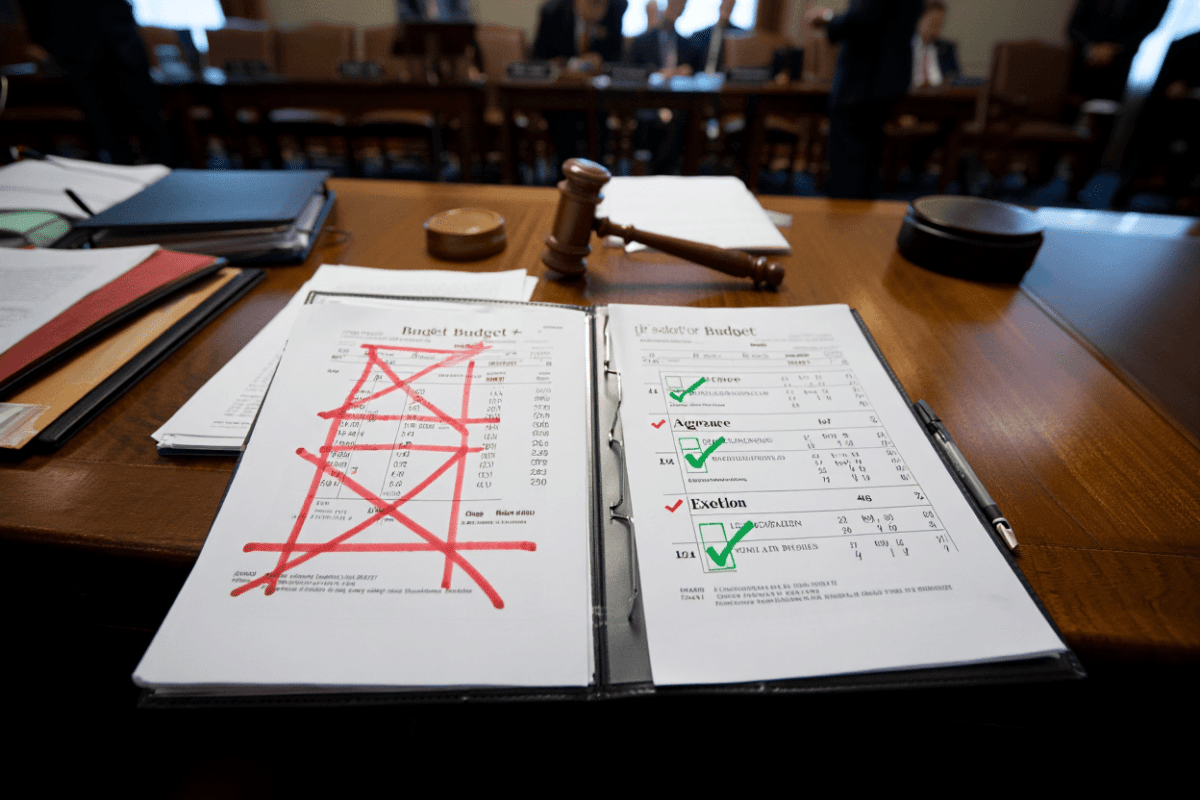
House Republicans advanced a $95 billion budget reconciliation package on July 17, clearing the House Budget Committee on a 20-14 party-line vote as the third major spending bill of the Congress.
The framework, unveiled earlier this week, allocates $60 billion for defense spending tied to the ongoing Iran war, $12 billion for farm aid, and $10 billion to help states implement stricter voter registration rules under the Safeguard American Voter Eligibility (SAVE) Act, a top Trump priority.
House Republicans are using the budget reconciliation process, which allows legislation to pass the Senate with a simple majority and bypasses the usual 60-vote threshold required to overcome a filibuster. “Republicans were sent to Washington on a mission to reverse the failed policies of the socialist Democrats and restore the greatness of America,” House Budget Committee Chair Jodey Arrington said in a statement, calling the package a tool to “stop Democrat obstruction, support our troops, and safeguard the integrity of our elections.”
The House Budget Committee’s approval represents the opening move in a complicated legislative process. The budget resolution now heads to the full House for a floor vote next week before lawmakers leave for their August recess.
However, the package faces significant headwinds in the Senate, where Republican leaders have expressed deep skepticism about both the timing and the substance of the proposal. Senate Majority Leader John Thune called advancing the bill “risky” so close to the November midterm elections, warning that forcing GOP senators to take tough votes on poison-pill amendments could divide the party during a critical campaign period. “Is $60 billion worth the risk of putting something like that on the floor and all the other harm that potentially comes from that?” Thune asked.
Sen. Thom Tillis of North Carolina, a key swing vote, vowed to use “every device” available to delay any reconciliation package that includes election-related provisions. Tillis argued that states would face an impossible scramble to implement new voter registration and ID requirements before the general election in just four months. He called the effort to add SAVE Act provisions to a budget package a “charade” and a “distraction.”
Senate Republicans also object to the package’s lack of spending offsets. Fiscal conservatives, including incoming Senate Budget Committee Chair Ron Johnson of Wisconsin, are demanding that any new spending be paired with spending cuts to avoid adding to the deficit. “Our national debt is a runaway train. The next reconciliation bill should be fully paid for,” Sen. Bill Cassidy of Louisiana wrote on social media.
Additionally, Senate Appropriators Committee members, including Chair Susan Collins of Maine, argue that bypassing the regular appropriations process undermines their authority and sets a problematic precedent. “In general, my view is we should not be using reconciliation, we should work through the normal appropriations process,” Collins said.
The defense funding falls significantly short of President Trump’s earlier request for $350 billion in additional Pentagon spending, though it aligns with the White House’s more recent supplemental spending request to rebuild weapons stockpiles and fund classified programs as the Iran conflict extends beyond four months. The farm aid reflects concerns among lawmakers with rural constituencies facing higher input costs and weather challenges.
House Republican leaders are racing against the calendar. Speaker Mike Johnson met with Trump at the White House this week to discuss the package and aims to pass the budget resolution before the August recess. However, passage in the Senate remains highly uncertain, with Republicans holding only a narrow majority and facing defections from multiple flanks—fiscal hawks, defense hawks wanting more spending, and senators concerned about election-related provisions.
Sources
- The Hill — House Republicans’ budget framework details and committee vote; Senate Republican opposition and concerns
- AP News — House GOP’s $95 billion package announcement with breakdown of allocations and legislative process