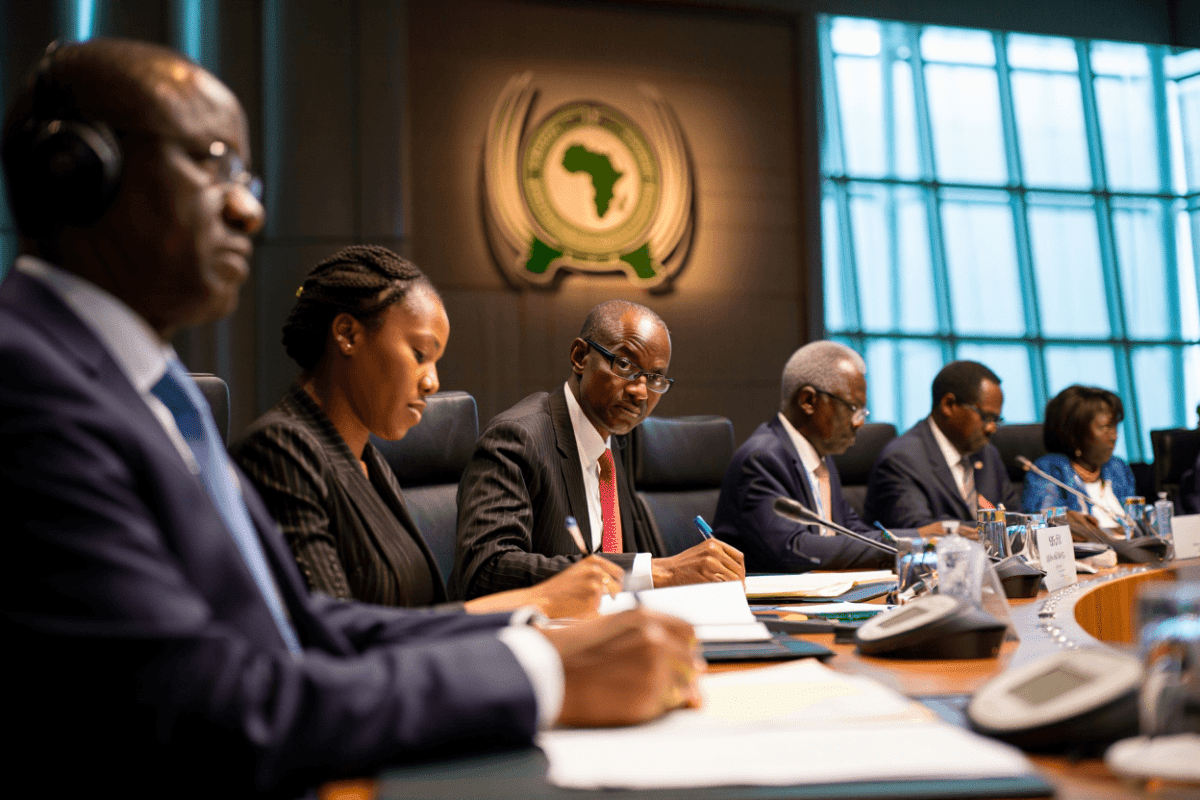
The African Union’s 17th High-Level Retreat on the Promotion of Peace, Security and Stability in Africa concluded May 22, 2026, in Libreville, Gabon, drawing top diplomats and peace mediators across the continent. The two-day summit, held on May 21-22, brought together current and former African leaders, UN officials, and the Group of the Wise—a panel of respected elder statesmen—to strengthen African-led conflict prevention efforts amid persistent regional instability.
🔥 Quick Facts
- Dates: May 21-22, 2026 in Libreville, Gabon
- Organizers: African Union Commission and United Nations
- Participants: 50+ countries, including former President Uhuru Kenyatta of Kenya
- Focus: Conflict prevention, peacekeeping, and regional security
Africa’s Highest-Level Peace Gathering Since 2024
The Chairperson’s 17th High-Level Retreat marks the continent’s most significant peace and security convocation in nearly two years. Mahmoud Ali Youssouf, Chair of the African Union Commission, opened the retreat by emphasizing Gabon’s hosting capabilities and Africa’s unified commitment to preventive diplomacy. The gathering expanded beyond traditional government channels—the presence of the Group of the Wise and senior UN officials signaled renewed partnership between continental and global peacekeeping institutions.
The timing reflects escalating threats across the region. Central Africa faces persistent armed group activity, cross-border tensions, and humanitarian crises affecting millions. West Africa’s Sahel region continues battling expanding extremist networks, while the Horn of Africa remains volatile despite some diplomatic breakthroughs. No single country dominates this landscape—collective African mediation is essential.
Gabon’s Strategic Role in Regional Diplomacy
President Brice Oligui Nguema, who took office in May 2025 following a 2023 military transition, has positioned Gabon as a neutral peace mediator in Central African affairs. According to international observers, Nguema has conducted direct diplomacy with neighboring Central African states, securing recognition for Gabon’s interim government while building credibility as a regional mediator.
Gabon’s strategic advantages are significant: geographic centrality in Central Africa, relative political stability compared to neighbors, and long-standing relationships with international organizations. The US embassy formally recognizes Gabon as “a key player in conflict resolution efforts in the Central African region.” Hosting this retreat underscores Gabon’s elevated diplomatic profile and Libreville’s role as a continental peace hub.
Summit Participants and Their Stakes in African Peace
The composition of attendees revealed the breadth of African peace initiatives. Former Kenya President Uhuru Kenyatta arrived May 20, signaling East African engagement in continental stability. Kenyatta previously led Kenya’s regional mediation efforts and remains influential in peace circles. His attendance emphasized that peace-building transcends active governance—elder statesmen remain valued advisors.
Beyond heads of state, the summit included military commanders, peace envoys, civil society leaders, and UN representatives. This diversity reflects modern conflict prevention doctrine: no single ministry or military command solves regional instability. Economic actors, women’s groups, and youth leaders increasingly shape outcomes.
| Region | Key Challenge | Primary Actors |
| Central Africa | Armed group proliferation, resource conflicts | CAR, Cameroon, DRC, Gabon |
| West Africa (Sahel) | Extremist insurgency, counter-insurgency spillover | Mali, Burkina Faso, Niger, ECOWAS |
| Horn of Africa | Interstate border disputes, terrorism | Somalia, Ethiopia, Kenya, IGAD |
| Southern Africa | Political instability, humanitarian access | Zimbabwe, South Africa, regional blocs |
“The African Union remains committed to African-led solutions to African problems. This retreat reinforces our collective resolve to prevent conflict through dialogue, mediation, and institutional strength.”
— Mahmoud Ali Youssouf, Chair of the African Union Commission, addressing the 17th High-Level Retreat, May 21, 2026
Conflict Prevention vs. Traditional Peacekeeping
The summit’s focus on “prevention, security, and stability” reflects a strategic shift in African peacekeeping doctrine. Traditional UN peacekeeping missions (like MINUSCA in Central African Republic) deploy after conflict erupts, at enormous cost and often with limited success. The retreat emphasizes upstream prevention: intelligence sharing, early-warning systems, diplomatic pressure on belligerents, and support for fragile governments before collapse.
This approach requires sustained investment. The African Union’s Peace and Security Council met thirteen times in the first quarter of 2026 alone—far exceeding historical frequency. Preventive diplomacy consumes resources comparable to post-conflict stabilization but without the visibility of military deployments. Securing sustained funding from continental donors remains an ongoing challenge.
What Comes Next for African Stability?
The Libreville retreat concluded with a commitment to strengthen African-led conflict prevention mechanisms and expand the Group of the Wise’s role in mediation. Follow-up meetings are scheduled to track progress on regional conflicts. However, concrete outcomes often lag diplomatic summits. Three critical tests loom for Gabon and the African Union:
First, Central African stability: Will preventive diplomacy contain armed group activity and support nascent peace agreements in the CAR? Second, Sahel security: Can collective mediation slow extremist expansion across West Africa’s vast region? Third, financial sustainability: Will African nations and international partners fund peace operations adequately, or will budgets favor military responses?
Can Africa Lead Its Own Peace Strategy?
The convening in Gabon symbolizes Africa’s push for autonomy in continental security—a contrast to Cold War eras when external powers dictated peace terms. Gabon’s presidency of relevant AU committees and its neutral standing demonstrate that medium-sized African states increasingly anchor diplomatic initiatives. Yet dependencies persist: UN logistical support, Western intelligence sharing, and international financial backing remain essential to African-led missions.
For observers monitoring African geopolitics, the Libreville summit raised questions about institutional durability. Summits generate headlines; sustained implementation drives impact. Will the recommendations from May 21-22 translate into stronger conflict prevention by December 2026, or join the archive of aspirational statements?
Sources
- African Union Peace and Security Department – Official statements on the 17th High-Level Retreat
- United Nations Department of Political and Peacebuilding Affairs – Joint UN-AU retreat announcements
- People’s Daily Africa – Coverage of summit participants and diplomatic attendance
- The Diplomatic Insight – Analysis of Libreville’s peace summit outcomes
- BTI 2026 Gabon Country Report – Context on Gabon’s diplomatic positioning and regional role