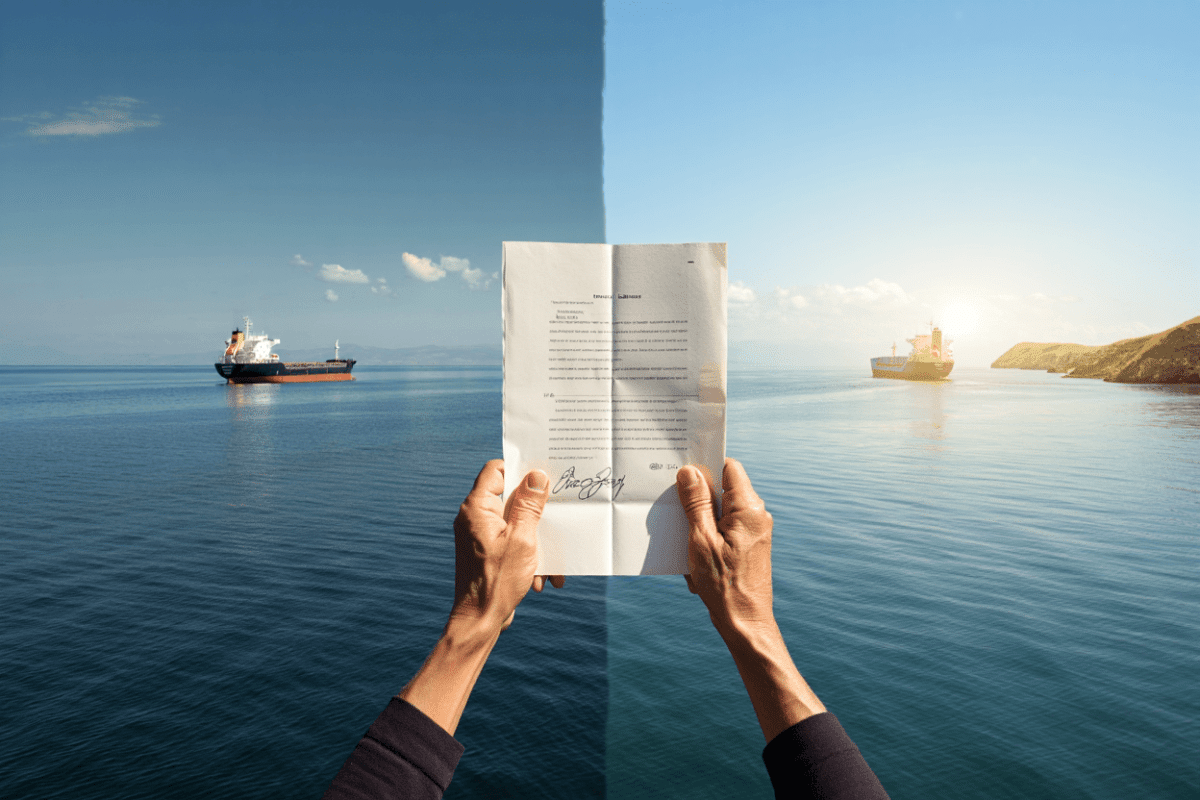
President Donald Trump signed a 14-point agreement with Iran on June 17, ending a four-month war that began with U.S. and Israeli strikes on February 28, and immediately lifting the U.S. naval blockade on Iranian ports and reopening the critical Strait of Hormuz to global shipping.
Signing the deal at the Palace of Versailles during the G7 summit, Trump acknowledged the agreement’s difficulty: “This wasn’t easy.” The memorandum of understanding extends a ceasefire for 60 days while negotiators work toward a final accord on Iran’s nuclear program, leaving thorniest issues for future talks.
The war, which lasted from February 28 to June 17, 2026, began when the United States and Israel launched coordinated strikes targeting Iran’s military bases, nuclear sites, and air defenses. According to NBC News, the conflict spread to neighboring countries and rocked global markets through disruptions to oil trade. The deal now aims to restore economic stability by reopening the Strait of Hormuz, through which roughly 20% of global crude oil and liquefied natural gas passes, according to Congress research.
What the Agreement Includes
The 14-point interim agreement calls for an “immediate and permanent termination of military operations on all fronts, including in Lebanon,” according to Al Jazeera. Iran has reaffirmed its commitment never to develop nuclear weapons—a pledge it made under President Barack Obama’s 2015 nuclear deal, which Trump withdrew from in 2018.
Under the terms, Iran agrees to dilute its stockpile of highly enriched uranium through a “mutually agreed upon” mechanism, though Trump said timing on this was not critical. The U.S. has pledged to lift all sanctions on Iran and will work with regional partners to establish a $300 billion redevelopment fund, though the U.S. says it will not directly contribute funds itself, according to NBC News.
U.S. Central Command confirmed that the blockade on Iran’s ports had been lifted. “Today, U.S. forces lifted the blockade on all maritime traffic entering and exiting Iranian ports and coastal areas, in accordance with the President’s direction,” CENTCOM stated on June 18. Analysts expect shipping through the Strait of Hormuz to recover to nearly 50% of prewar levels within 30 days, according to CNBC reporting on data from Kpler.
The 60-Day Negotiation Window
The agreement sets a 60-day deadline for reaching a permanent deal, with negotiations initially scheduled for Switzerland but postponed after Israel and Hezbollah clashes threatened to derail talks. Vice President JD Vance was to lead the U.S. negotiating team but did not depart as planned, citing logistical challenges, according to NBC News.
Major unresolved issues include Iran’s ballistic missile program, which was excluded from the interim agreement despite being a stated Trump war objective. When asked about it, Trump told reporters in France: “If Saudi Arabia and Qatar all have some, in relative proportion I think it’s OK” for Iran to possess such weapons, NBC News reported. Iran’s Supreme Leader Khamenei responded by saying it was Trump who sought the deal “out of desperation.”
The deal drew sharp criticism from Senate Republicans. Senator Bill Cassidy called it “the worst foreign policy blunder in decades,” telling NBC News: “Iran is left stronger; we are left weaker.” Analysts from Bloomberg Economics noted that both sides punted major disagreements to the 60-day window, with Iran gaining substantial concessions—including sanctions relief already agreed—while the U.S. leverage in future talks remains unclear.
Sources
- NBC News — Trump’s signing of the 14-point agreement, details of the deal, quotes from Trump and Vance, Republican criticism, and analyst commentary on unresolved issues
- Al Jazeera — Agreement’s call for immediate termination of military operations, including in Lebanon
- CNN — Confirmation of Trump signing the hard copy of the agreement
- Time Magazine — Full text of the 14-point agreement
- CBS News — Trump formally signing the U.S.-Iran deal and questions about implementation
- NPR — U.S. lifting the blockade on Iranian ports as part of the agreement
- France 24 — U.S. forces lifting Iran ports blockade after Trump signed the deal
- CNBC — Shipping recovery projections for the Strait of Hormuz and the 60-day negotiation period
- Congress.gov — Data on the Strait of Hormuz’s role in global energy trade
- Council on Foreign Relations — Strait of Hormuz reopening and its economic impact