Iran declared the Strait of Hormuz closed again on June 19, hours after the United States lifted its naval blockade of the critical waterway, citing Israel’s refusal to withdraw from Lebanon and continued American military presence in the region as violations of a ceasefire agreement signed two days earlier.
The Islamic Revolutionary Guard Corps announced the closure over maritime radio channels, stating that the strait would remain closed until Israel withdrew from Lebanon, the U.S. lifted its blockade completely, and American forces withdrew from the Persian Gulf and the region.
The reversal came just one day after the U.S. Central Command formally lifted its two-month blockade on Iranian ports on June 18, allowing oil tankers and commercial vessels to resume transit through the waterway for the first time since February. President Trump and Iranian President Masoud Pezeshkian had signed a memorandum of understanding on June 17 that was intended to end the conflict and reopen the strait.
The closure also derailed planned nuclear negotiations. The first round of U.S.-Iran talks scheduled for Switzerland on June 19 was called off, according to reporting from the New York Post. The U.S. has not publicly stated a reason for the postponement.
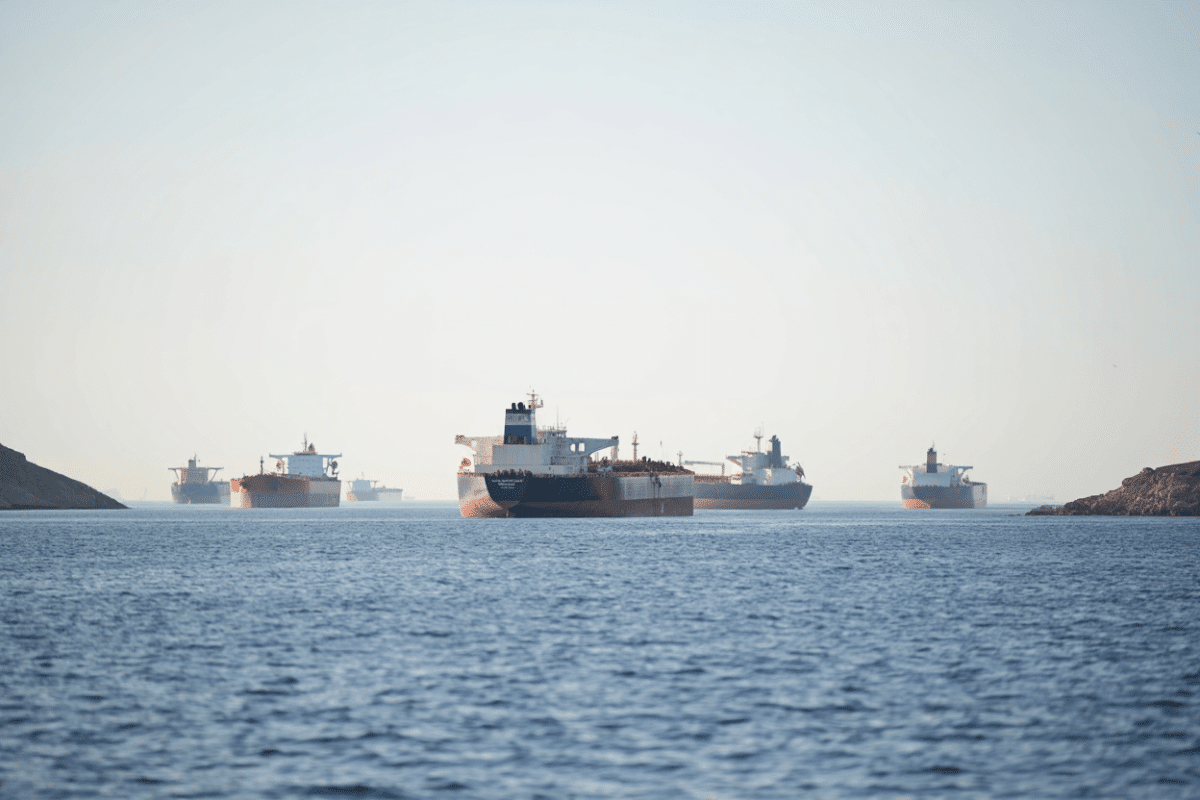
Even before Iran’s latest closure announcement, the resumption of shipping faced major obstacles. About 80 mines remain in the center of the strait, blocking the main shipping route and preventing normal traffic flow, according to the independent tanker owner trade body Intertanko. Phil Belcher, marine director at Intertanko, told The Guardian that clearing those mines would take considerable time, leaving the main traffic separation scheme “closed” and “dangerous.” Before the conflict, the strait accommodated about 130 ships per day and handled roughly 20 percent of global oil flows.
The mines were laid by Iran during the conflict to restrict vessel movement through the traffic separation scheme established between Iran and Oman since 1968. Nearly 600 vessels remain anchored in the Gulf, stranded since February, creating a massive backlog that experts say will take months to clear even if the ceasefire holds. Shipping industry observers warn that the narrow alternative route along the Omani coast poses collision and grounding risks, particularly given Iran’s reported signal jamming that has disabled ships’ navigation systems.
Iran has also signaled plans to charge maritime fees to vessels transiting the strait after a 60-day toll-free period mandated by the U.S.-Iran agreement. Such charges would violate international law, which guarantees free passage through the waterway. The shipping industry has warned that tolls could set a dangerous precedent for other international maritime chokepoints like the Strait of Malacca.
Sources
- New York Post — Iran’s closure announcement, statement from the Islamic Revolutionary Guard Corps, details of the ceasefire agreement, and postponement of nuclear talks
- The Guardian — Information about the 80 mines blocking the strait, tanker owner trade body assessment, shipping risks, and Iran’s planned maritime fees
- NBC News — U.S. Central Command’s announcement of the blockade lift on June 18
- NPR — Details of the blockade lift and the start of the 60-day ceasefire period