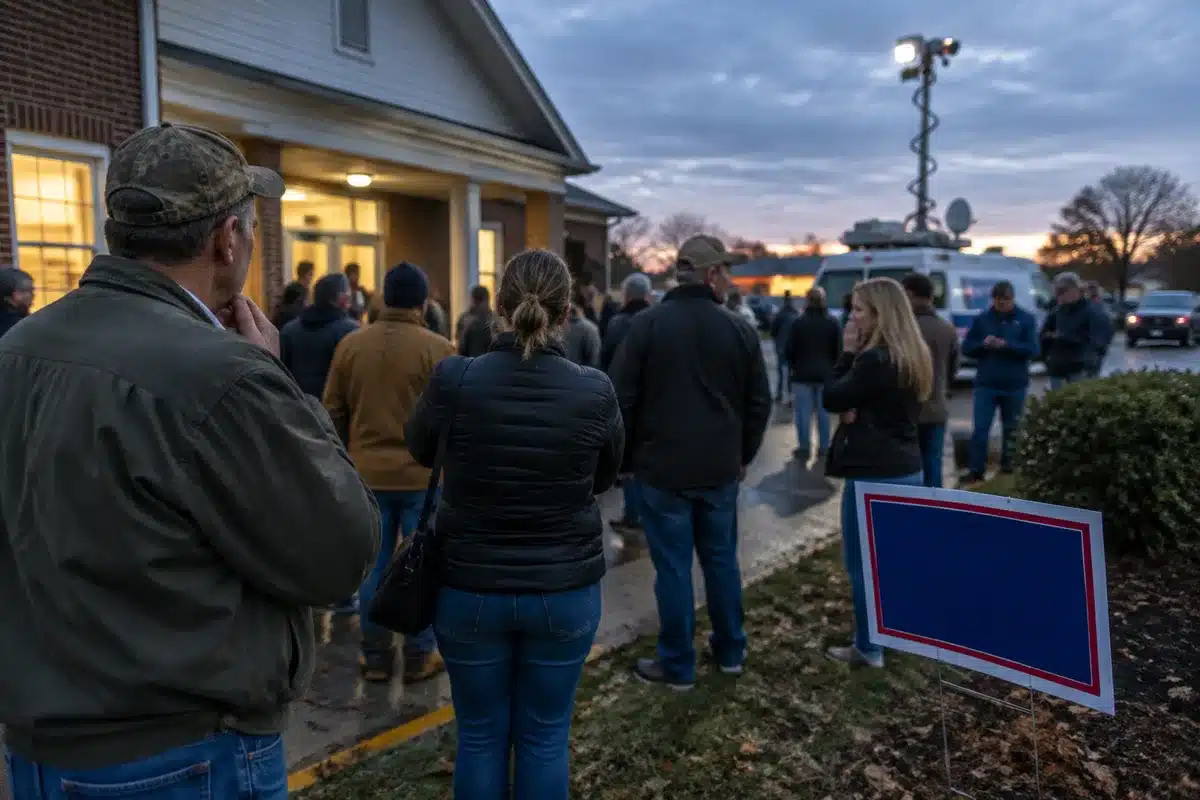
More than 255,000 North Carolinians will need to prove they’re working or face losing Medicaid coverage under new federal requirements set to take effect in about six months, according to reporting from May 2026. The work mandate, part of the One Big Beautiful Bill Act, requires most Medicaid expansion enrollees ages 19 to 64 to complete at least 80 hours per month of work, job training, volunteering, or school attendance to keep their health insurance.
The potential coverage losses in North Carolina reflect a national trend. The Kaiser Family Foundation reported on June 18, 2026, that Medicaid work requirement coverage losses account for over half—or 5.3 million—of the increase in the number of uninsured Americans. The Commonwealth Fund estimated that work requirements could trigger as many as 30,000 layoffs in North Carolina’s healthcare industry alone, with indirect job losses rippling through other sectors as workers lose income and reduce spending.
Research from Arkansas, which previously implemented work requirements, offers a cautionary precedent. When Arkansas briefly enforced the requirement in 2018, more than 18,000 people lost coverage within months. Researchers studying the outcome found that most of those who lost Medicaid were already working—but ran into “bureaucratic obstacles” with paperwork and reporting that made them lose their healthcare anyway, according to research cited by WRAL. A federal court eventually halted the policy.
Rural North Carolina faces particular vulnerability. Healthcare providers in sparsely populated regions already operate on thin margins, with Medicaid payments often falling short of care costs. Michelle Skipper, a nurse running a primary care practice in Scotland County, told WRAL: “Rural health gets disproportionately affected by cuts to Medicaid. And then especially those of us that try to have some independent practice … it makes it much more difficult to stay open.” Several rural hospitals in the state—in Sanford, Lumberton, and Marion—are considered at risk of shutting down due to the cuts, according to Public Citizen.
The North Carolina Healthcare Association warned that the work requirement provisions “represent significant reductions in Medicaid resources that rural hospitals rely on to sustain care.” State Commerce Secretary Lee Lilley acknowledged the broader economic stakes: “It’s really hard for us to recruit a business or help a business to grow in a community that does not have access to health care,” he told WRAL.
State lawmakers have begun exploring mitigation strategies. The federal government is providing $213 million through the Rural Health Transformation program to help offset the blow. Republican state Senator Jim Burgin proposed creating free community college tuition and expanding childcare aid to help people transition to better-paying jobs with employer-sponsored health insurance, though such efforts remain in early stages. State health officials say they are “anticipating successful implementation of work requirements in North Carolina,” but the timeline is tight and the stakes are high for the state’s most vulnerable residents.
Sources
- WRAL — Reported on 255,000 North Carolinians facing work requirements, the One Big Beautiful Bill Act, rural hospital closures, Commonwealth Fund analysis of potential layoffs, and Arkansas precedent
- Kaiser Family Foundation — Reported that Medicaid work requirement coverage losses account for 5.3 million of the increase in uninsured (June 18, 2026)
- NC Medicaid (.gov) — Confirmed 80-hour-per-month requirement and work/community engagement rules
- Commonwealth Fund — Provided analysis of 30,000 potential layoffs in North Carolina’s healthcare industry
- Public Health Watch — Cited Robert Wood Johnson Foundation analysis showing up to 345,600 could fall off Medicaid rolls in North Carolina