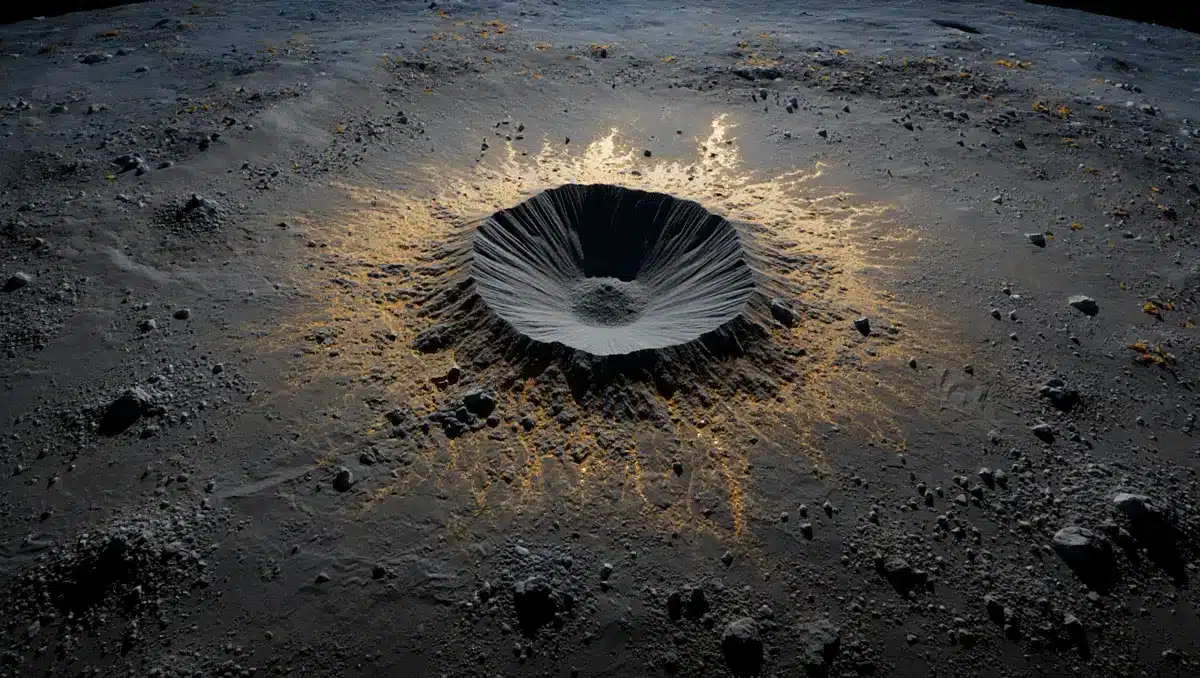
A SpaceX Falcon 9 upper stage struck the Moon on August 5 near Einstein Crater at approximately 2:35 a.m. EDT, traveling at 5,400 miles per hour, according to tracking by Project Pluto and predictions confirmed by NASA’s Centre for Near-Earth Object Studies.
The roughly five-ton upper stage, launched on January 15, 2025, as part of a mission carrying two lunar landers, was abandoned in a moon-crossing orbit after completing its primary task. Scientists had tracked the discarded rocket section for months as it drifted on an uncontrolled trajectory toward the lunar surface.
The impact created a crater more than 17 meters (56 feet) in diameter and sent up a plume of dust and rock fragments that scientists expect to measure in the coming days. Benjamin Fernando, a postdoctoral researcher at Los Alamos National Laboratory and lead author of a study on the impact, told ABC News the event would vaporize the booster, create a flash of light, and excavate fresh material from beneath the lunar surface.
Researchers view the collision as a rare scientific opportunity. Because scientists know the mass and speed of the Falcon 9 stage precisely, they can use the impact as a calibration event to test techniques for studying natural meteoroid impacts on the Moon, which occur without advance warning or known parameters.
“If we can measure the composition of that plume, that tells us something about the composition of that part of the moon,” Fernando said. The impact also provides data on the risks of lunar debris strikes as NASA plans to return astronauts to the Moon as early as 2028 and build a permanent lunar base.
A Precedent for Uncontrolled Rocket Debris
The Falcon 9 impact follows a similar event in March 2022, when a Chinese Long March 3C upper stage from the 2014 Chang’e 5-T1 mission struck the far side of the Moon near Hertzsprung crater. That impact created a double crater roughly 28 meters wide, according to NASA’s Lunar Reconnaissance Orbiter observations. The 2022 collision went unnoticed by space agencies at the time; researchers later determined the object was of Chinese origin after analyzing the impact signature.
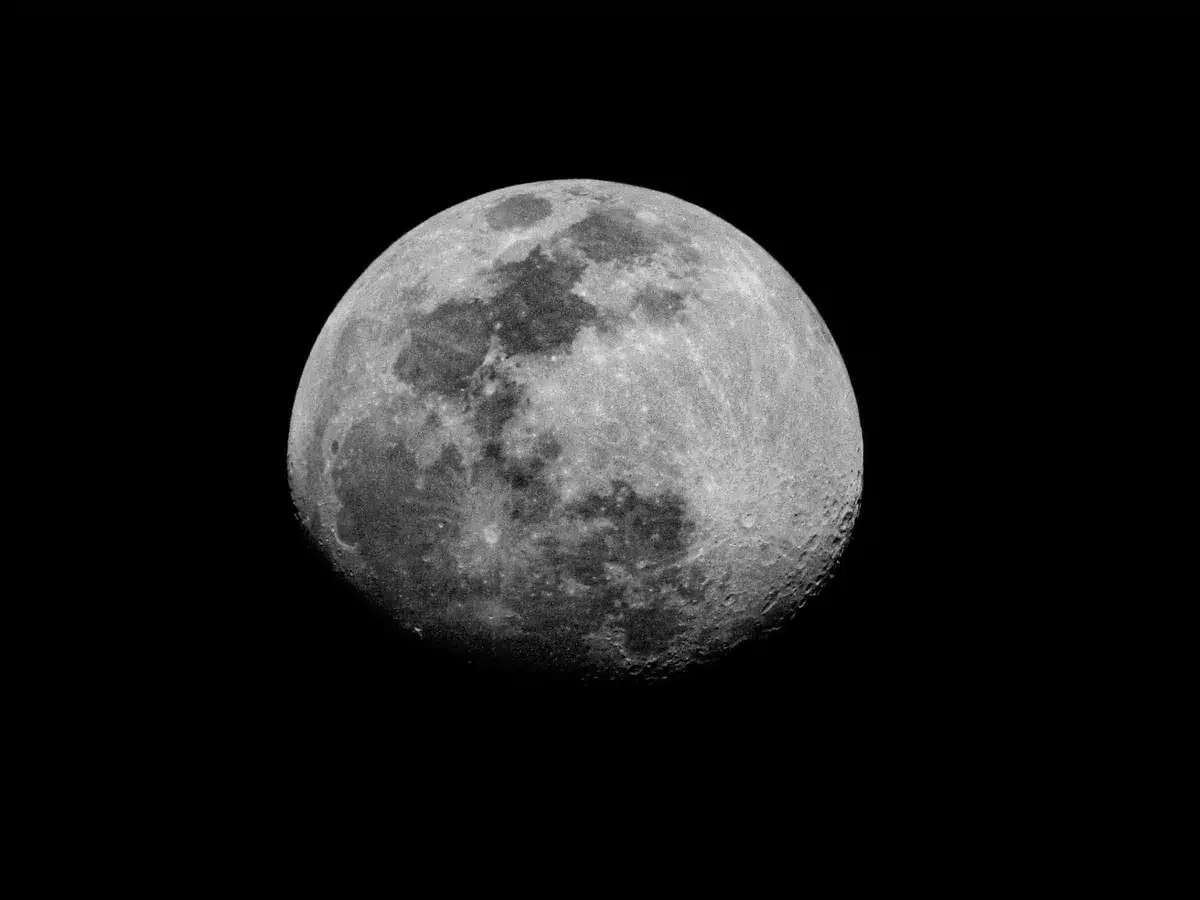
The SpaceX impact differs in that it occurs on the Moon’s illuminated side facing Earth, making it potentially observable by astronomers with telescopes. While the impact flash is expected to be too faint for the naked eye, amateur astronomers have been encouraged to attempt observations. The plume of ejected material may be visible through larger instruments, and professional observatories in the Americas, NASA’s Lunar Reconnaissance Orbiter, and South Korea’s Danuri probe are positioned to record the event.
Space Debris and Future Risk
The collision underscores a growing concern about orbital debris. According to the European Space Agency, around 54,000 objects larger than 10 centimeters currently orbit Earth, with humans having launched approximately 17,000 tonnes of material into space since the Space Age began in 1957. As more satellites and rocket stages are deployed, the risk of uncontrolled impacts on the Moon and Earth-orbiting objects increases.
Fernando emphasized the importance of understanding these risks as human activity on the Moon expands. “These sorts of things are going to happen more and more often,” he said. “As we have more astronauts on the lunar surface, more lunar infrastructure habitats, for example, we need to understand how much of a risk these impact events actually pose.”
Sources
- ABC News — confirmed the Falcon 9 upper stage impact on August 5 at 5,400 mph near Einstein Crater, the mass and size of the rocket section, and expert commentary from Benjamin Fernando at Los Alamos National Laboratory on scientific value and future lunar risks.
- BBC News — provided details on the impact prediction from NASA’s Centre for Near-Earth Object Studies, the expected crater size (17+ meters), plume dynamics, the January 15, 2025 launch date, and the precedent of the Chinese Long March 3C impact in March 2022 near Hertzsprung crater.
- NASA — confirmed the impact tracking via the Lunar Reconnaissance Orbiter, the double crater from the 2022 Long March 3C impact (28 meters wide), and observations of the 2026 event for scientific purposes.
- Space.com — documented the March 2022 Long March 3C Moon impact as part of the 2014 Chang’e 5-T1 mission.