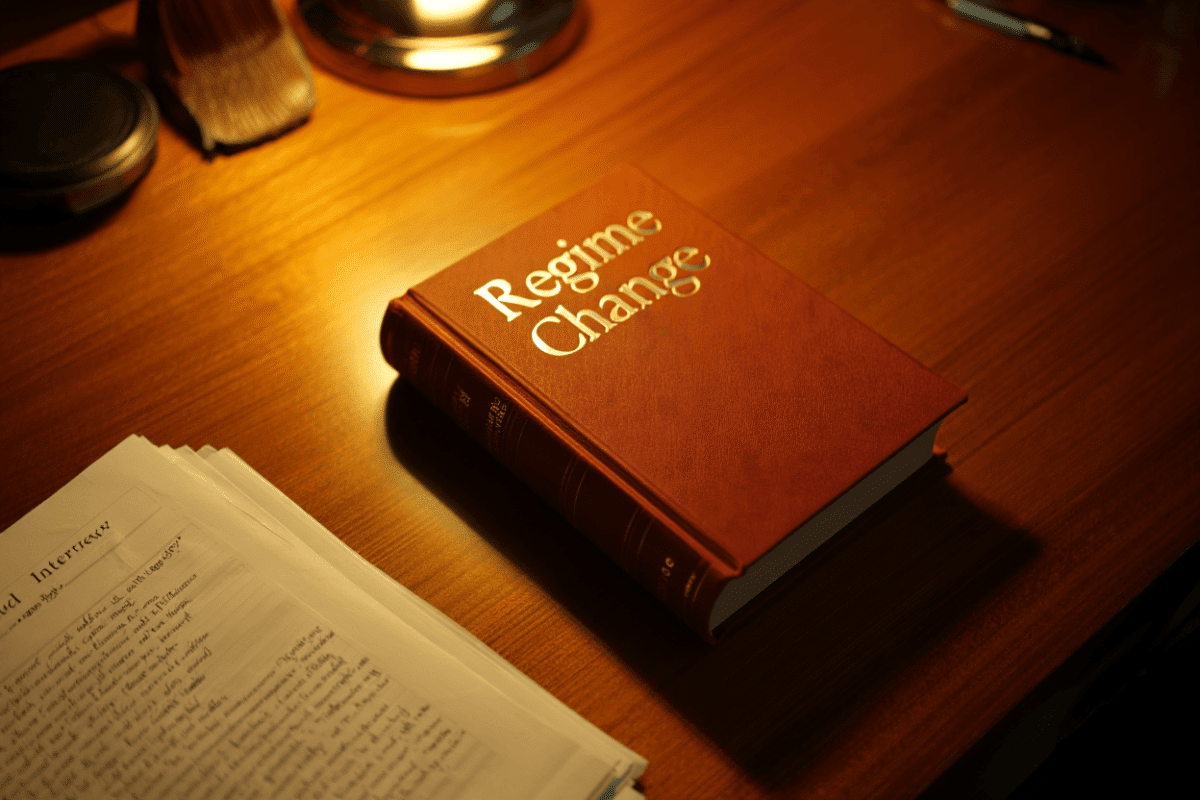
Maggie Haberman’s “Regime Change,” a new book co-authored with Jonathan Swan, reveals that President Donald Trump showed the New York Times reporters a document comparing his power to some of history’s most feared and treacherous leaders—including Mao, Stalin, Attila the Hun, Genghis Khan, Napoleon, and Hitler.
When Trump sat down with Haberman and Swan in March for an interview about his place in history and the power he wielded in his second term, he proudly produced the two-page document, which he said had come from “a historian” he met at a Gary Player golf event. The document argued that while each of those historical figures “however fearsome in his day, had no global reach. Their power was local. But (Trump’s) was not,” according to the book obtained by CNN ahead of its June 23 release.
Trump recited the names of the leaders, explaining how each fell short of his own power as US president, the authors write. When asked how these leaders maintained power, Trump replied: “through fear. Who would ever do a thing like that? Right?”
However, when Haberman and Swan tracked down the document’s author, they discovered he was not a historian at all, but rather the longtime caddy and personal confidant of golfer Gary Player. The caddy told the journalists he had first shared his assessment of Trump’s power with Player and later explained it directly to Trump over golf in Florida.
Trump later posted the document on Truth Social, still identifying the author as a “presidential historian,” in what one source told CNN may have been an attempt to get ahead of the book’s release.
“Regime Change: Inside the Imperial Presidency of Donald Trump” covers the first 14 months of Trump’s second term, a period the authors describe as unconstrained by the constraints that defined his first presidency. Based on more than 1,000 interviews conducted over a three-year period, the book provides behind-the-scenes details drawn from direct quotes attributed to speakers, those who heard them directly, or from contemporaneous notes, recordings, or transcripts, according to Haberman and Swan.
Beyond the historical figures comparison, the book reveals Trump’s hot-and-cold feelings toward Israeli Prime Minister Benjamin Netanyahu during deliberations over going to war with Iran. Haberman and Swan write that Trump initially told an Israel skeptic in the early months of his administration that he didn’t want “any part” of a Netanyahu war with Iran. In another instance, Trump called Netanyahu a “con man,” which the authors note is one of the worst insults in Trump’s lexicon.
The book also captures Trump’s skepticism toward Ukraine and its leader, Volodymyr Zelensky, as Russia’s war continued into Trump’s second year despite his campaign promise to resolve it within 24 hours. After a confrontation in the Oval Office between Trump, Zelensky, and Vice President JD Vance last February, Trump told an advisor the exchange was “Better than The Apprentice,” according to the authors.
The anecdote of the document is one of many striking scenes in the book, which also includes Trump personally gluing gold decorations to the Oval Office fireplace mantel with superglue, his vulgar criticism of Commerce Secretary Howard Lutnick over tariff policy, and his campaign to torment Federal Reserve Chairman Jerome Powell over the renovation of the Federal Reserve building.
The book’s release comes amid White House concerns about the extent of leaked material Haberman and Swan may have obtained, including concerns about access to Situation Room recordings from classified meetings, according to reporting by Axios. The journalists have indicated they conducted extensive interviews with current and former administration officials to construct their account of Trump’s second term.
Sources
- CNN — detailed reporting on the document comparing Trump to historical figures and the caddy revelation
- The New York Times — reporting on Trump’s Iran war decision and Netanyahu relations from the book
- Wikipedia — publication date of June 23, 2026 for “Regime Change”
- Simon & Schuster — book description and pricing information
- Axios — reporting on White House concerns about leaked Situation Room materials