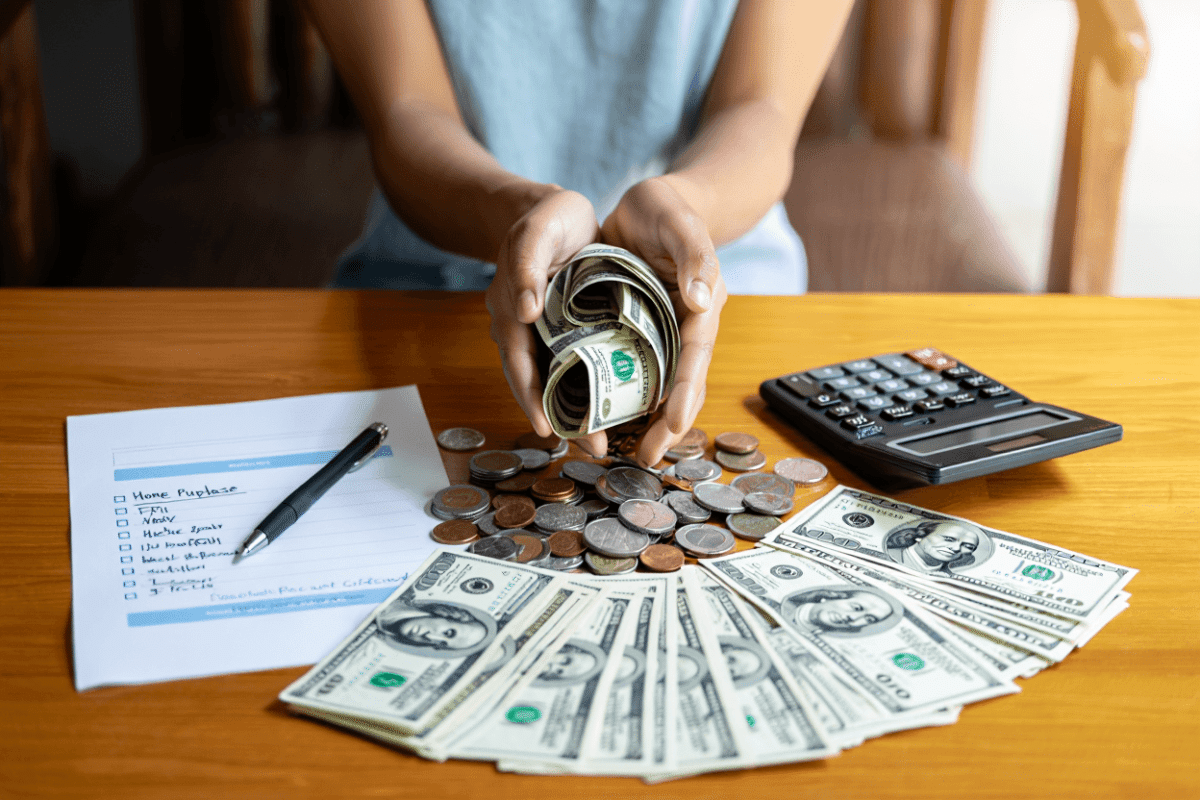
Saving money for a home requires a clear plan, consistent habits, and realistic expectations about down payments and closing costs. The median first-time homebuyer puts down just 9% of the purchase price, not the often-cited 20%, according to 2024 data from the National Association of Realtors, meaning you don’t need to wait years to build a massive down payment before becoming a homeowner.
Start by setting a clear savings target and timeline. Research down payment options in your area and add closing costs (typically 2-5% of the purchase price) plus a small cushion for initial repairs and emergencies. Divide your total by the number of months until your target purchase date to create a monthly savings goal. For a $350,000 home with a 9% down payment, you’d need roughly $31,500 for the down payment alone, plus $7,000 to $17,500 for closing costs, according to AmeriSave.
Automation is the most effective savings strategy. Set up a recurring transfer to a dedicated home savings account on payday so money moves before you spend it. Even $150 transferred twice monthly grows to over $3,600 in a year. As you receive raises or bonuses, increase the transfer amount. The Consumer Financial Protection Bureau emphasizes that consistent contributions, no matter how small, build momentum faster than sporadic large deposits.
Cut variable expenses with strategic swaps. Meal planning reduces takeout costs, buying staples in bulk lowers grocery bills, and exploring public transit or carpooling saves on transportation. These small changes free up cash without requiring dramatic lifestyle overhauls. Audit subscriptions and recurring charges quarterly—streaming services, apps, and memberships often represent “silent” costs that add up quickly. Redirect freed-up dollars straight to your home fund.
Tackle high-interest debt before saving aggressively for a down payment. Credit card interest can derail savings progress and hurt your debt-to-income ratio, which lenders examine during mortgage underwriting. Using the avalanche method (paying highest interest first) or snowball method (smallest balance first for psychological wins) frees up monthly cash for your down payment fund.
Understand your down payment options. Conventional loans allow as little as 3% down, though you’ll pay private mortgage insurance (PMI) of roughly 0.3% to 1.5% annually until you reach 20% equity. FHA loans require just 3.5% down with a credit score of 580 or higher. VA loans and USDA loans offer zero-down financing for eligible borrowers. Lower down payments mean higher monthly payments, but buying sooner often outweighs waiting years to save 20%, especially as home values appreciate and rent increases.
Building an Emergency Fund Alongside Home Savings
Don’t deplete all your savings for a down payment. The Consumer Financial Protection Bureau recommends maintaining 3 to 6 months of living expenses in an emergency fund. This protects you from unexpected home repairs, job loss, or medical bills that could derail homeownership if you’re financially overextended.
A high-yield savings account or money market fund works well for short-term home savings (within 3 years), offering safety and liquidity without investment risk. If your timeline extends beyond 3 years, you might allocate some funds to bonds or diversified investments for potentially higher returns, though this requires comfort with market volatility. Fidelity suggests consulting a financial professional to determine the right asset allocation for your specific timeline and risk tolerance.
Maximize Overlooked Resources
Treat unexpected cash as a direct contribution to your home fund. Tax refunds, rebates, gift cards, marketplace sales, and expense reimbursements can accelerate progress significantly. Set a personal rule that at least 80% of found money goes to savings. Over a year, these small wins create meaningful boosts without changing your core lifestyle.
Research down payment assistance programs in your area. Many first-time buyers don’t explore city, county, or state programs that offer grants, second mortgages with deferred payments, or forgivable loans. According to AmeriSave, 49% of buyers struggling with down payments hadn’t investigated these programs. While eligibility requirements and assistance amounts vary by location, these programs exist specifically to help qualified buyers reach homeownership sooner.
Keep your goal visible and celebrate milestones. Name your savings account “Down Payment – 2026” (or your target year), use a budgeting app to track progress, and celebrate every $1,000 saved. Visibility maintains motivation and makes the goal feel tangible rather than distant. Remember that saving money for a home won’t happen overnight, but careful planning, consistent deposits, and strategic spending cuts make homeownership achievable sooner than many expect.
Sources
- AmeriSave — median down payment data for first-time and repeat buyers, down payment assistance program information, closing costs breakdown, and down payment strategy frameworks
- Fidelity — down payment percentage guidance, savings timeline recommendations, and investment allocation suggestions for different purchase timelines
- Leader Bank — practical monthly savings tips, automation strategies, and account selection guidance
- Consumer Financial Protection Bureau — emergency fund building strategies, savings habits, automatic transfer methods, and cash flow management
- National Association of Realtors — 2024 median down payment data for first-time homebuyers (9%) and repeat buyers (23%)