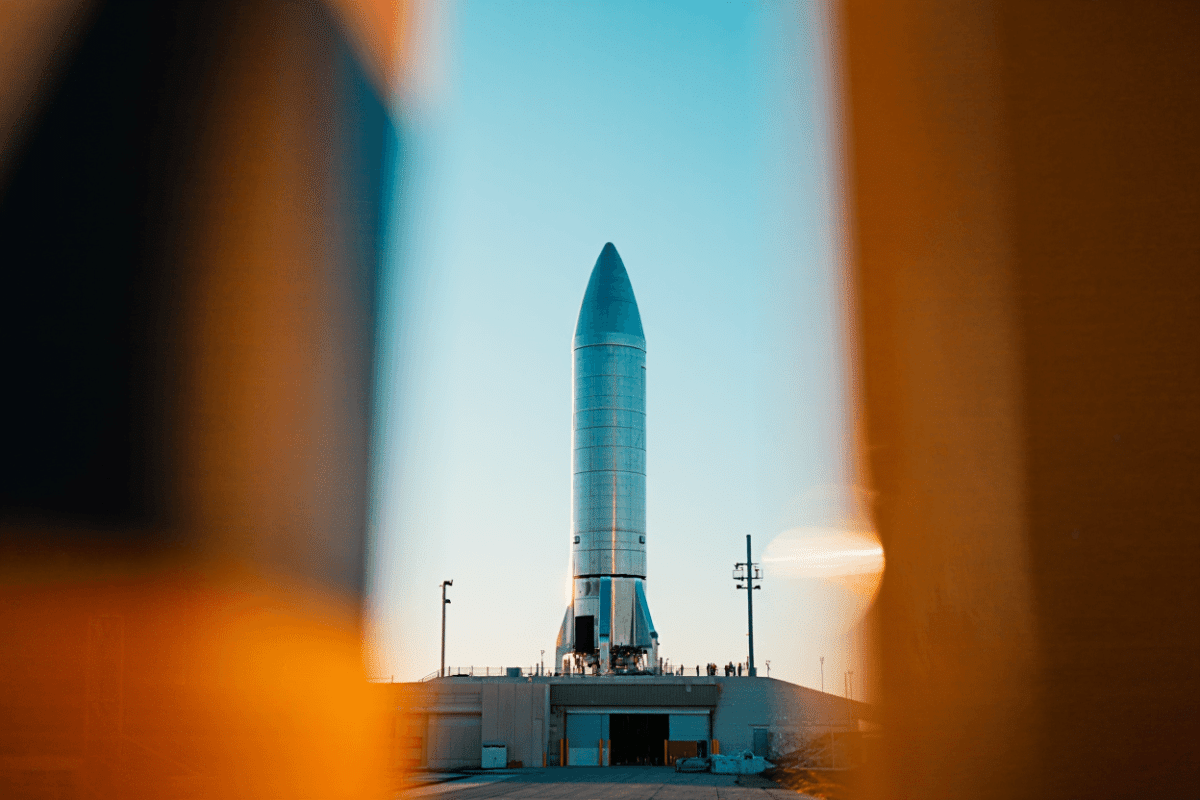
SpaceX is preparing to launch the first Starship Version 3 megarocket tonight from Starbase in Boca Chica, Texas, marking a pivotal moment in commercial spaceflight. The upgraded vehicle, designated Flight 12, is targeting liftoff no earlier than 6:30 PM EDT during a 90-minute launch window. This debut introduces significant engineering upgrades — including the new Raptor 3 engines and an expanded hull — that promise roughly 18 million pounds of thrust, approximately 10 percent more than the previous V2 generation. The mission comes amid SpaceX’s accelerated IPO timeline, with the company targeting a June 12 Nasdaq debut under ticker symbol SPCX.
🔥 Quick Facts
- Starship V3 targets 6:30 PM EDT launch tonight with a 90-minute window from Starbase, Texas
- 18 million pounds of thrust represents a 10% boost over V2 generation
- New Raptor 3 engines feature sleeker, more reliable design across both Super Heavy and Ship
- SpaceX IPO filing reveals $1.25 trillion valuation with June 12, 2026 Nasdaq target
- Elon Musk net worth tops $839 billion as Forbes billionaires leader in 2026
The Starship V3 Breakthrough: What’s New Tonight
Flight 12 represents the first operational test of Starship’s third generation, a vehicle engineered with incremental improvements learned across 11 prior test flights. The V3’s hull is approximately 5 feet (1.5 meters) taller than its predecessor, allowing greater propellant capacity and revised internal architecture. This expanded design follows SpaceX’s iterative development philosophy—each flight serves as a testbed for systems refinement rather than a dramatic redesign.
The Raptor 3 engine sits at the heart of V3’s performance gains. This advancement features improved combustion efficiency, reduced manufacturing complexity, and enhanced reliability margins. Both the Super Heavy booster and Starship upper stage are equipped with the new powerplant, making tonight’s launch a simultaneous validation of engine performance across the entire vehicle stack.
Flight 12 Mission Profile and Technical Context
Tonight’s test flight will follow a similar profile to previous orbital attempts: ascent to apogee, upper stage separation, boost-back burn, and landing recovery attempts. SpaceX has refined these sequences through 11 prior missions, gradually pushing confidence intervals higher. The V3 generation brings enhanced thermal protection systems, enabling more aggressive reentry profiles and potentially better cargo preservation during future operational flights.
By introducing nine engines on the Ship (upper stage) and 33 engines on the Super Heavy booster, as designed in the V3 architecture, SpaceX is approaching the vehicle configuration necessary for moon and Mars missions. NASA’s Artemis lunar program depends on Starship’s Human Landing System (HLS) variant, which uses a modified V3 airframe with dock and ladder systems. Tonight’s flight, while uncrewed, generates data directly applicable to those critical missions. You can see how recent developments in Musk’s valuation underscore the financial stakes of this launch.
Technical Specifications and Vehicle Comparison
The V3 generation introduces measurable improvements across multiple dimensions:
| Specification | V2 (Previous) | V3 (Tonight) |
| Total Thrust | ~16.4M lbf | ~18M lbf |
| Hull Height | 120 meters | Approx 121.5m |
| Primary Engine | Raptor 2 | Raptor 3 |
| Ship (Upper Stage) | 6 Engines | 9 Engines |
| Booster Engines | 33 Raptor 2 | 33 Raptor 3 |
| Thermal Protection | Updated shields | Enhanced tiles |
These improvements signal SpaceX’s confidence in pushing toward rapid reusability—a core mission objective. Each increment in efficiency translates directly to operational cost reduction, which matters immensely for the economics of lunar missions and eventual Mars transport.
Implications for Commercial Spaceflight and Industry Impact
Tonight’s launch carries weight beyond single-mission metrics. The global space industry watches Starship development as a bellwether for reusable, super-heavy-lift capability. Competitors including Blue Origin and international agencies acknowledge that Starship’s success reframes feasibility timelines for deep-space operations.
From a business perspective, SpaceX’s IPO filing values the company at $1.25 trillion, making it one of the highest-valued aerospace entities. The timing of Flight 12—just weeks before the June 12 Nasdaq debut—creates a narrative momentum. Successful orbital tests feed investor confidence, though SpaceX itself carries significant operational and regulatory complexities documented in its IPO prospectus. The company is seeking to raise approximately $75 billion, potentially pushing Elon Musk’s net worth toward $1 trillion territory.
What Success Looks Like Tonight
For Flight 12, SpaceX defines success across several milestones: successful booster separation, upper stage apogee achievement, controlled descent sequences, and test abort systems activation. A full booster catch and stable Starship splashdown would represent incremental technical validation. Even partial successes generate engineering data for Flight 13 and beyond.
The V3 fleet’s retirement timeline remains fluid. SpaceX has retired all V2 test articles after Flight 11, signaling full commitment to the V3 architecture. This suggests multiple V3 test flights are planned throughout 2026, with operational readiness targeted for 2027-2028 lunar missions.
“Starship is the most powerful rocket ever built, and tonight we’re testing the next evolutionary step. Every flight teaches us something critical about reusability at scale.”
— SpaceX Mission Updates, Official Statement, May 21, 2026
Why Does Starship V3 Matter for Your Watch List?
If you follow space exploration, defense contracting, or long-term technology trends, tonight’s launch marks a watershed moment. Starship V3 simultaneously represents engineering progress, corporate valuation risks, and geopolitical implications. A sustained cadence of successful V3 flights validates SpaceX’s full-reusability thesis, which has profound consequences for launch costs, orbital infrastructure, and humanity’s capacity for sustained space presence.
The IPO narrative intersects with technical performance. Investors scrutinize not just the company’s financials, but its operational execution risk. Flight 12 becomes a data point in that larger story—and its outcome will ripple through equity markets and industry sentiment for weeks to come.
Sources
- Scientific American – SpaceX Starship V3 launch timeline and investigation status
- Space.com – Starship Flight 12 live updates and technical specifications
- Ars Technica – Fueling test completion and V3 thrust specifications
- Reuters – SpaceX IPO acceleration and June 12 Nasdaq targeting
- Forbes Billionaires Index – Elon Musk wealth and net worth rankings
- Business Insider / Investing.com – SPCX ticker assignment and IPO details