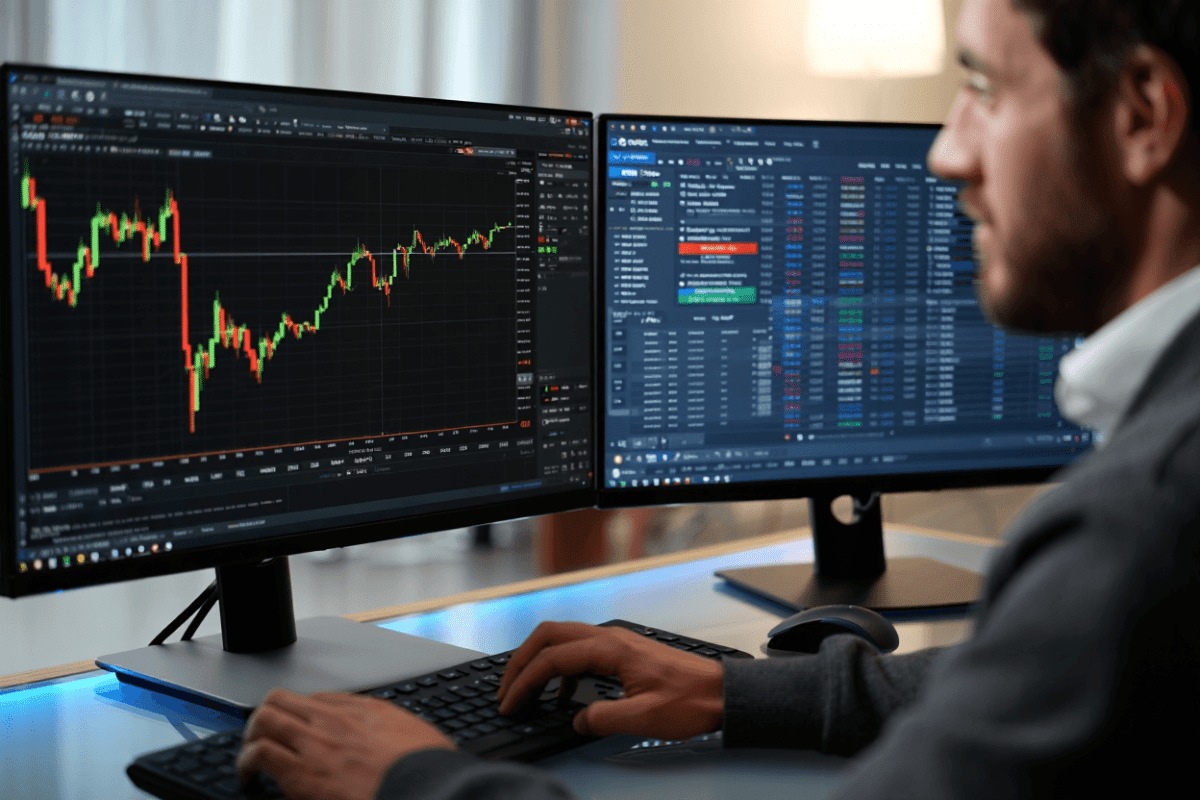
OKX announced a comprehensive trading fee adjustment effective May 19, 2026, restructuring its fee tier grouping system across Spot and Futures markets. The adjustment affects token pair Group 1 in the first phase, with broader changes to Groups 2 and 3 rolling out by June 1, 2026. This move strengthens OKX’s competitive position in the US crypto market as the platform scales compliance infrastructure following its $504 million settlement with US authorities in February 2025.
🔥 Quick Facts
- Effective Date: May 19, 2026 at 11:00–13:00 UTC+8 for Group 1
- Fee Structure Change: Fee-on-trading-pair basis replaced previous account-wide rates
- Global Rollout: June 1, 2026 deadline for Groups 2 and 3 adjustments
- US Market Position: 38 state licenses obtained; zero security breaches with AA CertiK rating
- Spot & Futures: Base rates remain 0.08% maker / 0.10% taker with new tiered discounts
Fee Restructuring Strategy and Market Rationale
OKX’s fee adjustment signals a deliberate pivot toward granular fee customization rather than user-account-wide rates. The token pair grouping structure allows OKX to offer differentiated pricing for high-volume pairs (like BTC/USDT or ETH/USDT) versus emerging or lower-volume assets. This approach demonstrates exchange maturity—similar to tactics used by Binance and Kraken in competitive US markets.
The adjustment follows OKX’s January 2026 introduction of fee-group mechanisms for US traders specifically. By refining the structure three times in five months, OKX shows responsiveness to market volatility and user feedback. Premium pairs in Group 1 typically attract institutional traders and market makers, who value tighter bid-ask spreads and lower execution costs.
US Market Context: Regulatory Compliance Driving Fee Innovation
OKX’s fee restructuring must be understood within its post-settlement trajectory. In February 2025, the exchange agreed to pay $504 million to US authorities following a DOJ investigation into AML and KYC failures. The platform had processed $1 trillion+ in transactions from US customers without proper licensing—a violation OKX has since corrected.
Today, OKX operates under money transmitter licenses in 38 US states (excluding New York, which requires BitLicense status). The May 2026 fee updates represent part of broader compliance-first operations. By implementing transparent, pair-level fee tiers, OKX demonstrates regulatory alignment—clearly documenting how fees vary, reducing opportunities for regulatory criticism about hidden costs or anti-consumer practices.
Fee Structure Comparison and Competitive Positioning
| Exchange | Spot Maker Fee (Base) | Spot Taker Fee (Base) | US Availability |
| OKX | 0.08% | 0.10% | 38 states (licensed) |
| Binance US | 0.10% | 0.10% | All states (restricted from federal level) |
| Kraken | -0.02% to 0.25% | 0.05% to 0.40% | All states (FinCEN registered) |
| Coinbase | 0.40% | 0.60% | All US states |
| Kraken Pro | 0.16% to 0.26% | 0.26% to 0.40% | US-wide (professional) |
OKX’s 0.08% base maker fee ranks among the most competitive in the US market. Kraken Pro offers negative maker fees (rebates) for high-VIP tiers, but OKX’s entry tier undercuts Binance US by 20% and Coinbase by 80% for maker orders. This fee structure advantage is particularly relevant for large traders and market makers who perform high-volume operations.
“Our US fee framework updates reflect our commitment to transparency and competitiveness. By introducing pair-level fee grouping, we’re enabling both active traders and casual investors to understand exactly what they’re paying, while maintaining industry-leading rates for high-volume participants.”
— OKX Support Center, US Trading Policy Updates, May 2026
Long-Term Implications: US Expansion and Regulatory Trust
OKX’s fee restructuring sits within a 12-month narrative of aggressive US market expansion. The platform launched in the US in April 2025 following its settlement. By May 2026, achieving 38-state licensing and implementing granular fee tiers shows sustained momentum. Industry analysts note that exchange licensing diversity and transparent fee structures are becoming regulatory quality signals.
The June 1 deadline for Groups 2 and 3 adjustments suggests OKX is phasing changes carefully—avoiding market disruption while ensuring compliance teams can monitor user behavior in response to Group 1 changes. This measured rollout contrasts with sudden, platform-wide fee cuts that can confuse traders or signal financial stress.
What Does This Mean for US Crypto Traders?
For US-based crypto investors, OKX’s adjustments present a lower-cost alternative to Coinbase Pro or standard Binance US tiers. However, OKX remains unavailable in New York and a handful of restrictive jurisdictions due to BitLicense limitations. Trading pair grouping means emerging tokens may cost more to trade than major pairs—a fair but important distinction for altcoin traders.
VIP tiers on OKX are based on 30-day trading volume and asset holdings. Users trading $5+ million USD monthly qualify for VIP tiers with negative maker fees (rebates). For institutional participants and proprietary traders, OKX’s fee structure now rivals traditional finance infrastructure.
Will Other Exchanges Follow OKX’s Pair-Level Fee Model?
The crypto exchange market in 2026 is characterized by race-to-the-bottom fee competition reminiscent of stock brokerage wars in the 2010s. As detailed in recent analyses of market momentum, institutional capital is flowing into crypto ecosystems at unprecedented rates. Pair-level fee differentiation allows exchanges to subsidize volume on premium assets while recovering margin on niche tokens—a mathematically sustainable model.
Binance, Bybit, and MEXC may adopt similar tiered structures by late 2026. The strategic advantage is temporary; once competitors match pricing, differentiation will shift to liquidity depth, regulatory reputation, and product innovation.
Looking Ahead: What Traders Should Monitor
On the surface, fee adjustments seem technical. But OKX’s timing and messaging reveal strategic intent. The May 19 deadline allows OKX to gather two weeks of trading data before the June 1 global update. This phased approach protects risk management teams from sudden liquidity shifts.
US crypto traders should monitor three metrics: (1) actual execution spreads after the fee change (fees don’t equal true cost—slippage matters); (2) OKX’s user growth in Q2 2026 (does lower fees drive adoption?); and (3) regulatory developments affecting exchange licensing (will NY BitLicense rules soften in 2026?). These are the real signals of OKX’s market trajectory.
Sources
- OKX Official Announcements – May 2026 trading updates and fee structure changes
- OKX Support Center – US Fee Framework documentation (updated January 2026)
- CoinLedger, Traders Union, Investopedia – Comparative exchange fee data and compliance status
- Daily Coin & CoinTribune – 2026 exchange competitive analysis and fee structures
- Crypto Compliance & Regulatory Sources – DOJ settlement details and state licensing status