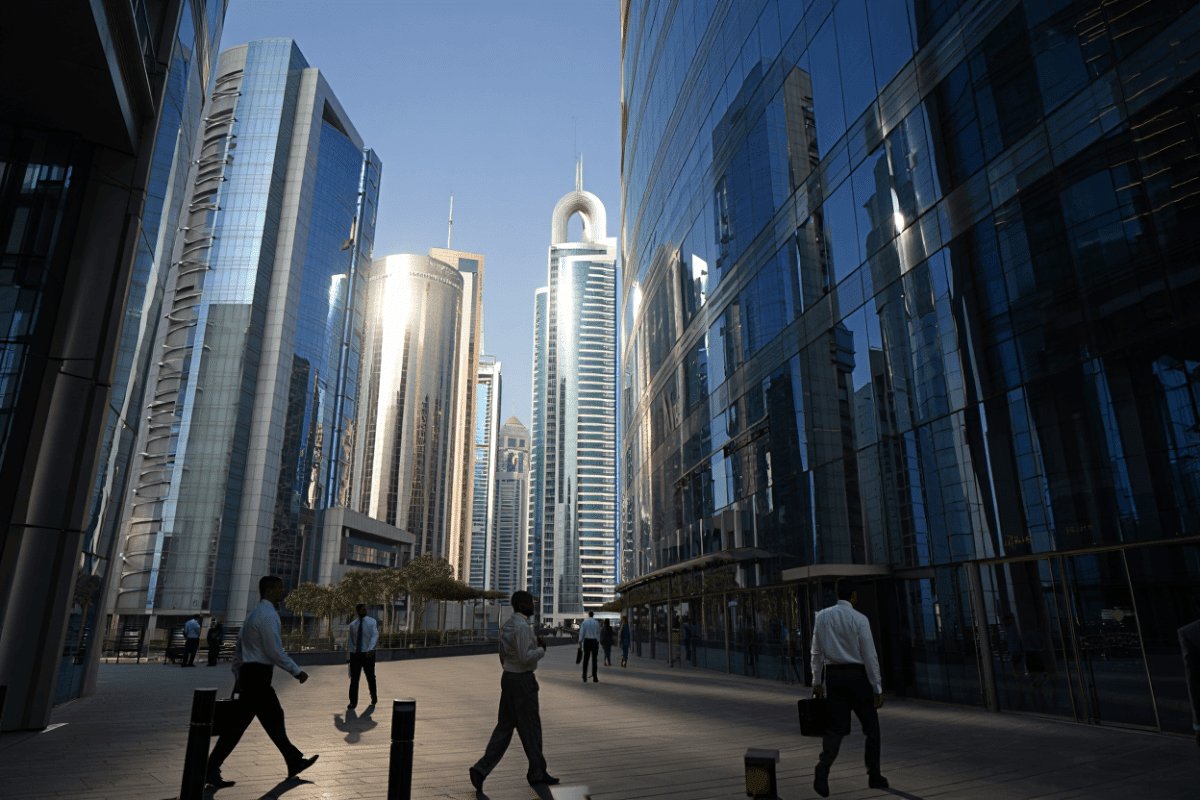
The Dubai International Financial Centre (DIFC) elevates the emirate to 7th place globally in the Global Financial Centres Index (GFCI), marking its highest-ever ranking in the index’s history. This achievement reflects a 4-place improvement from its previous standing and positions Dubai alongside established financial capitals including London, New York City, and Singapore. The ranking, released in March 2026, signals a notable rebound in business confidence and competitive positioning within the global financial ecosystem.
🔥 Quick Facts
- Dubai ranks 7th globally in the Global Financial Centres Index, its best position ever
- 775 new companies were attracted to DIFC in Q1 2026, a 62% year-on-year increase
- Banking sector ranks 14th globally, while FinTech entered the top 5 cities worldwide
- DIFC regional dominance confirmed with Dubai leading the Middle East, Africa, and South Asia region
Dubai’s Path to Global Top 10 Recognition
Dubai’s ascent to 7th place represents more than a single ranking achievement. The GFCI, compiled by Z/Yen and Long Finance, evaluates 120 financial centres across multiple dimensions including competitiveness, regulatory frameworks, infrastructure, and business environment quality. Dubai’s four-position jump within one reporting cycle reflects sustained investment in financial infrastructure and regulatory modernization by DIFC leadership.
Prior to this milestone, Dubai ranked 12th in March 2025, indicating an accelerated competitive trajectory over just 12 months. This progression mirrors broader UAE economic momentum, with the country poised for 5% GDP expansion in 2026, exceeding global averages of 3.1%. The ranking validates Dubai’s long-term strategic positioning as a bridge between Eastern and Western financial markets, leveraging geopolitical diversification and regulatory advantages.
DIFC Performance Surge and Sector-Specific Strengths
DIFC data released in April 2026 demonstrates operational momentum supporting the index ranking. The centre onboarded 775 new companies during the first quarter, the highest quarterly intake, driven by expanding global wealth and regional integration initiatives. This inflow reflects confidence from international financial institutions, family offices, and technology-enabled service providers seeking regional hubs for Middle East, Africa, and South Asia (MEASA) operations. Recent expansion announcements from global firms signal sustained appetite for regional financial infrastructure.
Sector-level specialization contributes to Dubai’s overall ranking strength. FinTech positioning advanced notably, with Dubai now classified among the top 5 global cities for financial technology innovation. Government and Regulatory frameworks and Professional Services also entered global top-10 rankings, indicating successful regulatory modernization and talent attraction. Banking, while ranked 14th globally, reflects mature competition from established financial centres like London and New York, yet remains a strategic strength within the regional context.
Global Competitiveness Metrics and Comparative Position
Understanding Dubai’s ranking requires context on competing financial centres. The GFCI 39 (March 2026) top 10 positions reveal:
New York maintains the #1 position with established market depth and regulatory sophistication. London follows closely, bolstered by Brexit-era adaptations and fintech innovation. Singapore, Shanghai, and Tokyo dominate Asia-Pacific rankings, reflecting demographics and manufacturing export networks. San Francisco and Zurich represent specialized niches—technology finance and wealth management respectively. Dubai’s emergence at #7 positions the emirate ahead of established centres like Los Angeles, Paris, and Amsterdam, signifying regional competitive advantage consolidation.
| Global Rank | Financial Centre | GFCI Score | Region |
| 1 | New York | 745 | North America |
| 2 | London | 744 | Europe |
| 3 | Singapore | 743 | Asia-Pacific |
| 4 | Shanghai | 743 | Asia-Pacific |
| 5 | Tokyo | 757 | Asia-Pacific |
| 6 | San Francisco | 744 | North America |
| 7 | Dubai | 742 | MEASA |
Dubai’s 742 score reflects measurable distance from top-ranked hubs but demonstrates competitive parity with 6th-ranked San Francisco (744) and shows trajectory toward top-5 positioning. The index methodology weights nine dimensions: business environment, human capital, infrastructure, financial sector development, competitiveness, regulatory frameworks, market access, and reputation—Dubai improved notably in each area.
“DIFC’s strong performance during the first quarter of 2026 reflects the rising international confidence in Dubai and the UAE economy. The 7th global ranking is a testament to our commitment to creating an enabling ecosystem for global financial firms and reinforces Dubai’s position as a preferred destination for financial services innovation.”
— Essa Kazim, Governor of DIFC, April 2026
Regional Dominance and Emerging Market Leadership
Dubai maintains unchallenged regional prominence within the MEASA bloc. Abu Dhabi ranks second regionally but significantly lower globally, positioning Dubai as the definitive financial hub for Middle Eastern cross-border transactions, wealth management, and emerging market access. This regional monopoly strengthens as multinational firms rationalize regional offices into single hubs, with Dubai’s English common-law framework, tax-neutral status, and operational efficiency outweighing alternatives. Global infrastructure and technology investments mirror the regional hub strategy that Dubai exemplifies.
The city also benefits from intra-regional capital flows. Estimated 23 million high-net-worth individuals (HNWIs) hold $87 trillion USD globally, with growing concentrations in the Gulf Cooperation Council (GCC). Dubai’s competitive positioning for cryptocurrency, fintech, and alternative assets attracts younger demographic wealth segments underserved by traditional banking infrastructure elsewhere in the region.
What’s Next: Targeting Top-4 Ambition
DIFC leadership explicitly targets top-4 global positioning by the end of this decade, requiring sustained acceleration in competitive dimensions. Current momentum suggests viability; however, displacement of Tokyo, Singapore, or Shanghai demands breakthrough innovations in areas where these centres have entrenched advantages: generational wealth infrastructure (Tokyo), Asian fintech integration (Singapore), and domestic capital market depth (Shanghai).
Key catalysts for continued ranking ascent include: expanded regulatory capacity for cryptocurrency and blockchain; heightened talent retention through human capital initiatives; infrastructure expansion supporting hybrid work models and AI-driven trading operations; and deepened partnerships with legacy financial hubs rather than zero-sum competition. The fact that DIFC exceeded Q1 2026 company onboarding targets by significant margins suggests operational infrastructure can support accelerated growth without quality degradation, a historical challenge for emerging financial centres.
Can Dubai Sustain This Momentum Long-Term?
Questions remain whether current ranking reflects structural institutional strength or cyclical capital flows responding to geopolitical diversification. Brexit-era shifts benefited Dubai as firms hedged European exposure; Middle East stability concerns could reverse if regional dynamics shift. Conversely, the UAE’s 5% expected GDP growth in 2026 outpacing global averages, combined with USD-pegged currency stability and transparent regulatory frameworks, suggests durable competitive advantages beyond temporary arbitrage. The critical test arrives in 2027-2028 when potential market downturns reveal whether new DIFC entrants maintain operations or consolidate back to established centres.
Sources
- PR Newswire / DIFC – Official announcement of 7th global ranking in GFCI and four-place improvement
- Khaleej Times – Sector-level analysis of Banking (14th), FinTech (top 5 global), and regulatory achievements
- Long Finance Z/Yen – GFCI 39 (March 2026) methodology and comparative global rankings
- Yahoo Finance / DIFC Reports – Q1 2026 company onboarding data showing 775 new firms, 62% YoY growth
- Gulf News – Business confidence trends and regional wealth concentration metrics
- Arabian Business – Institutional analysis of DIFC competitiveness trajectory versus regional peers