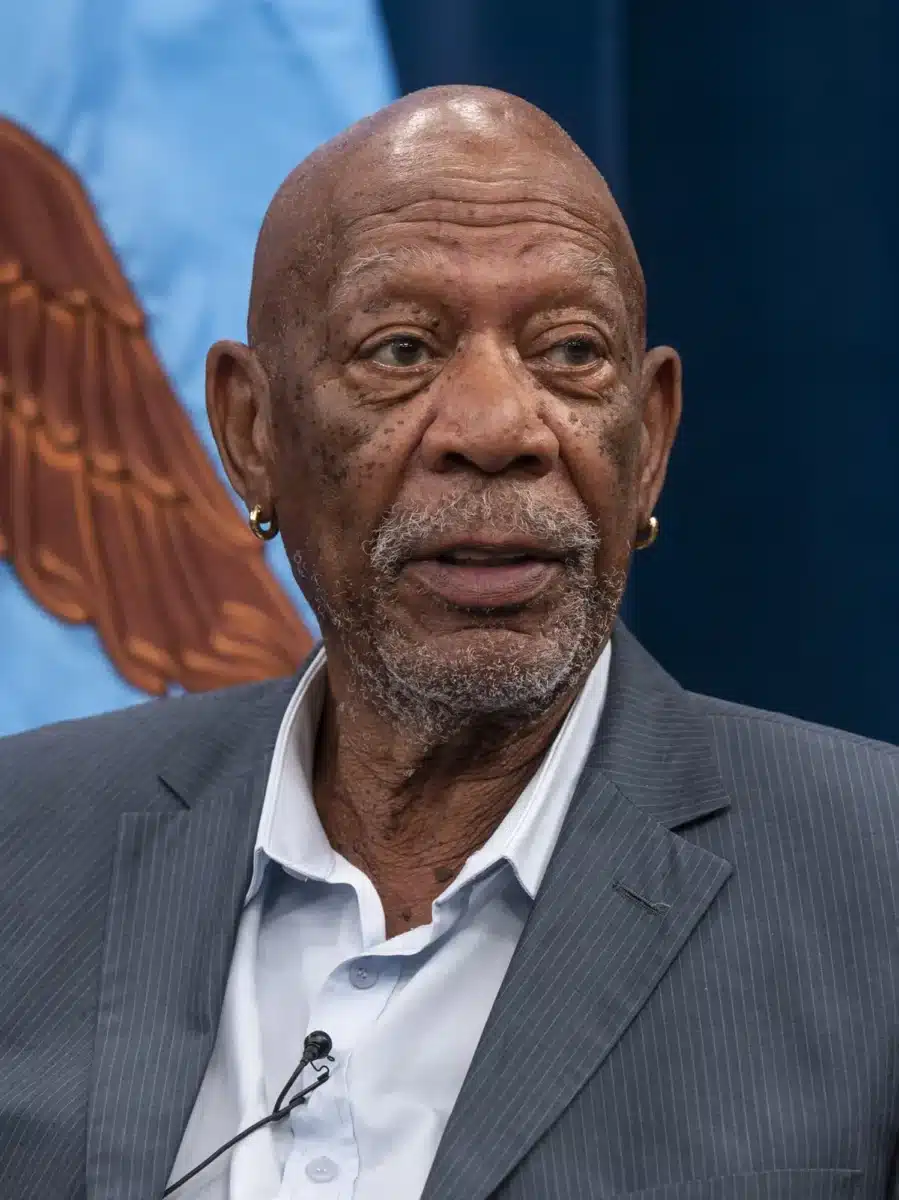
OpenAI CEO Sam Altman announced on May 20, 2026, that the company will provide $2 million in API token credits to every startup in Y Combinator’s current batch in exchange for a small equity stake. The unprecedented offer represents OpenAI’s commitment to fueling the next generation of AI-powered startups while deepening its ties to the world’s most prolific startup accelerator. Unlike traditional venture funding, startups receive immediate access to computing resources rather than cash.
🔥 Quick Facts
- $2 million in OpenAI tokens offered to each Y Combinator startup
- Announced May 20, 2026 during Y Combinator event
- Equity stake received by OpenAI in exchange for token allocation
- Covers entire current batch of Y Combinator founders
- Transforms startup funding model from cash-based to compute-based investment
Why This Matters for Y Combinator and OpenAI’s Strategic Ecosystem
The Y Combinator partnership marks a pivotal moment in how major AI companies provide capital to early-stage founders. Historically, Y Combinator invests $500,000 in equity at a standard 7% stake plus incremental equity for future funding rounds. This new OpenAI initiative sits alongside that traditional model, adding a critical resource: computational power.
Sam Altman’s history with Y Combinator runs deep. He was president of the accelerator from 2014 to 2019 before leaving to focus full-time on OpenAI. That institutional knowledge now bridges the two organizations. According to multiple sources, Altman stated during the announcement that “I’m excited to see what will happen” when startups have immediate access to cutting-edge AI infrastructure without financial friction. The token allocation effectively removes one of the largest barriers for AI-native startups: the cost of computing resources and API usage.
This approach differs fundamentally from traditional venture investment patterns, which focus on cash reserves. Instead, startups can begin building and iterating immediately using OpenAI’s GPT-4 models, Vision capabilities, and custom fine-tuning features. The compute-for-equity model signals OpenAI’s confidence in token-native businesses and reinforces its position as infrastructure for the AI startup ecosystem.
Token Economics: How $2M in Credits Translates to Startup Value
The valuation of the $2 million token package requires context. OpenAI’s API pricing varies by model and feature: GPT-4 Turbo costs $0.01 per 1,000 input tokens and $0.03 per 1,000 output tokens, while developers using GPT-4o run at lower rates due to efficiency gains. At these rates, $2 million provides substantial runway for companies conducting heavy model experimentation during their first 12-24 months.
What makes the offer particularly valuable is the absence of usage restrictions. Startups can allocate credits across multiple OpenAI services: API calls, batch processing, fine-tuning datasets, and Assistants. This flexibility contrasts with some limited-scope grant programs that cap usage to specific features. For a team building an AI search engine, customer service chatbot, or content analysis tool, $2 million in flexible credits equals 6-18 months of compute budget, depending on scale.
| Funding Model Comparison | Y Combinator Standard | OpenAI Token Offer |
| Type | Cash Investment | Computing Credits |
| Amount | $500,000 | $2,000,000 |
| Equity Received | 7% + incremental | To be determined |
| Primary Benefit | Operational runway | Infrastructure access |
| Flexibility | General use | OpenAI-specific tools |
| Competition Risk | Low | Lock-in to OpenAI stack |
Critics have raised a notable concern: the token offer creates dependent relationships. Startups that build entirely on OpenAI infrastructure become reliant on its pricing, API stability, and product decisions. This mirrors historical dynamics where developers anchored to one platform face switching costs later. However, supporters counter that the immediate access to state-of-the-art models justifies the trade-off during early product-market fit phases.
“I am excited to see what will happen when every YC founder has access to OpenAI’s best models without worrying about compute costs in the early stage.”
— Sam Altman, CEO and Co-founder, OpenAI, May 20, 2026
Strategic Implications: OpenAI’s Play for Early-Stage Market Control
This initiative reveals OpenAI’s broader strategic intention: become the default infrastructure for AI startups at scale. By distributing $2 million tokens per startup across an entire Y Combinator cohort, OpenAI signals that it is playing long-term platform control alongside venture investing. According to recent industry analysis, Y Combinator’s Spring 2026 batch includes approximately 100+ startups, meaning OpenAI’s token commitment exceeds $200 million in aggregate compute access.
The move also precedes what observers describe as intensifying competition from other AI infrastructure providers. Anthropic, Google, and other organizations have launched their own startup grant programs, but none have offered this magnitude of resources to a single cohort. OpenAI’s strategy leverages two advantages: brand dominance in commercial AI and Sam Altman’s direct relationship with Y Combinator’s network.
From Y Combinator’s perspective, the partnership strengthens its position as the gateway to AI innovation. Founders joining the accelerator now have immediate access to premium tools historically reserved for well-funded teams. This reduces friction in the critical first 6 months and increases founder velocity—a key metric Y Combinator tracks for batch success rates.
What This Reveals About AI Startup Economics in 2026
The token-for-equity model underscores how computing power has become the primary currency for AI companies. Unlike web startups 15 years ago—which needed servers and deployment infrastructure—modern AI startups face exponential model training and inference costs. A small team can spend $50,000+ monthly on API calls alone while developing a prototype. OpenAI’s offer collapses that barrier temporarily, allowing founders to optimize product-market fit before scaling infrastructure spend.
Looking ahead, this precedent may inspire similar offers from other foundation model providers. The standardization of “compute as venture capital” could reshape how the startup ecosystem values resources. Founders will increasingly evaluate accelerators not just on mentorship and network, but on direct access to cutting-edge models and discounted compute.
What Happens When Y Combinator Startups Grow Beyond $2M in Token Credits?
A critical open question remains: How will pricing work once startups exhaust their token allocation? OpenAI has not publicly specified whether graduating from the program includes preferential pricing, extended credit periods, or standard commercial rates. Industry precedent suggests startups will transition to OpenAI’s standard enterprise contracts with volume discounts tied to usage. Early-stage startups that achieve Series A or Series B funding will face real infrastructure costs, potentially representing their largest operational expense after salaries.
This transition point will test whether the token investment translates into long-term customer relationships or serves primarily as a customer acquisition lever. Companies that build AI-native products and grow rapidly may discover that OpenAI has effectively provided discounted access that paid for itself through early adoption lock-in and later commercial contracts.
Sources
- The Information — Sam Altman announcement of $2 million token offer to Y Combinator founders (May 20, 2026)
- TechCrunch — Coverage of the “mic drop” offer and its market implications (May 20, 2026)
- Business Insider — Analysis of token-for-equity model and startup funding transformation (May 20, 2026)
- The Economic Times — Reporting on OpenAI’s strategic move and token allocation structure (May 20, 2026)
- OpenAI Official — Y Combinator Startup Program information and token eligibility