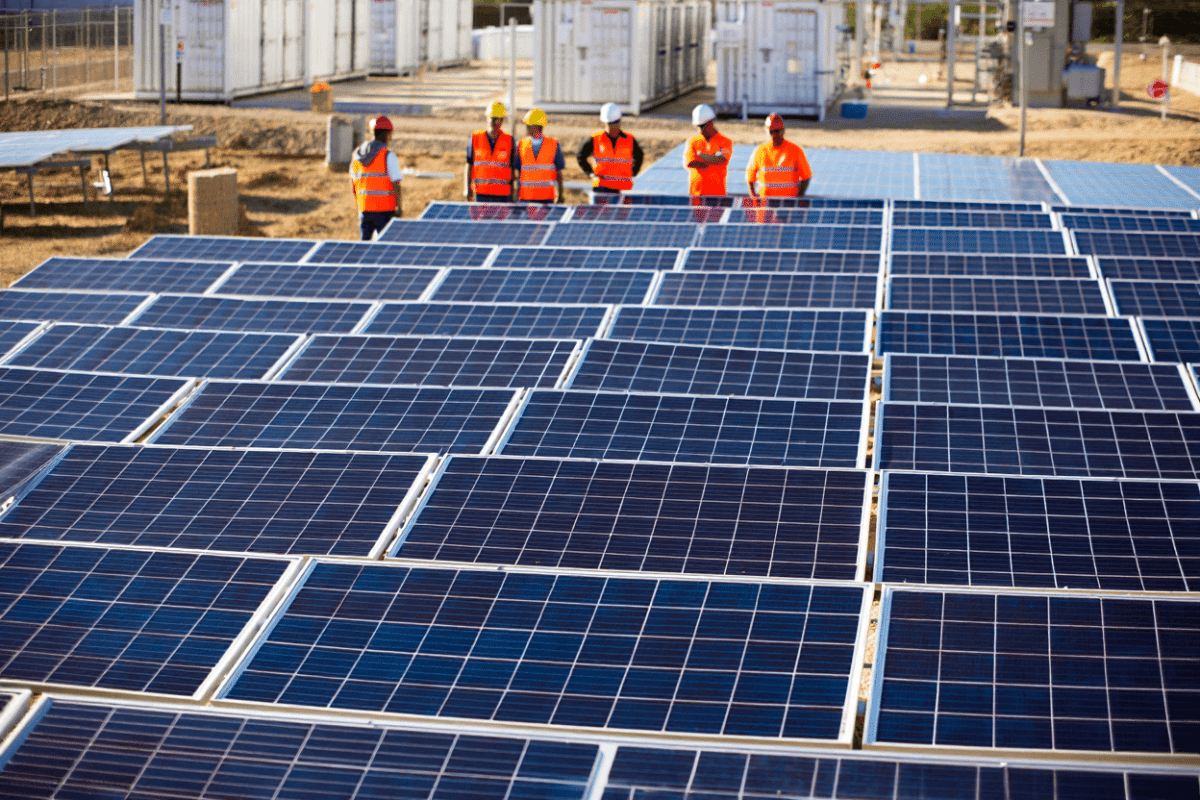
Solar energy and battery storage dominated U.S. grid capacity additions in the first quarter of 2026, accounting for 91% of all new power added to the grid, according to a new report from the Solar Energy Industries Association and Wood Mackenzie released June 10. The combined dominance reflects accelerating electricity demand, particularly from artificial intelligence and data centers, as well as the speed and cost advantages these technologies offer.
The United States installed 7.8 gigawatts of new solar capacity in Q1 2026, surpassing 6 million cumulative installations nationwide. Despite a 27% year-over-year decline from Q1 2025—reflecting seasonal variation and permitting challenges—solar remained the single largest source of new generation on the grid.
Energy storage installations reached 9.7 gigawatt-hours in Q1 2026, marking the strongest first quarter in the sector’s history and a 32% increase year-over-year. The pairing of solar and storage reflects utilities and corporate buyers prioritizing resilience and energy security amid global supply disruptions affecting fossil fuel prices and turbine availability.
“In a world of fluctuating fuel prices, energy buyers have made it clear that they want the security, low cost, and speed of solar and storage, which commanded a massive 91% of all new capacity built in Q1,” said Darren Van’t Hof, interim president and CEO of the Solar Energy Industries Association. “Yet, as power demand skyrockets, political and regulatory attacks are slowing down the exact resources we rely on.”
Contracts for utility-scale solar rose 15% year-over-year, fueled by technology companies securing power to meet growing AI-driven electricity demand. Texas continued its dominance as the fastest-growing solar market, while Ohio surged into the top three states for deployment. States won by President Trump accounted for 74% of all solar capacity installed in the first quarter, with Texas, Florida, Ohio, Indiana, Michigan, Arizona, and Mississippi ranking among the top ten.
Headwinds Despite Momentum
The SEIA report noted that 457 solar and storage projects totaling 100 gigawatts have permits pending and are vulnerable to politically motivated delays or cancellations. Michelle Davis, head of solar at Wood Mackenzie, warned that permitting bottlenecks continue to serve as near-term headwinds, despite record electricity demand. “We are forecasting that US solar additions will be flat over the next five years despite the need for more power supply in the US,” Davis said.
The residential solar market is expected to decline 21% in 2026, though forecasts show the sector will see consistent growth between 2027 and 2031. In Q1, a record 45% of residential solar installations were paired with battery energy storage, indicating a structural shift toward hybrid systems.
Solar’s dominance in Q1 2026 extends a multi-year trend. In 2025, solar accounted for 54% of all new electricity-generating capacity added to the U.S. grid, with solar and storage combined making up 79% of new capacity installed. The sector’s sustained leadership reflects the dramatic cost reductions in both technologies over the past decade and the grid’s urgent need for new generation to meet surging demand.
Sources
- Solar Energy Industries Association (SEIA) — Q1 2026 grid capacity figures, solar installations, energy storage records, permitting pipeline, and residential market forecasts
- Wood Mackenzie — Co-author of the U.S. Solar Market Insight Q2 2026 report; analyst commentary on permitting bottlenecks and near-term forecasts
- SEIA 2025 Year in Review — Historical context on solar’s 54% share of 2025 capacity additions and combined solar-storage 79% share