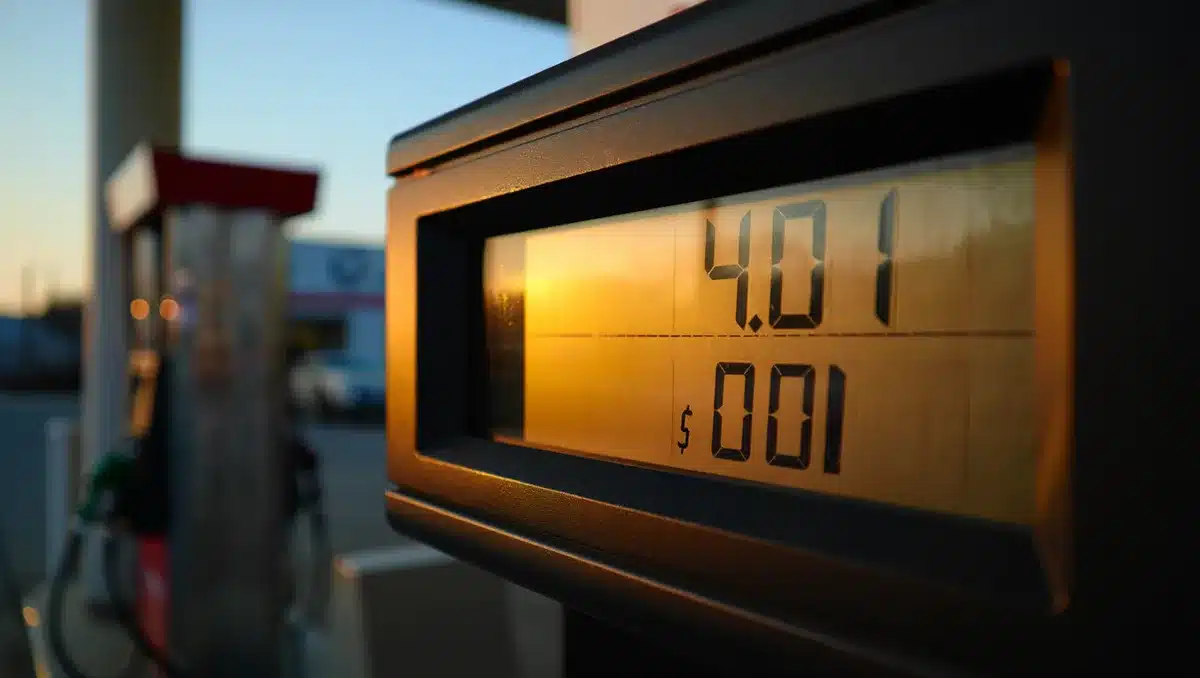
The national average for a gallon of regular gasoline fell to $4.01 on August 9, down 8 cents over the past week, even as crude oil prices climbed on Monday, marking a rare divergence between the two commodities that reveals the tight state of global refining markets.
Brent crude futures rose 1.5% to $84.7 a barrel on August 10, while US West Texas Intermediate crude gained above $79, according to market data. Yet despite crude’s climb, gas prices continued their downward trajectory, a dynamic that contradicts the typical tight correlation between oil and gasoline.
The decoupling owes to exceptionally elevated refining margins, which have surged to record levels due to supply disruptions. According to CNBC, the refining market remains very tight because of the Ukraine and Iran wars, keeping gas prices elevated even as crude prices fluctuate. Reuters reported that gasoline and diesel inventories sit near multi-year lows, while refining margins have hit record levels and refinery throughput remains constrained.
Refining margins—the profit refiners make by turning crude into finished fuel—now account for 21% of the cost of each gallon of gas as of March 2026, up from a 15% average between 2016 and 2025, according to Barron’s. A Brent 3:2:1 crack spread, a measure of refiner profitability, reached $42 for the week of March 27, up $27 from the start of that year, according to the Federal Reserve Bank of Dallas.

Why Refining Capacity Matters
When refining capacity tightens, gasoline prices remain sticky even if crude costs fall. The reason: refineries cannot quickly boost output to meet demand, so margins widen to ration supply. This dynamic has persisted even as crude oil prices have retreated from their peaks earlier in the year. Yahoo Finance noted that the normalisation of crude markets should keep refining margins elevated even if crude prices continue to fall.
The Energy Information Administration expects lower crude oil prices will contribute to retail gasoline prices falling by about 41 cents per gallon in the third quarter of 2026 compared with the second quarter. However, the persistence of high refining margins suggests that decline may come more slowly than historical precedent would predict.
For consumers, the $4.01 price represents a modest relief after months of elevated gas costs tied to Middle East tensions. The week-to-week decline of 8 cents signals that downward pressure on crude is beginning to translate to the pump, even if the refining bottleneck limits how quickly prices can fall.
Sources
- CBS News — confirmed national average gas price of $4.01 per gallon on August 9, 2026
- Cobb County Courier — reported national gas price fell 8 cents over the past week to $4.01
- Economic Times — reported Brent crude futures rose 1.5% to $84.7 a barrel on August 10
- CNBC — explained tight refining market due to Ukraine and Iran wars, keeping gas prices elevated despite crude fluctuations
- Reuters — reported gasoline inventories near multi-year lows and refining margins at record levels
- Barron’s — noted refining costs now represent 21% of gas price (as of March 2026), up from 15% historical average
- Federal Reserve Bank of Dallas — reported Brent 3:2:1 crack spread reached $42 for week of March 27, 2026
- Yahoo Finance — noted refining margins expected to remain elevated even if crude prices continue falling
- Energy Information Administration — forecasted 41-cent gasoline price decline in Q3 2026 versus Q2