Nvidia reported first-quarter fiscal 2027 revenue of $81.62 billion on May 20, 2026, exceeding analyst expectations of $78.8 billion by 3.5 percent. The 85.2% year-on-year revenue surge marks the chipmaker’s sustained dominance in artificial intelligence infrastructure. Simultaneously, Samsung Electronics averted a potentially devastating strike after reaching a last-minute tentative wage deal with its labor union, eliminating supply-chain disruption fears for the global memory chip market. Together, these developments propelled markets higher, reflecting investor confidence in the durability of AI infrastructure demand and manufacturing stability.
🔥 Quick Facts
- Nvidia Q1 revenue reached $81.62 billion, up 85% year-on-year and beating forecasts by 3.5%
- Data center revenue hit $75.2 billion with 92% year-over-year growth, driving overall results
- Samsung labor union suspended planned strike after reaching tentative deal on May 20, 2026
- Market optimism on both AI infrastructure demand and supply chain stability lifted tech stocks higher
- Nvidia increased dividend by 25x and announced $80 billion share repurchase program
The AI Hardware Supercycle Enters New Phase
Nvidia’s results demonstrate the unsaturated nature of artificial intelligence infrastructure investment globally. The 92% data center growth rate—the company’s largest division—signals sustained, accelerating demand from cloud providers, hyperscalers, and enterprise AI deployments. This growth trajectory defies historical semiconductor patterns, where demand cycles typically moderate as markets reach saturation.
The $81.62 billion quarter represents a doubling of trailing twelve-month revenue growth compared to the prior year period. Gross margins expanded to 75.1%, indicating pricing power and manufacturing efficiency at scale. Unlike commodity chip cycles, where margin compression follows scale, Nvidia’s margin durability suggests buyers view its products as strategic infrastructure rather than interchangeable silicon.
Data Center Dominance and Forward Guidance Reshape Markets
Data center accounted for approximately 92% of Nvidia’s quarterly revenue, with the division growing faster than the overall company. This concentration creates both opportunity and concentration risk: opportunity because AI infrastructure buildout remains early-stage in most markets, but risk because enterprise AI adoption could slow if deployment returns disappoint. Recent analysis on AI chip demand trajectory suggests the addressable market can sustain 80%+ growth rates for at least 2-3 more years.
Nvidia issued next-quarter guidance of $91 billion in expected revenue, exceeding Wall Street estimates. This guidance—delivered after a record-breaking quarter—signals executive confidence in sustained customer demand. Cloud infrastructure builders remain in mid-cycle capex expansion, with no visible pullback signals yet emerging from Amazon, Microsoft, Google, or Meta cloud divisions.
Samsung’s Last-Minute Deal Removes Global Supply Risk
| Critical Factor | Details |
| Strike Duration Threat | Could affect memory chip production for weeks or months |
| Timing Risk | Averted just hours before scheduled walkout on May 20 |
| Samsung Market Share | Largest DRAM and NAND memory chip supplier, 20%+ market share |
| Union Scope | 45,000+ Samsung Electronics workers involved in negotiations |
| Agreement Terms | Tentative wage deal reached; union to put deal to member vote |
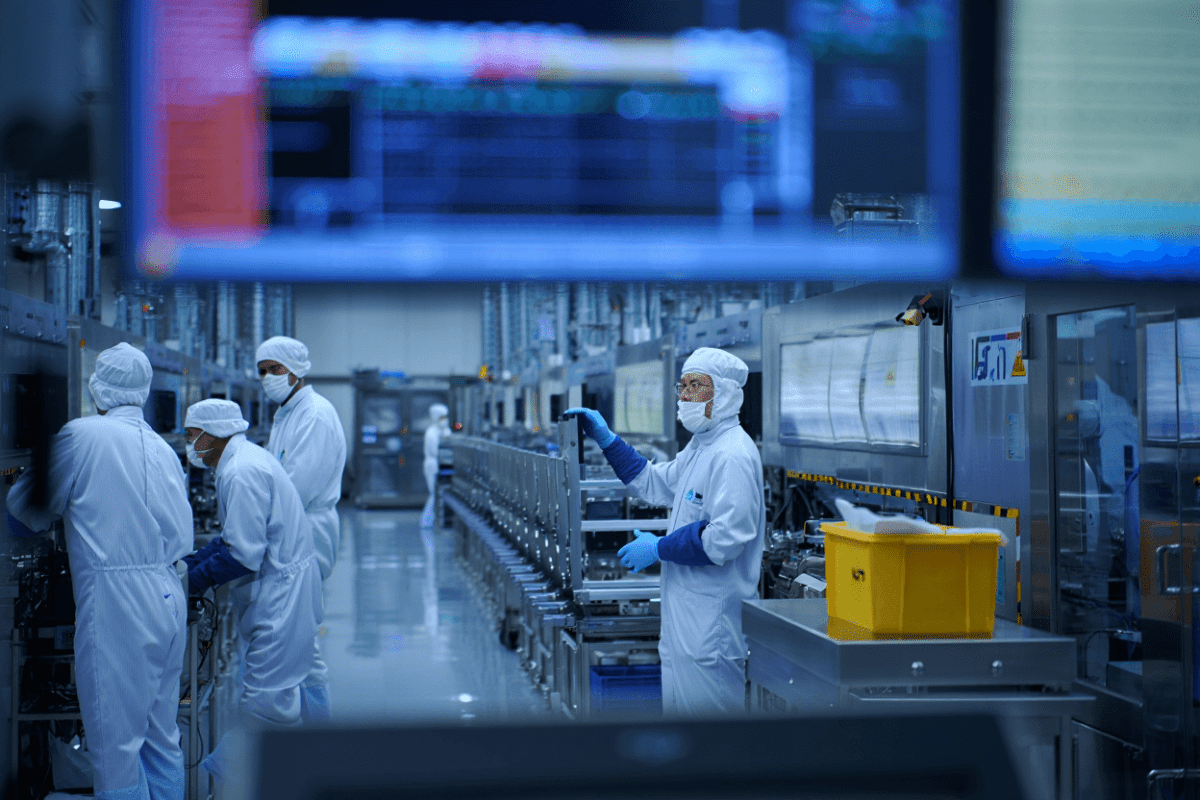
Samsung Electronics labor union suspended its planned strike after negotiations yielded a tentative wage and compensation agreement with management. The last-minute breakthrough prevented potential delays affecting global memory chip supplies. Memory chip shortages could have disrupted AI infrastructure buildout, particularly for hyperscalers qualifying new data center facilities dependent on Samsung DRAM and NAND components.
The threat level was material: over 45,000 Samsung workers participated in the negotiation process, representing the union’s largest mobilization in years. Had talks failed, manufacturing disruptions at Samsung’s Hwaseong and Pyeongtaek facilities in South Korea could have echoed through supply chains within weeks.
Twin Catalysts Converge: Demand Velocity and Supply Integrity
Markets responded positively to the convergence of two narratives. First, Nvidia’s guidance proved AI infrastructure demand remains robust despite recent concerns about customer capex moderation. Second, Samsung’s deal eliminated a near-term supply shock exactly when investors feared supply chain friction. Similar corporate announcements across the technology sector show layoffs coupled with strong guidance, suggesting profitability concerns rather than demand weakness.
Technology indices rallied as investor sentiment shifted from “is AI a bubble?” to “AI deployment is stable, and I can source components.” Broadcom, Advanced Semiconductor Engineering (ASE), and other semiconductor suppliers typically gain 2-5% on strong Nvidia results due to increased backend demand.
What Happens If Guidance Misses?
The $91 billion next-quarter guidance sets an ambitious bar. If execution falters or customer demand disappoints, multi-week pullbacks in semiconductor stocks would follow. Conversely, if Nvidia beats $91 billion by 5%+, semiconductor leadership could accelerate, drawing capital from defensive sectors. Investors now monitor hyperscaler capex guidance (Amazon and Microsoft earnings in late May) and AI deployment metrics (inference volume, token generation costs, training utilization rates) as leading indicators of actual customer demand health versus guidance sustainability.
The $80 billion share repurchase authorization announced during earnings suggests management confidence in long-term valuations despite near-term volatility. This capital return stands in contrast to aggressive growth capex patterns typical during early runways of new hardware cycles.
Sources
- Reuters — Nvidia first-quarter revenue beat analysis and guidance coverage
- Financial Times — Samsung strike resolution and global supply chain implications
- CNBC — Data center revenue acceleration and market reaction live coverage
- Yahoo Finance — Nvidia earnings-per-share beat metrics and year-over-year comparisons
- The Washington Post — Samsung labor union strike suspension and wage deal terms