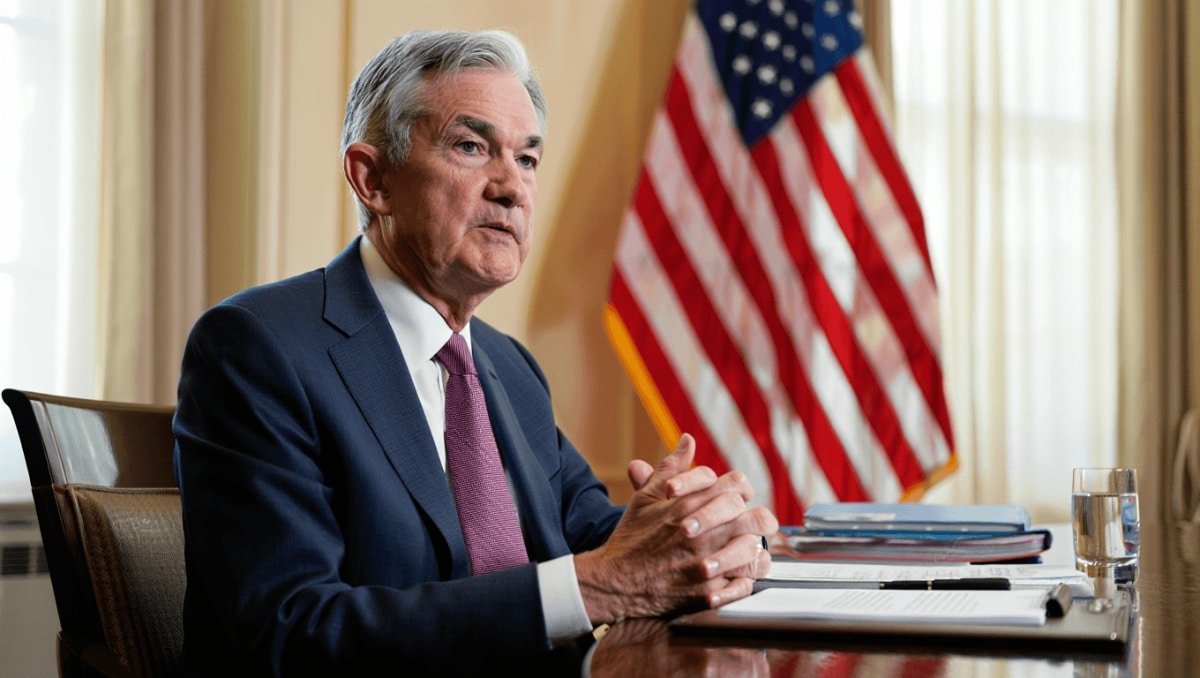
The Federal Reserve will announce its interest-rate decision on Wednesday as Chair Jerome Powell prepares to hold what could be his final public press briefing before his chairmanship expires next month. The meeting’s outcome and the surrounding leadership drama matter to markets, borrowers and savers because they shape expectations for rates, borrowing costs and the Fed’s approach to inflation.
What to expect from Wednesday’s decision
Economists and traders overwhelmingly predict the Fed will hold the benchmark federal funds rate steady at the current 3.50%–3.75% range. Inflation is still above the central bank’s 2% objective, and recent global tensions have pushed prices modestly higher, arguing against an immediate cut.
Policymakers will use the announcement and Powell’s press conference to signal how quickly they might ease policy later this year. Investors will be watching language about labor-market strength, inflation momentum and the Fed’s path for rate cuts.
Leadership timing and the calendar
Powell’s tenure as chair ends on May 15, though his membership on the Federal Reserve’s Board of Governors runs until January 31, 2028. The FOMC’s next scheduled meeting after this week does not occur until mid-June — after his chair term would have expired — making immediate decisions about the chairmanship politically and practically significant.
Two developments in the past week cleared a route for a potential leadership handoff ahead of the June meeting.
- Justice Department probe closed: The U.S. Attorney in Washington moved to end an investigation into Powell’s testimony regarding a costly Fed renovation, transferring oversight to the Fed’s inspector general.
- Senate dynamics shifted: A key senator who had threatened to block the nominee signaled support once the Justice Department action reduced political pressure, improving the prospects for confirmation of the incoming nominee, Kevin Warsh.
Why this cleared path matters
Until the federal prosecutor’s decision, at least one Senate opponent had insisted the probe be resolved before endorsing a successor. With that obstacle removed and the inspector general conducting the review, a confirmation vote for Warsh could be scheduled in time for him to assume the chair by June.
That timeline would mean a leadership transition as soon as next month, but it does not necessarily end questions about continuity. Powell has not ruled out remaining on the Board of Governors after his term as chair concludes, saying he will decide what’s best for the institution once investigations are complete.
What experts say about the policy outlook
Some economists argue the likely combination of a cleared confirmation path and the possibility that Powell stays on the board points toward steady policy language even if the chair changes. Supporters of a Warsh nomination highlight his views that higher productivity — potentially aided by artificial intelligence — could help moderate inflation over time.
But the inspector general’s review keeps governance and oversight questions alive, and analysts caution that new findings could reopen scrutiny. For now, however, markets see a high probability of policy continuity during the transition.
Implications for consumers and markets
The near-term impact is straightforward: unchanged policy keeps short-term borrowing costs where they are, affecting mortgage rates, credit-card APRs and yields on savings. Forward guidance from the Fed will determine whether traders price in cuts later in the year.
- Borrowers: Mortgage and loan rates may stay elevated until the Fed signals a clear plan to lower rates.
- Savers: High short-term yields could persist, but the timing of cuts will dictate savings returns.
- Markets: Equity and bond markets will react to Powell’s tone and any indication of a June leadership handoff.
The coming days will therefore be watched not just for a rate decision, but for clues about how the Fed intends to manage inflation, leadership continuity and institutional independence during a politically sensitive transition.