President Donald Trump has directed the Department of Homeland Security to restart pay for Transportation Security Administration employees after a funding impasse left many workers unpaid. The move restores wages, but travelers should not expect immediate relief at airport checkpoints—long waits and rising fares are likely to persist.
The DHS said paychecks could resume as soon as Monday, offering short-term relief to officers who missed weeks of income. Yet agency leaders warn that restoring salaries is only one piece of a larger problem that has already eroded staffing and stretched airline operations.
Staffing shortfalls
The partial funding lapse prompted a wave of departures at TSA. Agency officials report hundreds of resignations since the shutdown began, adding to more than a thousand exits during a prior shutdown. With roughly 50,000 screeners nationwide, those losses create immediate operational gaps at many airports.
Replacing officers is not quick: the typical onboarding and training cycle runs several months. That lag means airports may continue to face reduced screening capacity for weeks—possibly into major travel periods such as the upcoming global sporting events.
Senior TSA officials have warned lawmakers that the agency faces a “perfect storm” of fewer staff and rising passenger volumes. Recruiting is also suffering because the recent uncertainty has undermined job security for prospective hires, making the pipeline slower to refill.
Costs keep climbing
Another pressure point is fuel. Global tensions in the Middle East have pushed crude and jet-fuel prices sharply higher since February, with estimates approaching the high hundreds per barrel. That spike is being passed to consumers: several carriers have announced fare increases or surcharges to offset higher operating costs.
Supply routes have been disrupted as well. Damage to infrastructure and intermittent airspace closures in key regions have forced some airlines to take longer paths, adding time and cost to flights and complicating scheduling for already stretched crews.
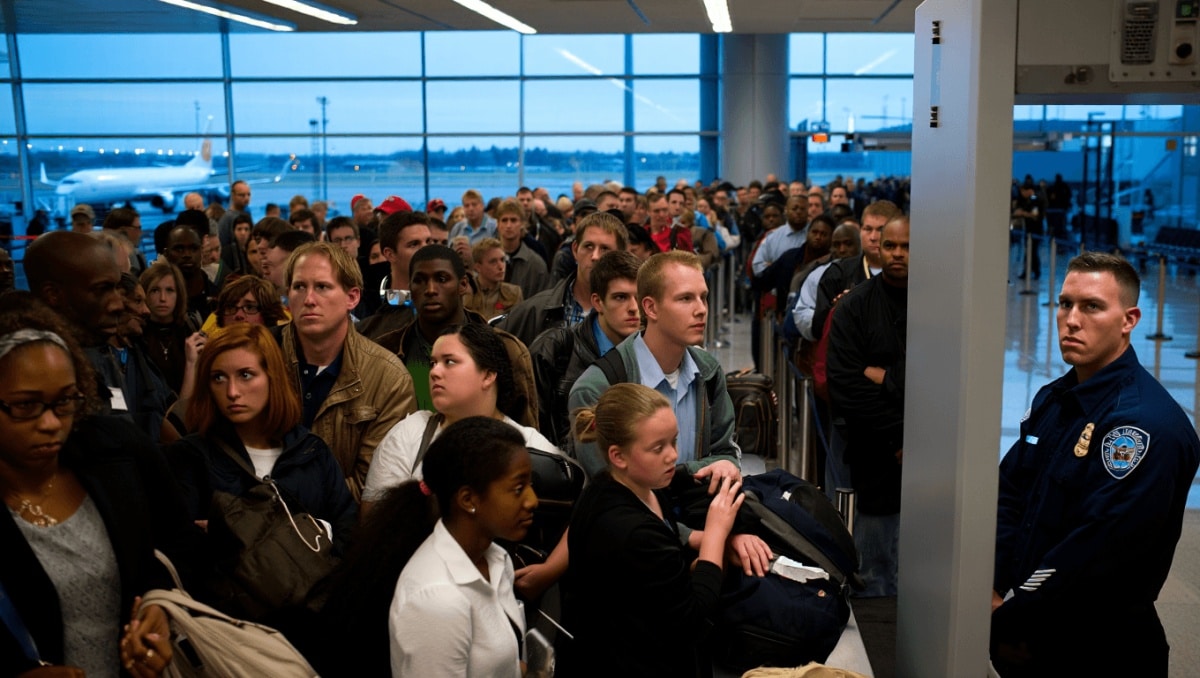
- Security lines: Expect uneven screening capacity and continued periods of extended waits at some hubs.
- Ticket prices: Airlines are raising fares or adding fuel-related fees on many routes.
- Reroutes and delays: Flights that avoid closed airspace may be longer or subject to schedule changes.
- Slow staffing recovery: Filling open TSA positions will take months, not days.
Public confidence and recent incidents
Passenger sentiment has soured. A February Ipsos poll found that nearly half of Americans were losing confidence in air travel safety, with higher-income travelers—who often fly more frequently—showing greater concern. Fewer than three in ten respondents said they felt confident in the safety of flying.
Such anxieties are compounded by a string of high-profile accidents and emergency responses in recent weeks, which can influence public perception even when they are unrelated to routine screening operations.
The combination of workforce reductions, cost pressures, and operational disruptions means the industry faces a slow, uneven recovery. Restoring pay addresses an urgent hardship for TSA employees, but it will take coordinated hiring, training, and operational adjustments before travelers see a steady return to pre-crisis service levels.
For now, passengers should build extra time into travel plans, monitor flight alerts, and expect elevated fares on many routes as carriers adapt to higher fuel and rerouting costs.