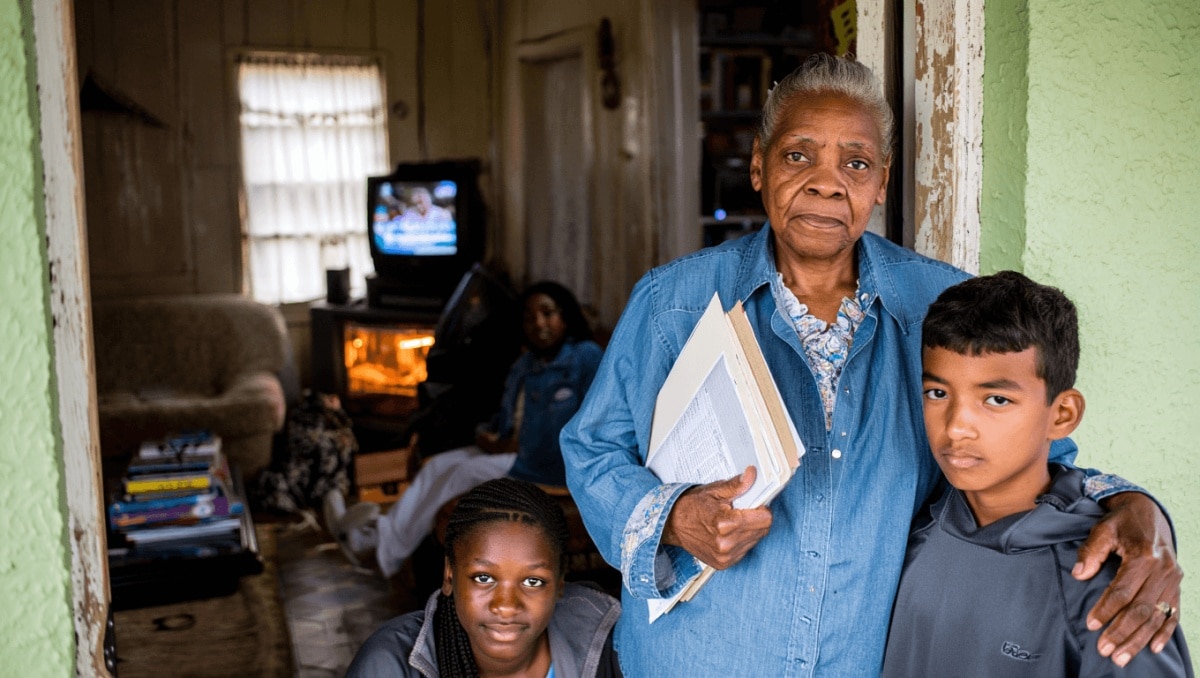
In Baton Rouge, 65-year-old Carol Leonard has become the primary caregiver for her two teenage grandsons — a role she says has exposed gaps in supports for kinship caregivers. Her account sheds light on how legal ambiguity and tight benefit rules can leave older relatives struggling to provide stable homes for children today.
No legal custody, persistent uncertainty
Leonard has cared for Blaze, 17, and Jason, 15, for most of their lives after their parents proved unable to do so. Although judges have occasionally granted her temporary custody, she never received full legal guardianship because her son has not signed over parental rights.
The consequence is stark: without formal custody papers, she says the boys’ father could legally remove them, and she cannot afford the upfront cost of a lawyer to change that. Schools in her district have allowed enrollment based on the family’s history, and she has managed to secure medical care and list the boys on her tax returns, but the lack of legal permanence remains a daily worry.
Denied benefits despite real need
Leonard works full time as a facilities manager and earns about $40,000 a year. That income, she says, puts her over the threshold for food assistance even though it does not stretch far once mortgage, a car loan, and other bills are paid.
- Annual income: ~$40,000 (facilities manager)
- Major expenses: mortgage notes, car payment, utilities
- Support currently available: church food pantry, help from the boys’ older sister
- Benefits blocked: denied SNAP because of income rules
She says community donations and family help have kept the household fed, and earlier this year she moved from an apartment into a small house so each boy could have a bedroom. Still, Leonard describes having to choose between essential bills and extras most grandparents take for granted.
Daily trade-offs and parental responsibilities
Leonard feels the strain not only financially but emotionally. She tries to balance discipline with care: when Jason’s grades slipped, she confiscated his phone to enforce consequences; when he later broke it, she delayed buying a replacement so he learned responsibility.
Those decisions, she says, are what a parent would do — but they come with added frustration because she views some of these duties as things she should not have to shoulder at her stage of life.
Health, hours and mobility
After two knee replacements and ongoing joint pain, Leonard rises before dawn to get the boys ready and commutes to work by 7 a.m. Her workday ends at 3 p.m., leaving little time or energy for evening activities. Blaze holds a part-time job on weekends; Leonard drives him late at night because insuring the teens’ use of her car is not affordable.
She worries that her physical limitations sometimes prevent her from doing every practical thing a younger parent might manage, from shuttling both boys to work to preparing nightly home-cooked meals.
Grandmother and guardian — different roles
Leonard distinguishes between being a grandmother and being a parent. She wants to be able to occasionally spoil her grandchildren, and she still hosts visits from other grandchildren. At the same time, she provides the basic necessities that create a stable home and encourages the boys to maintain contact with their mother and make choices that will lead to better outcomes.
What she hopes for: scholarships, self-sufficiency for the boys, and a legal arrangement that protects their future if something happens to her.
Why this matters now
As the number of grandparents and other relatives raising children grows nationwide, stories like Leonard’s highlight policy tensions: eligibility thresholds for programs like SNAP, the cost of legal custody proceedings, and limited supports tailored for kinship caregivers. For older adults stepping in as primary caregivers, modest incomes and health issues can quickly become barriers to stability.
Leonard’s final concern is practical and urgent: who will care for Blaze and Jason if she can’t? She says she is confident the boys will work hard, but the lack of a legal safety net keeps that confidence precarious. Above all, she says, she wants them to know they are loved.