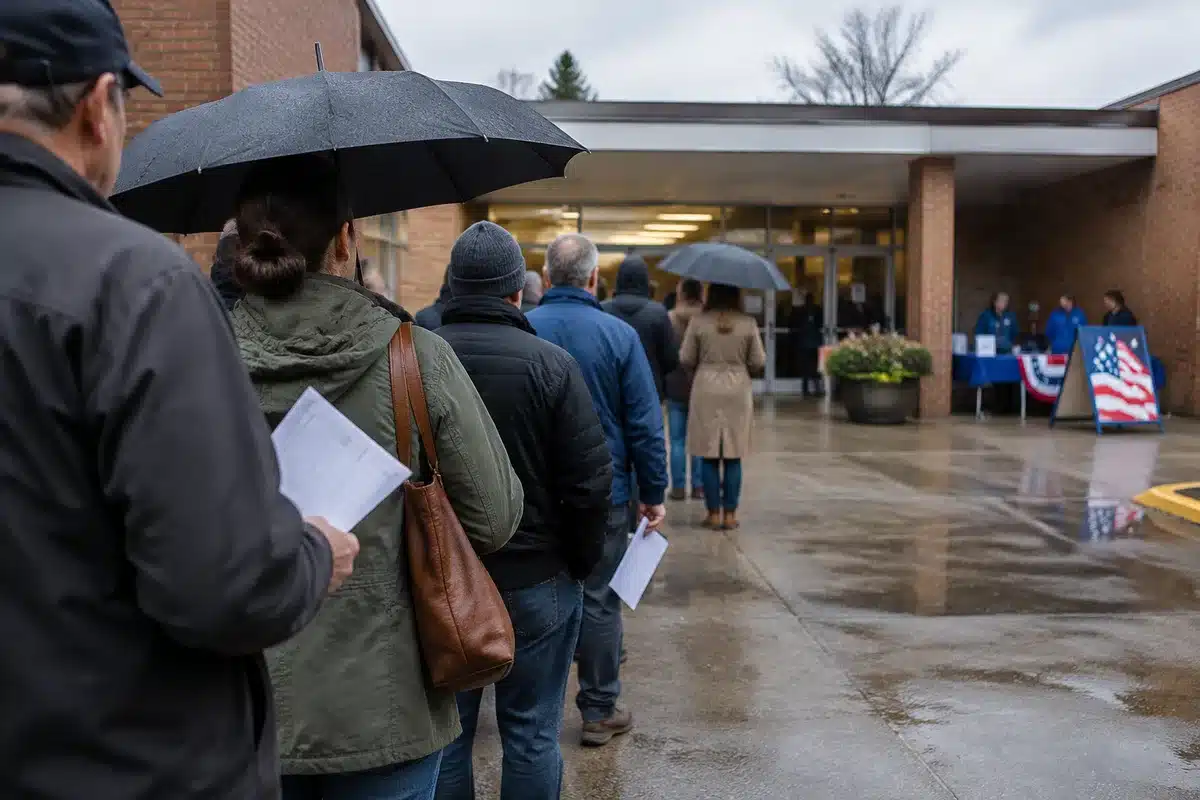
Senate Majority Leader John Thune faces mounting pressure from President Trump over stalled voting legislation, with the White House signaling that Trump’s patience with the South Dakota Republican is wearing thin. The standoff centers on the SAVE America Act, a restrictive voting bill that Trump has made a priority but which lacks the votes needed to pass the Senate.
Trump has escalated his public criticism of Thune in recent days, suggesting on Wednesday that the Senate leader might not be the right person to lead Senate Republicans. “We will find out, and I will let you know,” Trump told reporters when asked about Thune’s future as majority leader. White House press secretary Karoline Leavitt had warned a day earlier that Trump’s “patience is running out” with Thune over the failure to pass the SAVE America Act.
The tensions reflect a fundamental disagreement over legislative strategy. Trump has demanded that Thune keep the Senate in session through August and eliminate the 60-vote filibuster threshold to pass the voting bill with a simple majority. Thune has consistently rejected both demands, arguing that Democrats lack the votes to support the measure and that Senate Republicans will not agree to scrap the filibuster.
“If the endgame is, we actually get an outcome or result, we could stay here until Christmas,” Thune said in response to Trump’s push. “But Democrats aren’t voting for this, I’m just telling you. And the Republicans are not getting rid of the legislative filibuster.” When pressed about Trump’s strategy, Thune asked pointedly: “Show me how this ends. What’s the picture of victory at the end?”
The White House has summoned roughly two dozen Republican senators to the Oval Office to pressure them directly to support ending the filibuster. According to a senior Republican aide, 15 of the 20 senators who took those meetings told White House staff they were firmly opposed to changing Senate rules. This resistance from within Trump’s own party has frustrated the president, who has grown accustomed to greater leverage over House Republicans.
Unlike the House, where Speaker Mike Johnson faces direct pressure from Trump-aligned conservatives, Senate Republicans benefit from private ballot elections for leadership and six-year terms that provide some insulation from presidential pressure. Senate Republicans have largely backed Thune despite Trump pressure on the SAVE Act, with many concerned that disappointing the president while also defying voters on inflation and gas prices could damage the party before the midterm elections.
Senator John Cornyn, a Texas Republican who lost his primary to a Trump-backed candidate and will not have a vote when the GOP caucus elects leaders in January, was blunt about the mathematics: the Senate “can stay here ’til the cows come home, and it’s not going to change anything.” A memo circulated by the conservative Senate Republican Conference advised members that staying in Washington for August would make sense only if it could actually move the needle on votes—but it won’t.
Trump’s dynamic with Thune mirrors his earlier tensions with former Senate Majority Leader Mitch McConnell, whom Trump repeatedly insulted and eventually nicknamed “Old Crow.” But Thune’s position appears more secure than McConnell’s was, in part because Senate Republicans have shown they value the institution’s independence and their leader’s willingness to tell Trump the political reality, even when it conflicts with his demands.
Sources
- Time — Thune’s rejection of Trump’s pressure on the SAVE America Act and his questions about the endgame strategy
- Roll Call — GOP sources’ assessment that Thune has caucus support, White House pressure campaign details, and Republican strategist commentary on Thune’s job security
- PBS NewsHour — Trump’s demand that Thune cancel August recess and end the filibuster
- The Hill — Details on which Republican senators attended White House meetings and their positions on the filibuster