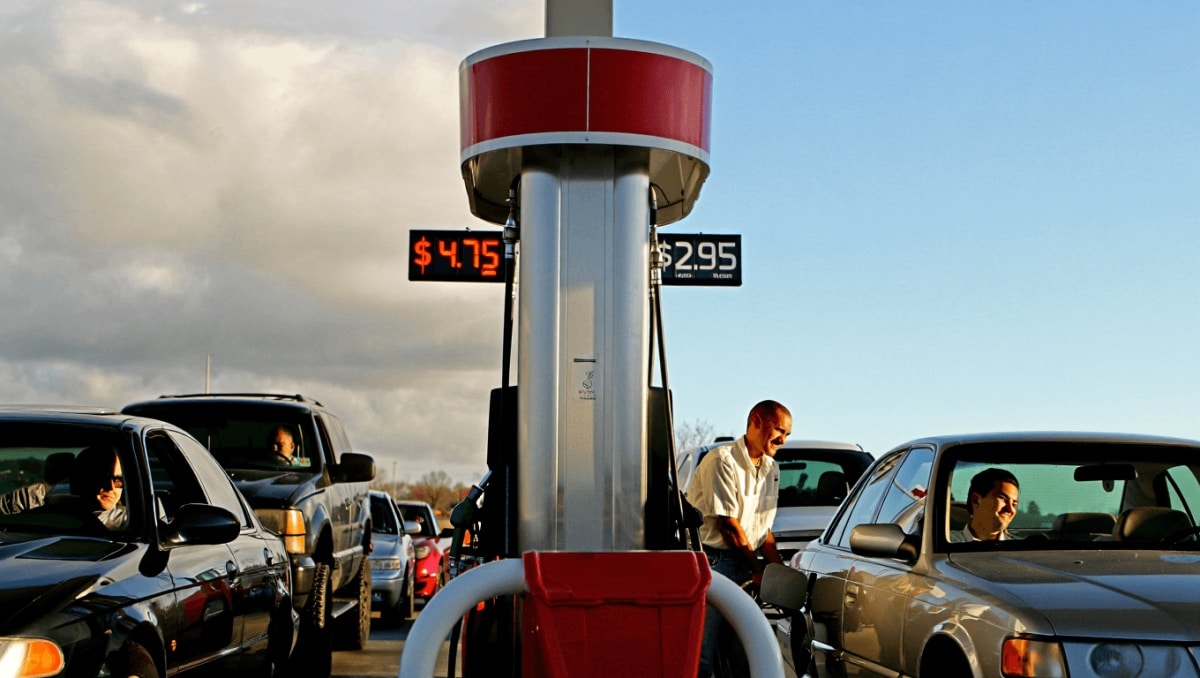
Gasoline costs have climbed sharply since late February, and the jump is hitting household budgets just as summer travel season approaches. A new state-by-state interactive map from Business Insider shows how much drivers are paying across the country and highlights where prices have risen fastest.
The national price trend has moved quickly: AAA data show the U.S. average was about $2.98 per gallon on February 27, passed the $4 mark by March 31, and climbed above $4.50 in mid‑May. While every state has seen increases, the size of the spike varies dramatically by region.
Where prices stand now
Coastal states on the Pacific have borne the brunt of the increases. California, in particular, exceeded $6 per gallon at the end of April, a strain on already high living costs there. By contrast, several Plains and central states — notably Oklahoma and Kansas — remain at the lower end of the range.
That geographic split reflects a mix of local supply conditions, taxation differences and changes in how refineries operate for the warmer months.
What’s pushing prices higher
Analysts point to several concrete factors combining to tighten supply and lift pump prices:
- Global supply concerns: Escalating incidents and naval tensions in the Strait of Hormuz have rattled markets because the waterway handles a large share of the world’s oil shipments.
- Seasonal fuel switch: Refineries begin producing a costlier summer gasoline blend in spring, which typically raises prices at the pump.
- Refinery disruptions: Recent outages in Midwest facilities have reduced available supply in the Great Lakes and surrounding regions.
- International flows: U.S. crude and refined products are moving at high export levels — meaning domestic crude is part of a global market price rather than only local supply.
Patrick De Haan, a fuel market analyst at GasBuddy, told Business Insider that because product is traded globally, sellers tend to favor the highest offers — a dynamic that can push domestic prices up even when the U.S. produces large volumes.
The outlook remains uncertain. De Haan said the average summer price could fall anywhere between roughly $3.50 and $5.50 per gallon, depending on how geopolitical tensions, refinery repairs and broader crude markets evolve.
Why this matters for drivers and the economy
Even modest price swings affect commuting costs, shipping expenses and inflation measures. Regions where fuel is most expensive will see larger short-term impacts on household spending.
Policy responses and market shifts could alter the trajectory, but for now the combination of seasonal demand, refinery constraints and global market pressures leaves motorists facing higher bills than they saw this winter.
Use Business Insider’s interactive map to see current prices by state and compare trends in your area.