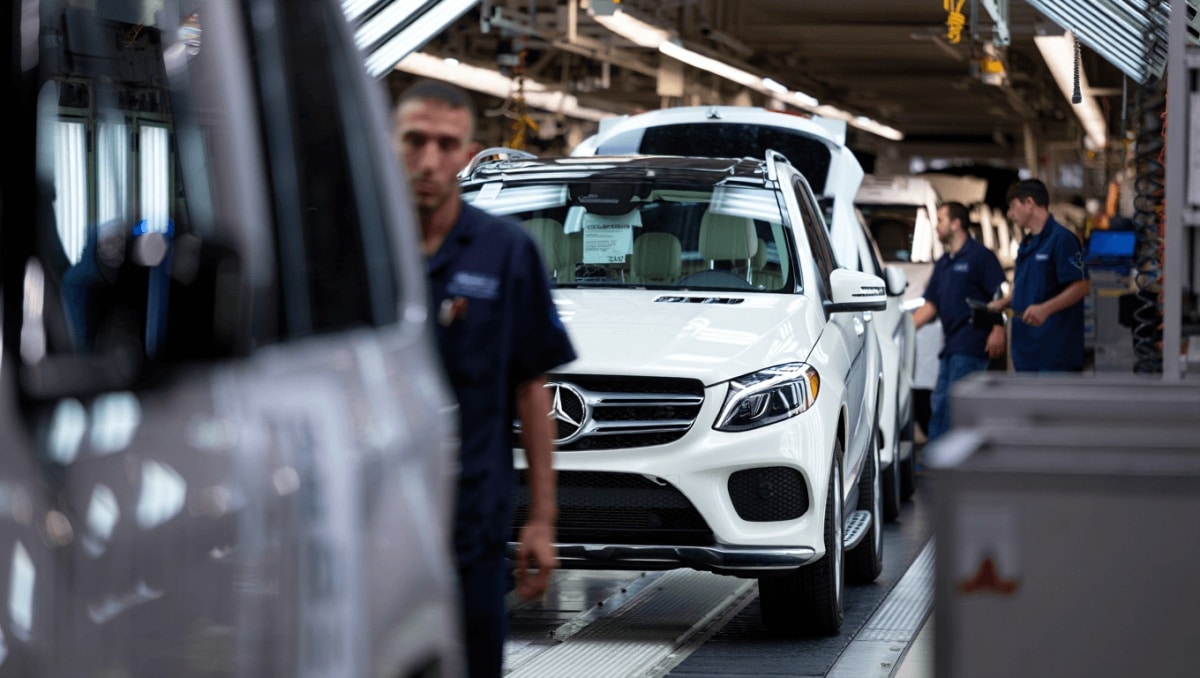
Mercedes-Benz on Tuesday announced a major expansion at its Alabama assembly complex, committing $4 billion through 2030 to increase SUV output as the company adapts to U.S. import tariffs. The move signals a broader push to strengthen manufacturing in the United States and to limit the cost impact of trade measures on its operations.
The $4 billion earmarked for the Tuscaloosa plant is part of a larger plan that will push Mercedes’ U.S. investment past $7 billion over the coming years. The automaker also says it will consolidate up to 500 positions from various U.S. locations into a new research and development center in Atlanta.
Executives have tied the shift in production and the fresh capital outlay directly to the burden of import levies imposed by the U.S. administration. Mercedes reported that tariff-related expenses shaved roughly €1 billion from results, contributing to a drop in group operating profit to about €5.8 billion in the most recent reporting period.
What the announcement changes
Mercedes had already moved plans to manufacture its compact luxury SUV, the GLC, from Germany to Tuscaloosa. The new investment will expand that capacity and further anchor the model’s production in the U.S., according to company remarks.
| Metric | Details |
|---|---|
| Alabama investment | $4 billion through 2030 to boost SUV production |
| Total U.S. commitment | More than $7 billion in planned spending |
| Jobs and R&D | Up to 500 roles moved into a new Atlanta R&D hub |
| Profit impact | About €1 billion in tariff costs; group operating profit ~€5.8 billion |
| U.S. sales (last year) | Approximately 303,000 passenger cars, up ~1% |
Mercedes North America CEO Jason Hoff told Reuters that shifting production of high-volume models to local plants is a practical response to trade policy. Localizing assembly “makes good business sense,” he said, noting tariffs as a key factor shaping those choices.
The company’s global chief, Ola Källenius, has repeatedly framed Mercedes’ U.S. operations as substantial and long-standing. Mercedes directly employs more than 11,000 people in the United States and works with dealer and supplier networks that extend the company’s economic footprint by tens of thousands of additional jobs. Using industry multipliers, Mercedes estimates roughly 100,000 jobs are linked to its local manufacturing and supply chain.
That footprint—payrolls, supplier activity and tax revenue—is central to Mercedes’ case for deeper investment stateside. Executives have also suggested that a reduction or removal of U.S.-EU auto tariffs could free up room for even greater capital spending in America.
For consumers and regional economies, the expansion could mean steadier local employment and a stronger domestic supply chain for luxury SUVs. For Mercedes, the strategy reduces exposure to tariff volatility and the extra costs that have weighed on margins.
Reuters contributed reporting to this article.