ASML stock closed at $1,632.90 on May 26, 2026, gaining 2.57% and reaching its highest level in weeks as semiconductor equipment demand accelerates. The stock has surged 40.3% year-to-date, driven by relentless AI infrastructure spending from major chip manufacturers. The Dutch lithography leader now commands 32% of the global electronics equipment market, a monopoly position strengthened by its irreplaceable role in advanced chip fabrication.
🔥 Quick Facts
- Stock price reached $1,632.90 on May 26, 2026, up 2.57% on strong AI demand
- Year-to-date gain of 40.3% reflects unmatched AI chip infrastructure positioning
- 2026 revenue guidance raised to €36-40 billion (up from €34-39 billion previously)
- EUV machine backlog extends into 2027, with zero competitive alternatives in the market
- Q1 2026 revenue hit €8.8 billion, up 11.2% year-over-year amid gross margins expanding to 52%
ASML’s Dominance in Extreme Ultraviolet Lithography Sets Market Apart
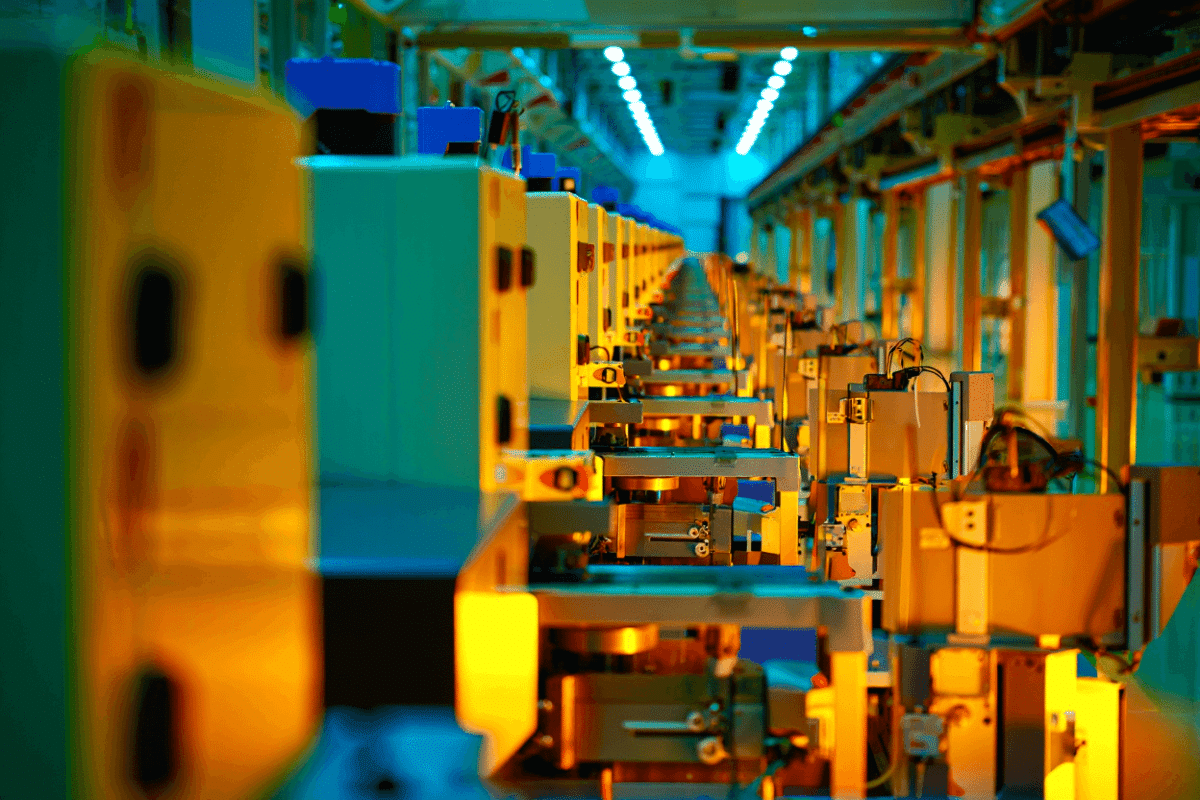
ASML Holding is the sole manufacturer of extreme ultraviolet (EUV) lithography machines, the equipment required to produce advanced AI chips below 7-nanometer nodes. This monopoly position is not vulnerable to traditional competition. Building an EUV system requires solving over 100,000 technical challenges, taking 15 years of research before the first commercial system shipped in 2013. The complexity involves precision optics, plasma generation, and photoresist chemistry at scales previously unachieved. No Chinese competitor has replicated EUV technology despite decades of attempts, and United States export restrictions ensure Western fabs maintain technology leadership. ASML’s technology represents one of humanity’s most complex manufacturing achievements outside aerospace and semiconductor fabrication itself.
AI Chip Demand Creates Record Equipment Orders Through 2027
The global semiconductor equipment market is expanding at 16% annually, with ASML capturing 47% of all orders from leading-edge chip manufacturers. TSMC, Samsung, and Intel are racing to increase EUV machine installations to meet AI training and inference demand predicted to consume $300 billion in capex through 2028 across the industry. For context, TSMC stock has also benefited from AI infrastructure expansion, but the foundry continues to depend on ASML machines as critical bottleneck assets. CEO Christophe Fouquet stated on May 20, 2026, that the company maintains a backlog extending well into 2027, with each EUV system taking 9-12 months to deliver after order placement. This scarcity dynamic supports pricing power and market dominance.
Financial Strength and Guidance Acceleration in 2026
ASML’s financial position reflects the structural advantages of controlling irreplaceable technology:
| Metric | Q1 2026 Result | 2026 Full-Year Guidance |
| Revenue | €8.8 billion (+11.2% YoY) | €36-40 billion (+16-22% YoY) |
| Gross Margin | 52% | 51-53% |
| Operating Margin | 36% | ~35% (implied) |
| Net Income (Q1) | €2.8 billion | ~€10.5-11 billion (est.) |
| Dividend Increase | Raised 17% in Q1 payout | Reflects confidence in sustained demand |
The 51-53% gross margin target remains extraordinary for capital equipment manufacturing, reflecting sticky pricing on machines without alternatives. ASML’s €36-40 billion revenue guidance was raised from €34-39 billion in January 2026, indicating management’s increased confidence in sustained AI-driven chip demand. Nvidia’s continued AI chip dominance drives orders, as major data centers require the most advanced nodes that only ASML equipment can produce at scale.
“We are in a situation where the semiconductor industry is growing faster than ever, and we are the critical bottleneck. Our machines are not just equipment, they are the foundation of artificial intelligence itself.”
— Christophe Fouquet, CEO of ASML, Reuters interview, May 20, 2026
What Could Disrupt ASML’s Monopoly Position in the Next 24 Months?
While ASML’s competitive moat appears unassailable, three risk factors merit consideration. First, U.S. export restrictions could accelerate if geopolitical tensions with China escalate, potentially capping international sales growth and creating regulatory uncertainty. Second, alternative lithography approaches—such as self-aligned quadruple patterning (SAQP) or emerging quantum dot immersion techniques—could theoretically reduce EUV dependency for certain node transitions, though timelines remain uncertain beyond 2028. Third, cyclical semiconductor downturns historically reduce equipment capex by 40-50%, and rapid inflation could pressure capex budgets despite AI intensity. Memory chip makers like Micron operate under different demand cycles, and a broad pullback in non-AI memory spending could slow overall equipment orders. Will ASML’s stock maintain its 2026 gains if the AI infrastructure buildout moderates in 2027, or is the monopoly sustainable through decade-long chip factory expansions?
Sources
- Reuters — ASML CEO interview on AI demand and supply constraints, May 20, 2026
- ASML.com — Q1 2026 financial results and 2026 guidance update, April 15, 2026
- Yahoo Finance — ASML stock performance and analyst ratings, up 40.3% YTD
- Seeking Alpha — EUV lithography analysis and market dominance assessment, April 18, 2026
- Deloitte — Global Semiconductor Industry Outlook 2026, February 5, 2026