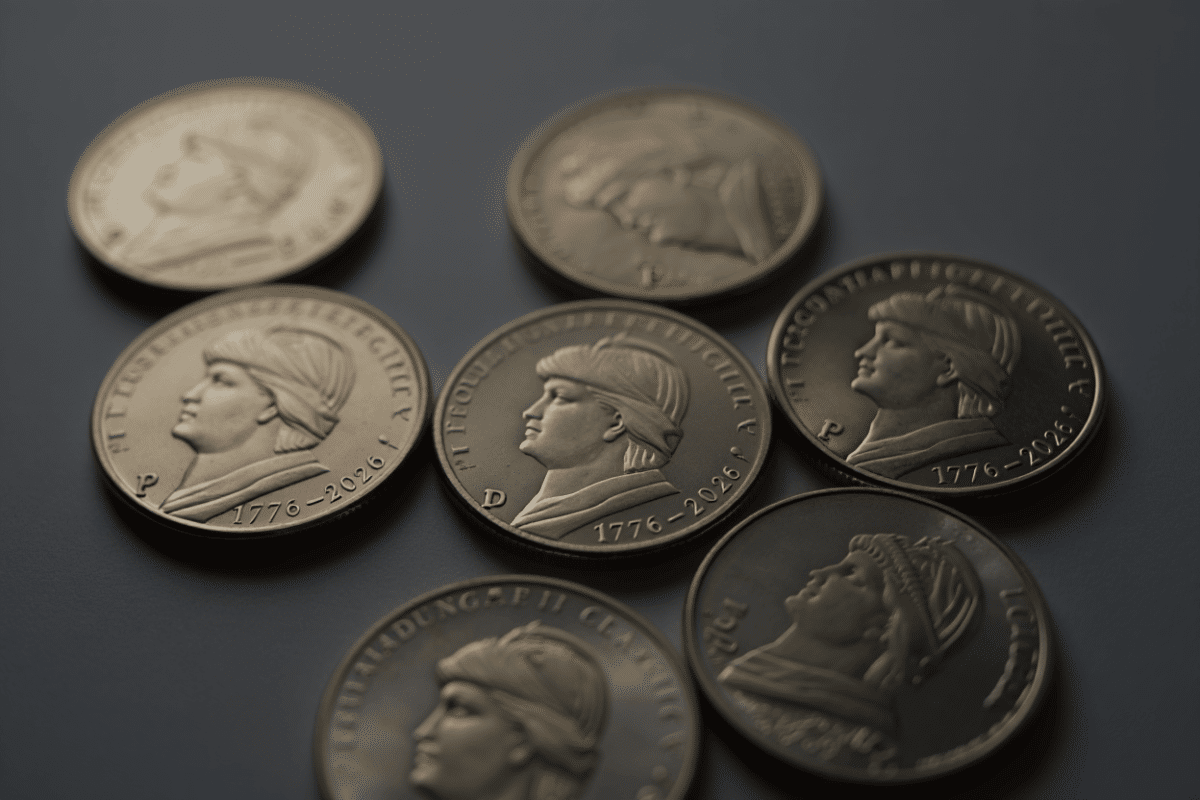
The US Mint officially released Semiquincentennial half-dollar sets on May 26, 2026, marking a significant milestone in the nation’s 250th anniversary coinage program. Two pricing tiers launched today: $60 two-roll sets containing a combined 40 coins (20 from Philadelphia, 20 from Denver) and $180 200-coin bags with 100 coins from each mint. These circulating-quality coins feature the Enduring Liberty design, which portrays the Statue of Liberty gazing steadfastly toward the future with dual dates 1776-2026, replacing standard Kennedy half-dollar imagery for this single production year only.
🔥 Quick Facts
- Release Date: May 26, 2026 — official US Mint launch
- Two-Roll Set Price: $60 with 40 circulating-quality coins
- 200-Coin Bag Price: $180 with mixed Philadelphia and Denver mints
- Design Feature: Statue of Liberty with 1776-2026 dual dates on obverse
- Household Limits: Maximum 2 bags and reasonable roll quantities per order
Understanding the Semiquincentennial Collection Strategy
The 2026 Semiquincentennial coinage program represents one of the most ambitious celebratory releases in modern US numismatic history. The US Mint has deliberately designed a one-year-only approach for the Enduring Liberty half dollar, ensuring that these coins will never appear in circulating commerce again after 2026. This strategy differs sharply from traditional Kennedy half dollars minted annually without special recognition. The Mint’s intentional restraint—limiting production to 2026 alone—creates natural scarcity and collector appeal without requiring precious metal composition or proof-finish quality. Experts note that this forward-looking decision aligns with emerging numismatic trends favoring limited-edition circulating designs over mass-produced alternatives.
Product Specifications and Acquisition Details
The two-roll sets priced at $60 offer an entry-level option for collectors unable or unwilling to commit to the 200-coin bag investment. Each roll contains 20 coins in circulating finish—the standard quality level for everyday currency—making them suitable for both numismatic collections and literal circulation use, though preservation is recommended for collector purposes. The $180 200-coin bag appeals to serious collectors seeking bulk quantities of uncirculated or near-uncirculated specimens with stronger eye appeal than standard rolls. Notably, both products mix Philadelphia (P) and Denver (D) mint marks equally, giving collectors representation from both major US Mint facilities. Distribution limitations restrict households to maximum 2 bags and reasonable roll purchases during the initial sales period, though exact cutoff quantities may be enforced based on demand.
| Product Type | Price | Coin Count | Mint Composition |
| Two-Roll Set (26QRRS) | $60.00 | 40 coins | 20P + 20D |
| 200-Coin Bag (26QBB) | $180.00 | 200 coins | 100P + 100D |
| Face Value Premium (Rolls) | +$40 markup | N/A | N/A |
| Face Value Premium (Bags) | +$80 markup | N/A | N/A |
Analysis of the pricing structure reveals a 50-cent premium per two-roll set and a 40-cent premium per coin in 200-coin bags above face value. These markups are standard for US Mint circulating collectible products and reflect handling, verification, and packaging costs rather than intrinsic metal value. The premium-per-coin ratio slightly favors bag purchases for collectors prioritizing cost efficiency, though the higher upfront investment creates a barrier for casual participants.
Design Excellence and Numismatic Significance
The Enduring Liberty obverse design departs radically from the Kennedy half dollar imagery that has dominated the denomination since 1964. Where Kennedy’s profile typically commands the obverse, the new design features an intimate close-up of the Statue of Liberty’s face with her distinctive gaze directed outward as if toward the future. The reverse completes the narrative by depicting Liberty passing the torch to a next-generation figure, symbolizing the transfer of founding ideals to contemporary and future Americans. Inscriptions read “LIBERTY” and “IN GOD WE TRUST” on the obverse, with “UNITED STATES OF AMERICA,” “HALF DOLLAR,” and twin dates “1776-2026” on the reverse. Designers intentionally avoided overwrought ornamentation, instead leveraging clean lines and high relief to maximize visual impact in circulating commerce. This restraint elevates the design from mere celebration to genuine artistic achievement, comparable in execution quality to legendary US Mint sculptors like Adolph A. Weinman of the original Walking Liberty series.
“To celebrate America’s Semiquincentennial in 2026, the Mint will be updating the circulating nickels, dimes, quarters, and half dollars that you find in your everyday transactions. These designs depict the story of America’s journey toward a ‘more perfect union,’ and celebrate America’s defining ideals of liberty.”
— US Mint Official Statement, May 2026
Market Context and Collector Demand Trajectory
The release arrives amid robust collector demand for 2026 commemorative coins. Recent market strength in financial assets has coincided with increased interest in tangible collectibles as wealth preservation vehicles. Numismatic industry data indicates the global coin collecting market is projected to grow at approximately 5.5% annually through 2035, driven by younger investors discovering the hobby alongside traditionalists. The US Mint’s deliberate production strategy—limiting 2026 imagery to this year only—capitalizes on collector psychology favoring scarcity. Unlike annual Kennedy releases with unlimited mintage potential, the Enduring Liberty coins carry implicit finality; no future production guarantees their continued availability. This creates urgency among serious collectors to acquire examples while supplies last, particularly the higher-premium bag products.
Strategic Considerations for Collectors and Investors
Prospective buyers face several decision points before committing capital. The $60 entry-level sets serve collectors prioritizing design appreciation and historical participation over investment potential, while the $180 bags appeal to those building substantial holdings for long-term appreciation. Circulation potential remains viable—banks can order these coins for standard distribution, though numismatists strongly recommend preservation in protective holders rather than spending. Storage solutions range from basic cardboard holders ($0.05-$0.15 per coin) to archival slabs and certified grading ($10-$50 per specimen). Collectors should consider financial flexibility, as US Mint products typically reach peak demand within 2-4 weeks of launch, then stabilize in secondary markets at variable markups depending on eye appeal, strike quality, and overall collector interest in the 250th anniversary program.
Will These Coins Become Significantly More Valuable?
The critical question every collector asks concerns future value appreciation. Historical precedent provides mixed signals. The 1976 Bicentennial quarters, dimes, and half dollars—released 50 years ago as a similar milestone celebration—appreciated modestly in uncirculated grades but failed to match precious-metal commemoratives in resale strength. Production volumes mattered crucially: billions of Bicentennial coins circulated widely, limiting scarcity-driven appreciation. The 2026 Enduring Liberty release‘s ultimate collector premium will depend heavily on final mintage figures, which the US Mint hasn’t yet disclosed. If production remains moderate (tens of millions rather than billions), uncirculated examples in original packaging may command 10-30% premiums over face value in 5-10 years. However, mass-market availability and base-metal composition (copper-nickel clad like standard circulation coins) preclude dramatic appreciation comparable to rare date Kennedys from the 1960s-70s. Conservative numismatists view these releases as participation premiums rather than investment vehicles, purchasing them to celebrate American heritage rather than accumulate wealth.
What Comes Next in the 2026 Semiquincentennial Program?
Today’s half-dollar release represents only one component of an extensive annual program. The US Mint’s 2026 schedule includes updated designs for circulating pennies, nickels, dimes, and quarters—all featuring unique 250th anniversary imagery unveiled progressively throughout the year. Gold and silver commemorative coins with precious-metal composition will follow later in 2026, offering rarer alternatives for collectors prioritizing intrinsic value. Proof sets and uncirculated sets featuring all new designs are planned for fall release, creating additional acquisition windows for those missing today’s half-dollar opening. Serious collectors should track future US Mint announcements to coordinate their 250th anniversary collection strategy, as limited-edition combinations may offer better value than individual purchases. The scale and ambition of this program—unprecedented in scope since the nation’s bicentennial—suggests that early adopters positioned themselves favorably relative to late-arriving collectors who may face secondary market premiums or availability constraints.
Sources
- United States Mint – Official press releases and product listings for 2026 Semiquincentennial half-dollar sets and bags
- CoinNews.net – Real-time reporting on May 26, 2026 release details and pricing confirmation
- Numismatic Industry Research – Collector demand trends and market projections for 2026 commemorative coins
- Bullion Exchanges – Comparative analysis of design significance and historical collector reception