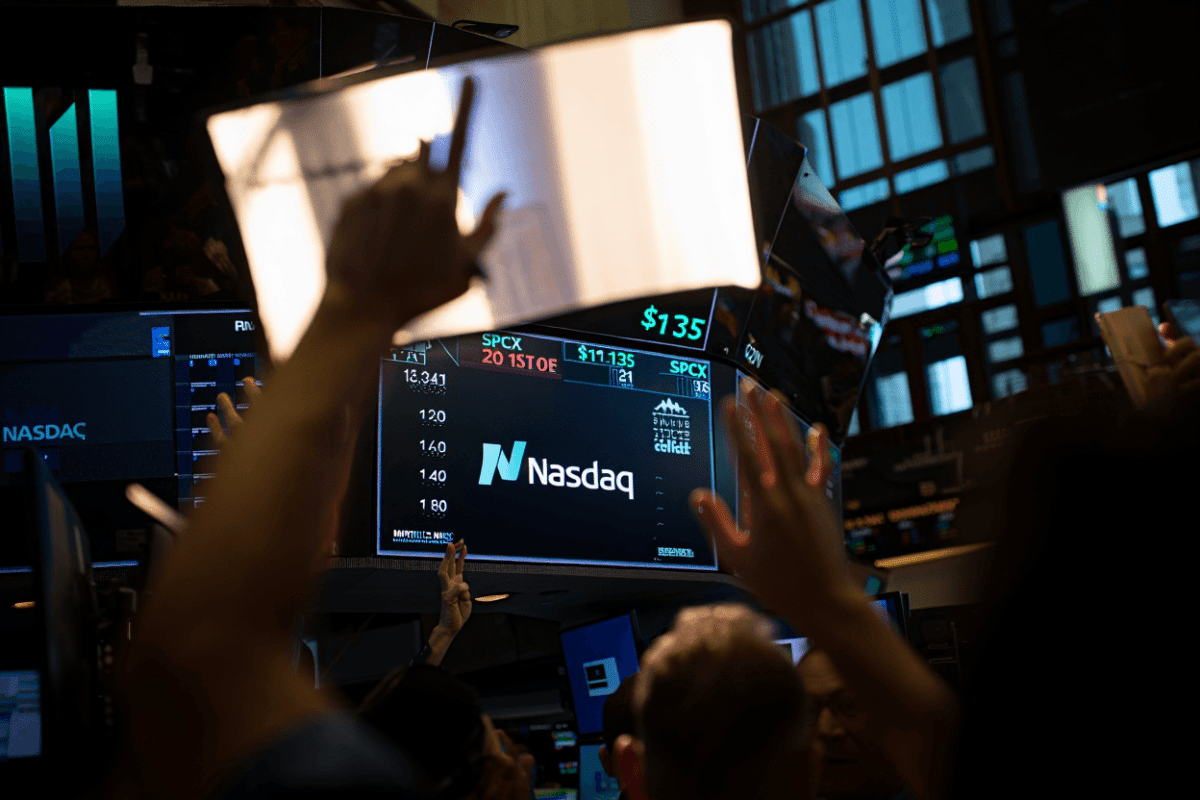
SpaceX began trading on Nasdaq at $135 per share on Friday, June 12, 2026, marking the largest initial public offering in history and raising a record $75 billion for Elon Musk’s rocket and satellite company. The stock, trading under the ticker symbol SPCX, valued the company at approximately $1.77 trillion, instantly placing it among the most valuable corporations in the world.
The IPO offering consisted of 555.6 million shares sold at the fixed price of $135 each, surpassing the previous record held by Saudi Aramco’s 2019 IPO, which raised $29.4 billion. The scale of the capital raise underscores investor appetite for public access to SpaceX, which has been privately held for over two decades under Musk’s leadership.
SpaceX took an unconventional approach to pricing its shares, setting the price a week in advance rather than following Wall Street’s traditional price-discovery process, which typically involves a range and final pricing closer to the listing date. According to Reuters, the company’s decision to fix the price at $135 upended longstanding Wall Street convention, giving investors no room to negotiate the terms.
Valuation Debate Splits Analysts
The IPO’s $1.77 trillion valuation has sparked sharp disagreement among analysts and investors. Morningstar, in a discounted cash flow analysis, valued SpaceX at $780 billion—roughly 48% below the IPO price—according to CNBC. The firm argued the company was “significantly overvalued” ahead of its public debut.
Other analysts expressed concern about the fixed-pricing mechanism itself. Bloomberg reported that SpaceX’s decision to set aside 30% of the offering for retail investors, compared to the typical 5% to 10%, raised questions about demand management and whether the structure reflected genuine market discovery or demand concentration among retail traders.
Despite the valuation questions, the IPO drew massive demand. Bloomberg reported the offering was more than twice oversubscribed, with retail orders exceeding $70 billion. The company’s Starlink satellite internet division, which generated $11.4 billion in revenue in 2025—about 61% of SpaceX’s total—helped drive investor enthusiasm, according to sources tracking the company’s financial performance.
The debut marks a watershed moment for commercial space exploration, giving public markets direct exposure to a company that has transformed rocket reusability and satellite deployment. Trading on June 12 also positions the spcx stock price as a real-time measure of investor sentiment toward both SpaceX’s core launch business and its broader ambitions in space infrastructure.
Sources
- Reuters — SpaceX sets $135 price for blockbuster IPO, upending Wall Street convention; confirmed IPO pricing and the fixed-price approach
- The New York Times — SpaceX IPO to Be Largest Ever at $135 Share Price; confirmed $1.77 trillion valuation and $75 billion raise
- Bloomberg — SpaceX Raises $75 Billion in Biggest IPO of All Time; confirmed pricing, capital raised, and oversubscription details
- NPR — SpaceX blasts off with a record-breaking $75 billion IPO; confirmed IPO details and June 12 trading date
- CNBC — SpaceX is worth less than half of its $1.75 trillion IPO target; reported Morningstar’s $780 billion valuation and overvaluation assessment
- MarketWatch — SpaceX IPO: Record-breaking deal prices at $135; confirmed trading began on Nasdaq under SPCX ticker
- WSJ — Everything You Need to Know About the SpaceX Trading Debut; confirmed June 12 listing and record-breaking status versus Saudi Aramco