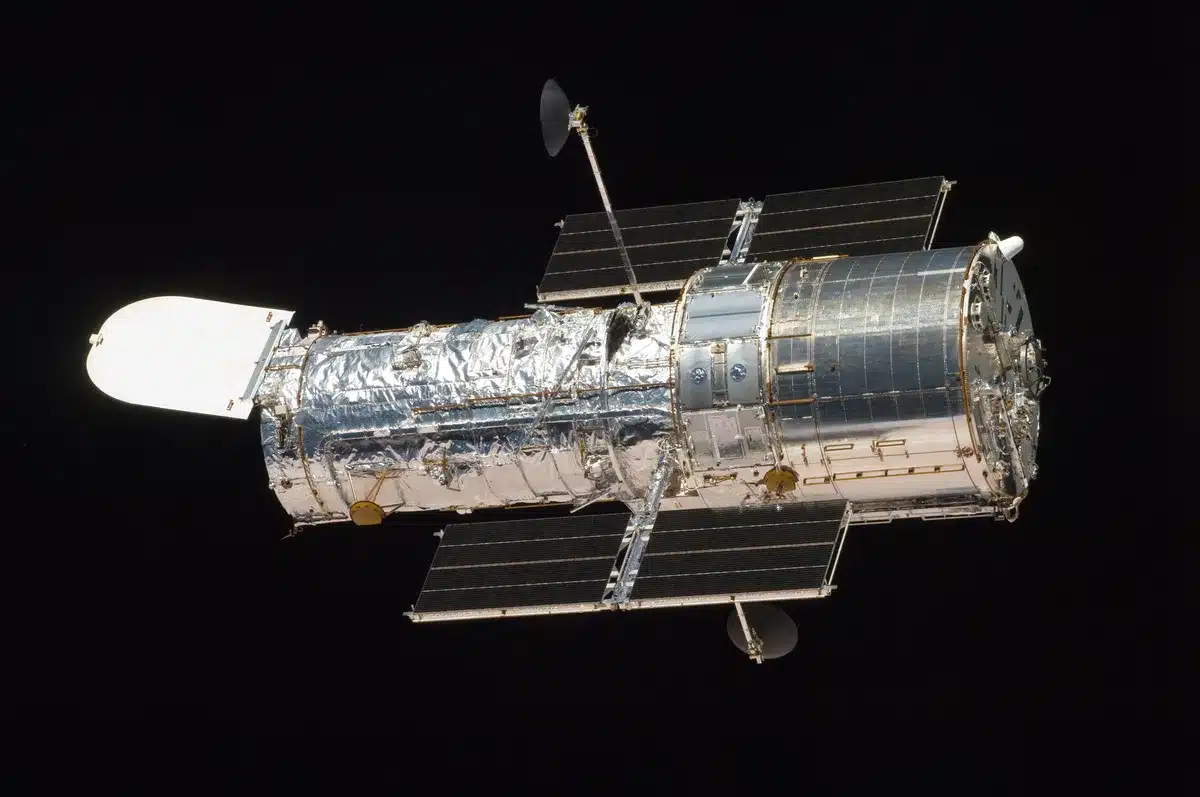
The Hubble Space Telescope has found that star formation in Andromeda, our nearest major galaxy neighbor, has been slowing for the past 500 million years, according to a study published July 27, 2026, in The Astrophysical Journal. Astronomers mapped 200 million individual stars across two-thirds of Andromeda’s disk using data from two Hubble surveys to reveal the galaxy’s star formation history in unprecedented detail.
The decline has been dramatic. About 500 million years ago, Andromeda was forming stars at roughly one solar mass per year—comparable to the Milky Way’s current rate. By 40 million years ago, that rate had halved, and today it has plummeted to just one-fifth of a solar mass annually, representing an 80 percent drop over the half-billion-year period.
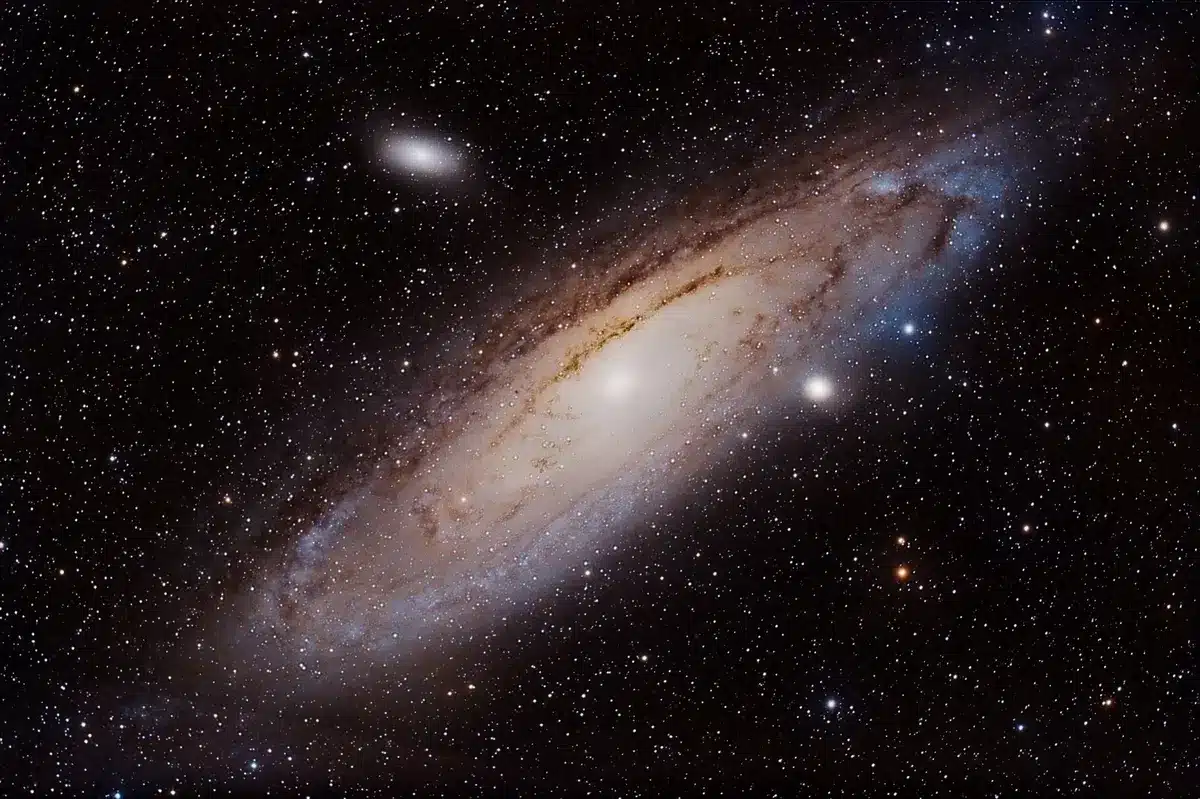
Lead author Tobin Wainer, an astronomer at the University of Washington, and his team discovered that most of this slowdown is concentrated in a single structure: a ring of gas and dust circling Andromeda about 32,000 light-years from its center. This star-forming ring accounts for roughly 60 percent of all star formation in the galaxy and is the primary driver of the overall decline.
The researchers used a technique called color-magnitude diagram fitting to trace the history. Massive stars burn hot and blue but die within a few million years, while smaller stars glow red and persist for billions of years. By dividing Andromeda’s disk into a grid of squares about 300 light-years across and analyzing the color and brightness of stars in each, the team could infer when stars formed in each region.
Andromeda’s current quiet state contrasts sharply with its past. About 2 billion years ago, the galaxy underwent a dramatic burst of star formation—likely triggered by a close encounter with a large galaxy that may have been the progenitor of M32, Andromeda’s small companion galaxy. Since then, activity has steadily waned.
The role of M32 in Andromeda’s current slowdown remains uncertain. The data reveal that the region of Andromeda closest to M32 began falling below average star-formation rates around 60 million years ago, dropping to roughly one-third below the galaxy-wide average 10 to 15 million years ago. This pattern hints at a possible interaction, but the timing doesn’t align cleanly with leading theories about when M32 last passed through Andromeda’s disk.
“We can’t explicitly say that we are seeing a decrease in star formation because of M32. But it’s right there, and it’s definitely the most likely suspect,” Wainer said in a statement from the Space Telescope Science Institute.
The study has broader implications for understanding galaxy evolution. Because Andromeda sits 2.5 million light-years away—close enough for Hubble to resolve individual stars but far enough to see the entire disk at once—it offers a perspective impossible for the Milky Way, which we observe from within. “Andromeda is important because it’s a neighbor that is close enough that we can see it in great detail while also getting a global perspective,” said co-author Raja GuhaThakurta of UC Santa Cruz.
An even more detailed view is coming. NASA’s Nancy Grace Roman Space Telescope, scheduled to launch as early as August 30, will have a field of view 100 times larger than Hubble’s, allowing astronomers to photograph Andromeda’s complete disk in a single observation and measure hundreds of millions of stars in near-infrared light.
Sources
- Tech Explorist — detailed reporting on the study’s methodology, star formation rates over time, and M32 interaction speculation
- Astronomy Magazine — comprehensive analysis of the 500-million-year decline, the star-forming ring’s role, M32’s possible involvement, and the study’s broader implications
- The Astrophysical Journal — the peer-reviewed publication of the study “The Panchromatic Hubble Andromeda Southern Treasury (PHAST). II. The Spatially Resolved Recent Star Formation History in M31” by Tobin Wainer et al., published July 27, 2026