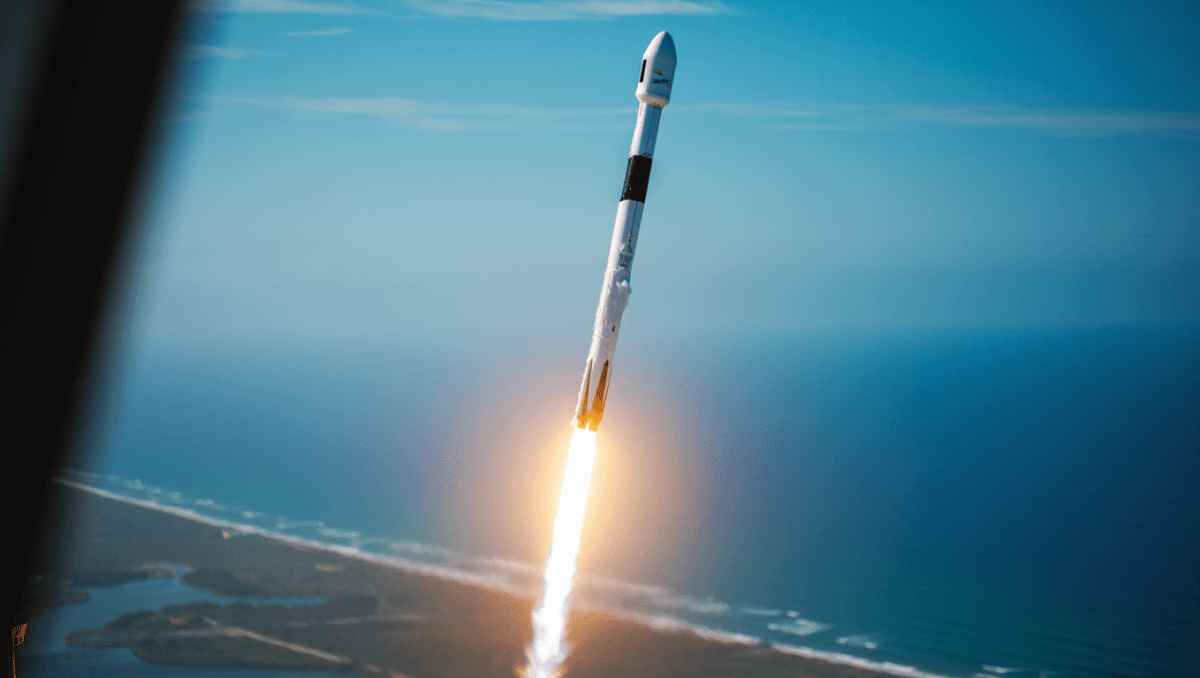
SpaceX successfully launched its Falcon 9 rocket with the CRS-34 cargo mission earlier today from Cape Canaveral Space Force Station. The Dragon spacecraft carried 6,500 pounds of vital supplies, scientific equipment, and groundbreaking experiments to the International Space Station. After weather delays forced a scrub Wednesday, the mission finally achieved liftoff at 3:03 p.m. PT Friday, marking yet another milestone in NASA and SpaceX’s partnership.
🔥 Quick Facts
- Launch time: 3:03 p.m. PT on May 15, 2026, from Cape Canaveral
- Historic milestone: Dragon spacecraft on 6th flight, record for SpaceX cargo craft
- Booster recovery: B1096 landed after 6th successful flight, capturing sonic booms
- Science aboard: 5 major experiments studying microgravity effects on biology and physics
Falcon 9 Overcomes Weather to Deliver Critical ISS Supplies
Wednesday’s weather scrub disappointed space enthusiasts when anvil clouds forced a last-second abort with just 28 seconds remaining in the countdown. NASA and SpaceX promptly rescheduled the launch. Today’s success delivered 6,500 pounds of cargo containing life support systems, replacement hardware, and five breakthrough science experiments. The Dragon capsule will autonomously dock to the Harmony module on the space station, remaining for approximately one month before returning.
This mission underscores SpaceX’s reliability for critical supply chains. The company now operates the only active U.S. cargo delivery capability to the orbiting laboratory. Jack Hathaway, NASA astronaut, and Sophie Adenot, ESA astronaut, monitored the spacecraft’s arrival from inside the station.
Record-Breaking Dragon Capsule Reaches Historic 6th Flight Milestone
Today’s launch showcases Dragon’s reusability advantage. This particular capsule achieved its sixth flight, becoming the most-flown SpaceX cargo craft in history. Each successive flight reduces operational costs while increasing reliability. The spacecraft features advanced autonomous docking systems and pressurized cargo bay capacity unmatched by competitors.
Falcon 9’s first-stage booster, designated B1096, completed its sixth successful landing after deploying Dragon to orbit. The booster’s controlled descent created dramatic sonic booms heard across Florida, a signature phenomenon when the rocket descends through the sound barrier.
Five Scientific Breakthroughs Headed to Microgravity Laboratory
| Mission Name | Focus Area | Research Goal |
| ODYSSEY | Microgravity Simulation | Validate Earth-based simulators against space conditions |
| STORIE | Space Weather | Monitor charged particles affecting power grids and satellites |
| Laplace | Dust Particle Dynamics | Understand planetary formation through particle collision studies |
| Green Bone | Bone Cell Growth | Develop treatments for osteoporosis through space-based research |
| SPARK | Astronaut Health | Assess red blood cell changes for long-duration missions |
NASA scientists designed these experiments to address critical questions. ODYSSEY validates whether Earth-based simulators accurately recreate microgravity conditions. STORIE monitors charged particles critical to protecting satellites and power infrastructure. Laplace studies how dust particles behave, unlocking secrets about planetary formation.
Green Bone grows bone cells on wood-based scaffolds, potentially revolutionizing osteoporosis treatment. SPARK examines how space travel affects human blood health, essential data for long-duration space missions to the Moon and Mars.
“For more than 25 years, the International Space Station has provided research capabilities used by scientists from more than 110 countries to conduct more than 4,000 experiments in microgravity.”
— NASA, Official Statement
Booster Landing Demonstrates SpaceX’s Reusability Success
Falcon 9’s first stage executed a precise landing burn at Landing Zone 40 near Cape Canaveral. The B1096 booster slowed from hypersonic speeds to a controlled touchdown, generating sonic booms that rattled Central Florida. This sixth successful flight demonstrates how SpaceX has revolutionized rocket economics through reusable hardware.
Each successful landing reduces launch costs significantly. Falcon 9 remains the most-flown orbital rocket, with over 649 combined launches from the Falcon family. The second stage completed its mission, placing Dragon into the correct orbit for approaching the ISS.
What’s Next for the CRS-34 Mission and NASA’s Space Ambitions?
Dragon will dock autonomously to the Harmony module within hours, after performing precise orbital maneuvers. The spacecraft will remain docked for approximately one month, allowing ISS crews to unload supplies and equipment. During this time, scientists on Earth will begin data collection from the five new experiments.
In mid-June, Dragon will undock and splash down in the Pacific Ocean, returning critical research samples and equipment to Earth. The Advanced Plant Habitat, which supported long-duration plant biology studies, will return for museum display. This resupply mission exemplifies how NASA and SpaceX partnerships advance human spaceflight goals toward the Moon and Mars.
Sources
- NASA Official – SpaceX 34th Commercial Resupply Mission Overview and launch details
- SpaceX – CRS-34 Mission technical specifications and timeline
- Florida Today – Weather delays, launch rescheduling, and real-time coverage