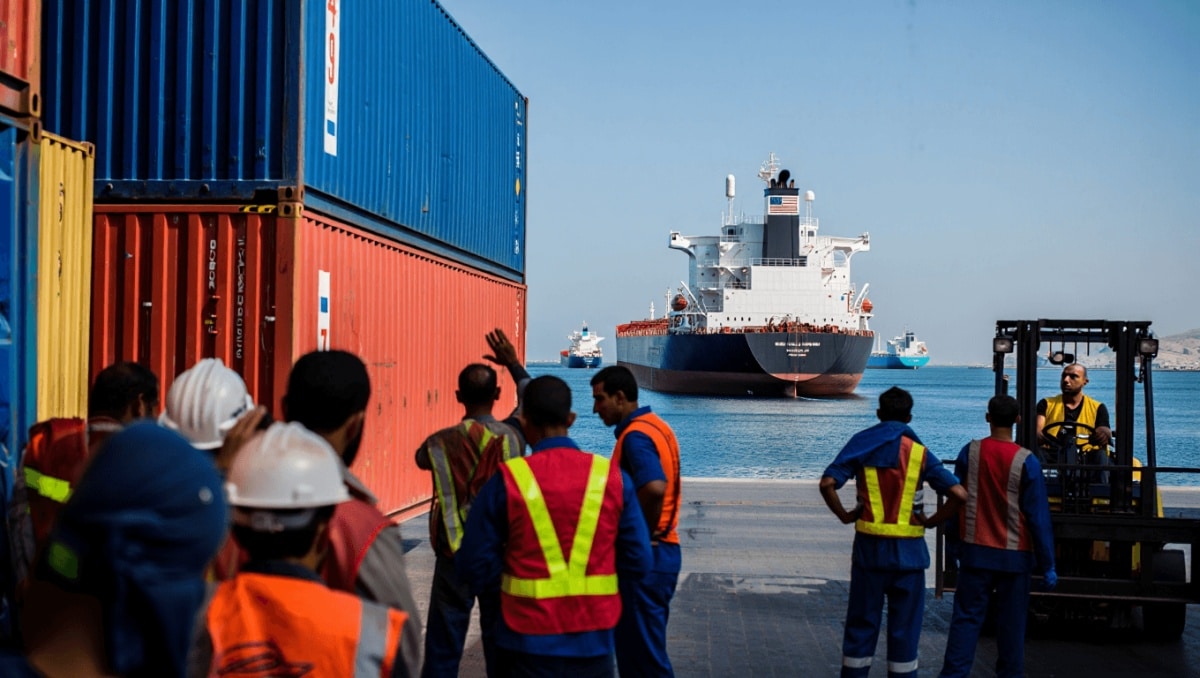
One month after the US and Israel launched military operations against Iran, the economic aftershocks are spreading fast—and consumers worldwide are already paying the price. Rising energy costs, disrupted freight and flight routes, and shortages of critical industrial inputs are shifting prices higher and testing policymakers’ options.
The immediate energy squeeze
With tanker traffic near the Strait of Hormuz curtailed and regional infrastructure damaged, global crude has pushed well above pre-conflict levels. Markets have reacted: Brent crude was trading north of $110 a barrel while U.S. benchmarks approached the $100 mark, driving pump prices and home energy bills upward.
Governments and industry are taking emergency steps. The International Energy Agency released a large tranche of reserves to steady markets, and several countries have adopted temporary rationing or shortened public-sector workweeks to conserve fuel. As IEA chief Fatih Birol warned, the shock “spares no country” if it persists.
How this hits households
- Fuel costs: Higher crude translates into more expensive gasoline and heating oil for households.
- Food prices: Fertilizer shortages risk lower crop yields and higher grocery bills over time.
- Airfares and travel: Longer routes and expensive jet fuel are already lifting ticket prices.
- Electronics and AI supply chains: Scarcity of helium and certain byproducts threatens chip manufacturing and data‑center expansion.
Markets under stress
Equity indexes have wobble d: major U.S. benchmarks moved toward correction territory as investors priced in the uncertainty. The S&P 500 extended a multiweek losing stretch, and indexes heavy on technology — already sensitive to questions about artificial intelligence and corporate profit cycles — saw sharper declines.
Some analysts argue the shock could push political leaders to reconsider military strategies if market losses deepen; others point out that domestic fiscal and technology tailwinds may blunt the economic hit for now.
The specter of stagflation
Economists are debating whether the current combination of rising prices and slower growth could slip into stagflation—a rare and difficult-to-manage scenario in which inflation remains high even as output falters. The last significant episode in the 1970s was largely driven by an oil-price shock; the parallels have revived caution among forecasters.
Policymakers face a dilemma: cutting interest rates to support growth risks fueling inflation further, while tightening to fight inflation could deepen a slowdown. Federal Reserve officials have publicly downplayed a return to 1970s-style stagflation, but some commentators remain unconvinced.
Travel and transport: immediate, visible disruption
Airlines rerouted flights to avoid Middle Eastern airspace, producing cancellations, long delays and sudden ticket surcharges. Some international hubs limited operations while others resumed partially—leaving travelers stranded and raising accommodation costs for those delayed abroad.
At the same time, jet‑fuel prices spiked sharply, doubling in some stretches of the month and prompting carriers to add fuel surcharges or raise fares on major routes.
Supply chains: small inputs, big consequences
Beyond crude, the conflict is tightening supplies of several niche but crucial commodities. Sulfur and urea—which play roles in metal processing and fertilizer production—are affected by disruptions to regional oil and gas activity. Helium, necessary for semiconductor fabrication, is also in shorter supply because of knock‑on effects in LNG-producing countries.
These shortages matter because they ripple into industries central to the modern economy: from electric vehicles and battery metals to the data centers underpinning A.I. services.
| Sector | Primary impact | Consumer consequence |
|---|---|---|
| Energy | Higher crude and LNG prices; strategic reserve releases | More expensive gasoline, heating, and electricity bills |
| Aviation | Airspace closures and rising jet‑fuel costs | Flight cancellations, longer routes, higher fares |
| Agriculture | Fertilizer supply disruptions | Potentially higher grocery prices over coming months |
| Technology & Manufacturing | Helium and metal-processing feedstock shortages | Slower chip production and possible delays in electronics rollout |
How long these pressures persist will shape the macroeconomic outlook. A brief escalation that is quickly contained would likely produce only transitory price shocks; a prolonged conflict could force deeper policy trade-offs and inflict wider damage on growth and employment.
Ultimately, restoring secure shipping lanes and steady energy flows will require a diplomatic solution. Until then, households and businesses should expect higher costs and greater volatility as the conflict’s economic aftershocks continue to unfold.