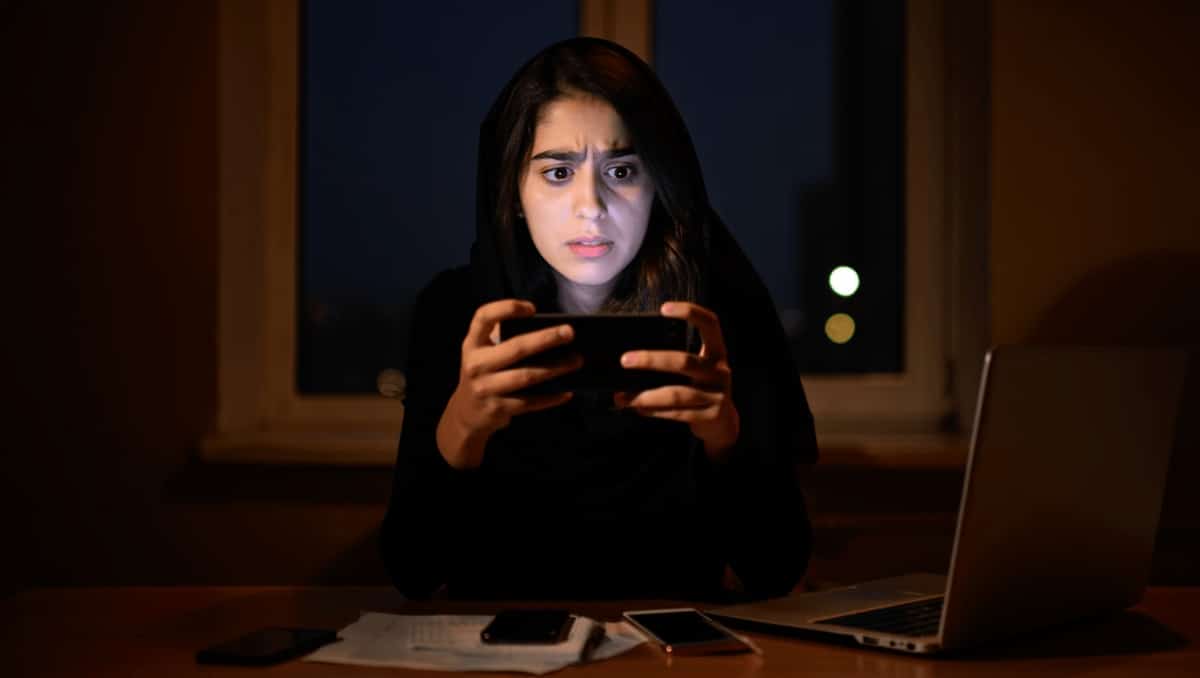
As the cross-border strikes and counterstrikes enter a fifth week, roughly 93 million people inside Iran face the danger of conflict without nationwide missile alerts or reliable internet — and millions abroad are struggling to check on relatives. A small team of engineers and volunteers has repurposed a crisis-mapping app to provide offline warnings and essential location data where official systems have failed.
How a grassroots app fills a gap in civilian warning systems
Holistic Resilience, a collective of technologists focused on internet freedom and crisis tools, maintains an app called Mahsa Alert that is being used to notify civilians about risky areas and to map services such as hospitals and blood banks.
The app takes its name from Mahsa Amini, whose 2022 death after detention by Iran’s morality police sparked large-scale protests and became a symbol of the Woman, Life, Freedom movement.
Volunteers combine crowdsourced tips with open-source intelligence to verify incoming reports. The team says it typically examines about 100 submissions a day — videos, photos and instant messages — and cross-references them against other data, including a nationwide inventory of some 18,000 CCTV cameras.
Ahmad Ahmadian, executive director of Holistic Resilience, describes the work as rapid neighborhood-level monitoring: volunteers try to determine whether a location could attract strikes and then warn people to keep clear.
Practical help when connectivity fails
Internet access inside Iran has been severely restricted during the conflict, and external evacuation notices posted in Farsi by the Israel Defense Forces often do not reach the intended audiences.
Mahsa Alert is designed to function offline so that displaced civilians can locate basic services when they cannot connect to the web. That capability has been critical for people moving into unfamiliar towns and neighborhoods.
- Key features — Offline maps of hospitals, blood banks, checkpoints and shelters; geolocated alerts about dangerous areas; verified crowd reports.
- Operational model — Volunteer moderation, open-source verification, continuous manual mapping and self-funded operations.
- Scale challenge — Iran’s large territory complicates rapid coverage and requires sustained human verification.
Project staff say many contributors work long stretches — sometimes 12 to 16 hours — and that the effort has been funded privately since launch.
Disinformation, surveillance and cyberattacks
Operating in this environment carries serious risks. Iranian authorities have reportedly prioritized messaging and security operations over establishing civilian alert systems. Instead of public sirens, residents say they receive threatening messages from intelligence services warning against sharing information.
The group has also been targeted by hacking attempts and by deliberate misinformation campaigns aimed at discrediting its alerts. Security researchers at Palo Alto Networks’ Unit 42 have documented an uptick in cyber activity attributed to Iranian actors since the hostilities escalated.
In one investigation, volunteers traced a tip that claimed missiles were launching from a specific building to a university girls’ dormitory. Holistic Resilience suspects some false reports are intended to mislead and magnify civilian casualties, bolstering propaganda narratives against external actors — an assessment the project could not independently verify.
Despite the pressure, the team emphasizes that its mission is protective rather than political: the group seeks to reduce civilian harm without taking sides in the broader conflict.
Why this matters now
With major population centers exposed to sporadic strikes and national communications unreliable, grassroots warning systems have moved from optional to essential. For families inside Iran and the diaspora trying to stay informed, tools that work offline and rely on human verification can mean the difference between reaching safe ground and walking into danger.
At the same time, the spread of disinformation and the threat of cyber intrusion underline a growing vulnerability: civilian protection systems themselves are becoming targets in modern conflicts. The resilience or collapse of these networks will shape how effectively noncombatants can respond in the coming weeks.