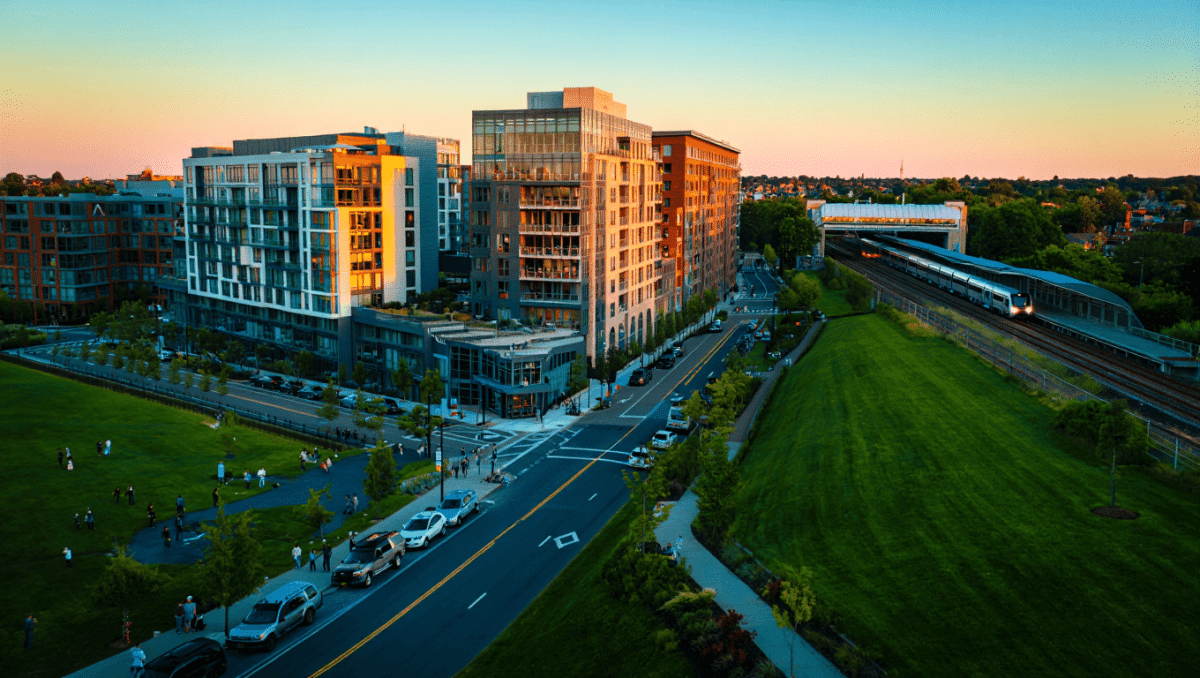
Cambridge just approved a $4.5 billion mixed-use project that will transform industrial land into a vibrant urban district. The 18-building complex in the Alewife neighborhood plans to bring over 2,000 homes, office space, and public gathering areas. Here’s what developers, city officials, and residents should know next.
🔥 Quick Facts
- Project Cost: $4.5 billion mixed-use development spanning 4.6 million square feet
- Housing Units: 2,076 residential apartments planned across multiple buildings
- Approval Date: April 28, 2026 unanimous Planning Board vote, confirmed May 1
- Next Steps: PUD Special Permit application and full City Council approval required
A Landmark For Cambridge’s Housing Crisis
The Cambridge planning board gave preliminary approval to Healthpeak Properties, a Denver-based real estate investment trust, for the sprawling Alewife District project. This moment marks a watershed event for Cambridge, which has struggled for years with housing affordability and urban density. The development addresses a critical gap in the city’s housing supply by introducing thousands of new residential units into a neighborhood adjacent to the MBTA Alewife Station. More than 2,000 apartments will come online across diverse building types, from mid-rise to towers reaching 12 stories. City officials described the project as a transformative opportunity to modernize the industrial Alewife Quadrangle.
The project also promises significant economic benefits through job creation and tax revenue. 1.3 million square feet of lab and office space will attract life science companies, strengthening Cambridge’s position as a global innovation hub. A pedestrian bridge spanning the MBTA commuter rail will connect the development to surrounding neighborhoods, improving walkability and transit access. Public green spaces totaling 14 acres will offer residents and workers abundant gathering areas.
Developer Partnership Brings Real Estate Expertise
Healthpeak is partnering with Hines, a globally recognized development firm, to build the residential components of Cambridge Point, the project’s official name. This strategic partnership combines Healthpeak’s specialized expertise in life science real estate with Hines’ proven track record in large-scale mixed-use development. Hines brings decades of experience delivering major urban projects across North America and Europe, adding credibility and financial strength to the initiative. The two firms have set ambitious timelines for phased construction, with Phase 1 encompassing 1,300 homes in five buildings and four office buildings. Together, they’re committing substantial capital to ensure community amenities are prioritized alongside commercial space.
The Denver-based REIT sees Cambridge as a premier market for life science investment, citing the region’s universities, research institutions, and biotech sector. Hines has emphasized that walkability and sustainability are core design principles. Both firms committed to union labor agreements and community benefits in early negotiations with city representatives and neighborhood groups.
Project Specifications And Timeline Highlights
| Project Metric | Details |
| Total Investment | $4.5 billion |
| Project Size | 4.6 million square feet |
| Residential Units | 2,076 apartments |
| Office/Lab Space | 1.3 million square feet |
| Land Area | 40 to 46 acres |
| Building Heights | Up to 12 stories residential |
| Public Green Space | 14 acres of parks and plazas |
| Approval Status | Preliminary determination, April 28 |
The phased construction approach will minimize disruption while maximizing community benefits early. Phase 1 targets completion by 2035, with subsequent phases rolling out through the 2030s. The master plan envisions a complete neighborhood transformation by the early 2040s. Infrastructure improvements include upgraded transit connections, new utilities to support thousands of residents, and enhanced stormwater management with green infrastructure. Affordable housing requirements are currently being negotiated with Cambridge Housing Authority.
“This project represents a once-in-a-generation opportunity to redefine Cambridge’s relationship with housing, innovation, and urban living.”
— Boston Business Journal reporting on planning board vote
What Comes Next After Preliminary Approval
Preliminary approval is not the finish line. Healthpeak must now file a comprehensive PUD special permit application with the Cambridge Planning Department. This step allows the city to thoroughly review detailed site plans, traffic impacts, environmental assessments, and community benefit agreements. The planning board will hold public hearings, and neighbors will have opportunities to voice concerns or support. City staff will compile a recommendation for the Cambridge City Council, which must vote to approve the final special permit. This process typically spans 6 to 12 months. Once permits are granted, Healthpeak will finalize designs with architect Elkus Manfredi, secure construction financing, and break ground. Real estate analysts predict initial housing deliveries could begin as early as 2030.
Community concerns around the bridge design, construction timelines, and traffic management remain active discussion points. The pedestrian bridge over the MBTA rail has been flagged as critical infrastructure, but design and engineering pose complex challenges. Developers have committed to working with neighborhood groups and are considering multiple bridge configurations. Affordable housing targets, parking strategies, and local hiring agreements continue to be negotiated with city officials and resident advocates.
Why This Approval Matters For Regional Real Estate And Boston’s Future
This Cambridge green light signals confidence in the region’s post-pandemic recovery and real estate fundamentals. Life science companies are aggressively relocating to the Boston area, driven by MIT, Harvard, and world-class biotech institutions. A major mixed-use project directly adjacent to reliable public transit offers developers exactly what companies seek: talent proximity, urban amenities, and sustainable density. Institutional investors and private equity firms have been waiting for such a catalyst. The $4.5 billion commitment from a publicly traded REIT like Healthpeak demonstrates that large-scale urban redevelopment is economically viable despite market uncertainties. Other cities watching Cambridge may accelerate their own zoning reforms. The Alewife project could become a template for transforming industrial districts into thriving mixed-income neighborhoods, blending residential, commercial, and innovation space at an unprecedented scale.
The broader implications extend beyond Cambridge. Massachusetts housing advocates have long argued that restrictive zoning limits supply and deepens affordability challenges. This project’s approval demonstrates that cities can provide significantly more housing while maintaining neighborhood character and quality of life. If Healthpeak successfully delivers 2,076 units plus healthy commercial space, it will validate the case for upzoning near transit hubs across the Northeast.
What Will It Take To See This Historic Cambridge District Fully Built?
Transforming 40 acres of industrial land into a thriving district requires orchestrating dozens of moving pieces. Financing, permitting, design refinement, environmental clearance, and community consensus will all demand continuous attention. Market conditions, interest rates, and tenant commitment levels will influence construction pacing. The pedestrian bridge remains the most technically challenging element, requiring coordination with the MBTA and potentially the state. If developers can clear these hurdles, the Alewife District could welcome its first residents by 2032 to 2035. Full buildout may extend into the 2040s, but each completed phase will enliven the neighborhood and demonstrate the project’s success to skeptics. The question for Cambridge and the region: can developers and city officials maintain momentum, or will rising costs and market shifts derail this ambitious vision?
Sources
- Boston Business Journal – Reporting on April 28, 2026 planning board approval and project scope
- Boston Real Estate Times – Cambridge Planning Board preliminary approval announcement
- Cambridge Day – Detailed coverage of community concerns and bridge design challenges