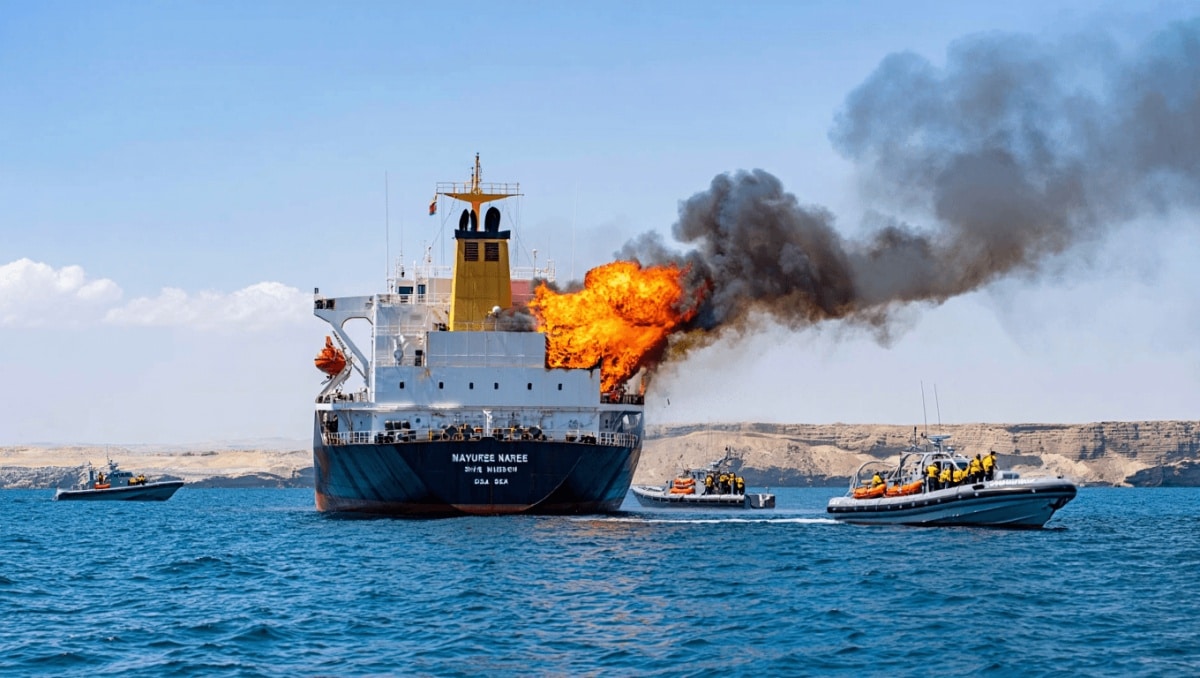
A Thai-flagged cargo ship was struck by a projectile in the busy waters of the Strait of Hormuz, catching fire and prompting a naval rescue operation off Oman’s coast. The incident, which authorities say involved the vessel Mayuree Naree, adds to a string of recent attacks that are heightening concerns about shipping safety and energy supplies through a critical maritime chokepoint.
Thailand’s Marine Department said the Omani navy moved to assist the ship’s crew after the blaze. Iranian authorities have been reported to claim responsibility for the strike, part of a broader pattern of attacks on commercial vessels transiting the strait amid escalating regional tensions.
The U.S. Central Command, CENTCOM, issued a sharp warning to mariners and governments, saying Iran appears to be conducting military actions from civilian port facilities in the area. CENTCOM cautioned that using civilian infrastructure for military operations endangers noncombatants and can strip those facilities of their protected legal status under international law — a step that has significant implications for how other states might respond.
Maritime monitors also logged multiple incidents across the northern Arabian Gulf. The United Kingdom Maritime Trade Operations center, UKMTO, reported several separate events: a cargo ship hit 11 nautical miles north of Oman, a container vessel damaged 25 nautical miles northwest of Ra’s al Khaymah in the UAE, and a bulk carrier struck about 50 nautical miles northwest of Dubai. In the cases noted by UKMTO, initial updates said fires were brought under control and crews were reported safe.
Why this matters now: the Strait of Hormuz handles a large share of the world’s seaborne oil shipments, so any disruption can ripple through global energy markets and raise costs for consumers. Markets reacted to the latest strikes with volatility, and U.S. gasoline prices — which have already risen in recent weeks — remain a political and economic concern for American households. The AAA national average for regular gasoline stands at about $3.58 per gallon.
Political responses are already sharpening. A prominent U.S. political figure warned of severe retaliation if Iran attempted to block oil exports through the strait, while Iran’s Revolutionary Guard declared it would prevent oil shipments to countries it considers hostile. Those competing statements increase the risk of miscalculation at sea.
- Immediate safety: Crew rescues and firefighting efforts are underway; human risk remains central.
- Shipping operations: Vessel routing, schedules and port calls may be disrupted as carriers seek safer transit options.
- Insurance and costs: Insurers may raise premiums for transits in the region, lifting freight and commodity prices.
- Legal stakes: Use of civilian ports for military ends could change how international law applies to future strikes.
- Energy supply: Any sustained choke on the strait would put upward pressure on oil markets and consumer fuel prices.
Naval escorts and increased maritime patrols have been discussed by several countries in recent weeks, but the patchwork of international responses so far has not eliminated the threat to commercial shipping. Analysts say even episodic attacks can cause long-lasting shifts in logistics and routing as companies weigh safety against cost.
Officials and maritime operators continue to monitor the situation closely. Reporting on the incident includes contributions from The Associated Press; further updates are expected as authorities on the scene release more details about the damage, crew status and the cause of the strikes.