Iran warned this week that ongoing U.S. and Israeli strikes could send global oil prices sharply higher — as much as $200 a barrel — a scenario that would immediately affect fuel costs, shipping and inflation. In response, Washington and allies organized an unprecedented coordinated release of emergency crude to try to steady markets.
The warning from Tehran followed a recent rally in crude that pushed prices back above $100 a barrel before easing to the high $80s and low $90s. U.S. retail gasoline prices have already climbed: the national average for regular stood near $3.57 per gallon on Wednesday, according to the American Automobile Association.
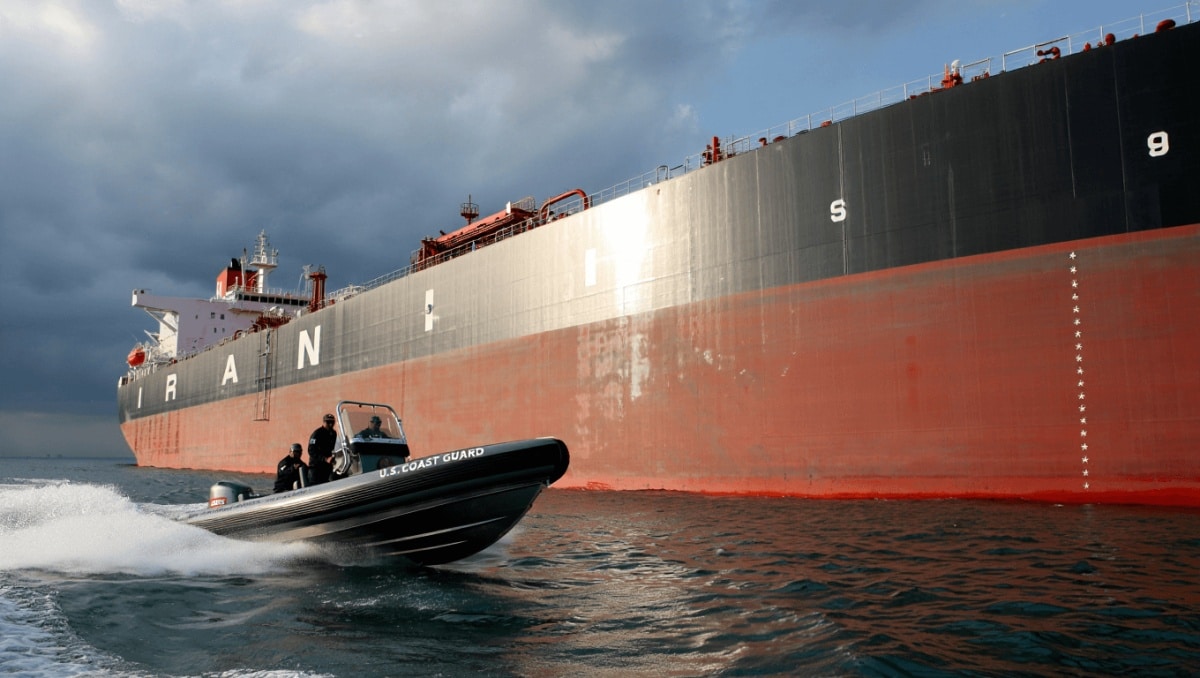
A senior Iranian military spokesman framed the price risk as a direct consequence of regional insecurity tied to the strikes, and Tehran has publicly threatened to target vessels linked to the United States, Israel or their partners as they transit the Strait of Hormuz — a waterway that carries roughly a fifth of the world’s oil. Recent incidents in the area, including reported deployments of naval mines and attacks on merchant ships, have increased traders’ concerns about supply disruption.
To blunt the shock, the International Energy Agency — the group of major oil-consuming countries — agreed to release 400 million barrels from emergency stockpiles. The U.S. Department of Energy said the United States will add a further 172 million barrels from the U.S. Strategic Petroleum Reserve, with deliveries to begin next week and expected to take several months to flow into markets.
- IEA coordinated release: 400 million barrels from member countries’ reserves.
- U.S. SPR drawdown: 172 million barrels to be released starting next week.
- Recent price moves: crude briefly topped $100, peaked near $120 before retreating; West Texas Intermediate was trading in the mid-to-high $80s.
- Potential consumer impact: analysts warn pump prices could move above $5 per gallon if prices rose dramatically.
- Maritime risk: at least 14 merchant vessels have been reported hit since the flare-up began.
Emergency stock releases by the IEA are rare: members have tapped strategic reserves only a handful of times — for the 1990–91 Gulf War, after Hurricane Katrina, during the 2011 Libyan conflict and twice in response to Russia’s invasion of Ukraine. Those precedents show such releases can calm markets short term but do not eliminate the strategic risk if tanker routes remain threatened.
The Department of Energy characterized the coordinated action as an effort to lower prices and stabilize supply while governments monitor regional developments. Officials also signaled plans to replenish portions of drawn-down reserves over the coming year.
For consumers and businesses, the immediate implications are concrete: higher crude typically feeds through to more expensive gasoline and jet fuel, raising costs for commuting, freight and air travel. For policymakers, the episode raises questions about how much strategic stockpiles can blunt a disruption that stems from geopolitical conflict rather than a temporary production outage.
Analysts say the effectiveness of the release will hinge on two variables: whether shipping lanes through the Persian Gulf remain open and how quickly market participants absorb the additional barrels. If supply routes are repeatedly disrupted, even large coordinated releases may only offer temporary relief.
Reporting on the evolving situation included material from Reuters.