Iran resumed crude loading at Kharg Island’s western terminal on August 12 after a 25-day shutdown, marking the first significant export activity from the Persian Gulf island since a US naval blockade halted operations on July 31. The restart signals a partial recovery for Iran’s critical oil infrastructure, though it comes amid broader disruptions to the country’s energy exports caused by the Strait of Hormuz blockade.
The terminal’s reactivation followed the collapse of an interim agreement to reopen the Strait of Hormuz in mid-July, which prompted Washington to reinstate its naval blockade of Iranian ports. According to maritime intelligence companies Windward and TankerTrackers.com, a very large crude carrier (VLCC) berthed at Kharg Island’s Azarpad jetty and loaded approximately 2 million barrels—the first such loading observed since July 18. The 333-meter tanker had been waiting offshore since July 11 before moving to the berth.
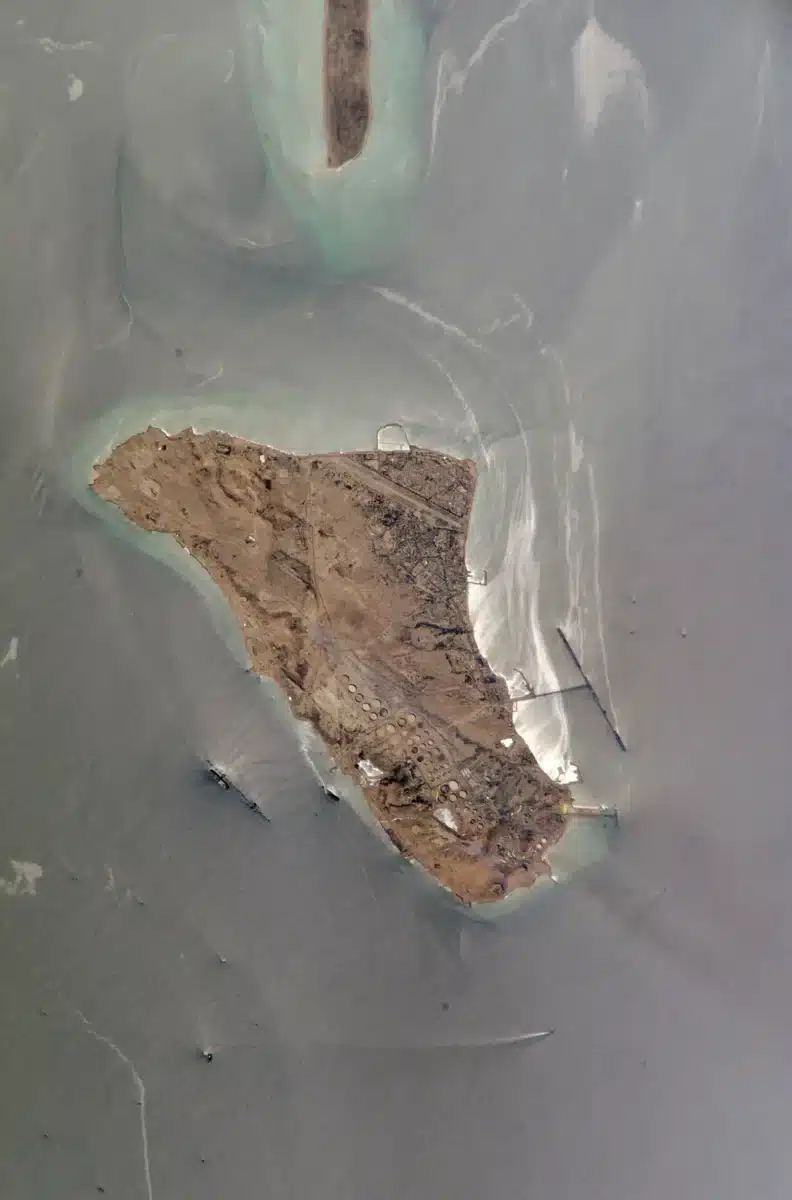
Kharg Island handles roughly 90 percent of Iran’s crude oil exports, making even a single tanker loading an important signal of operational recovery. The island, located 26 kilometers from Iran’s coast, has storage capacity of about 30 million barrels. Satellite imagery showed that while the western terminal was active, the eastern oil terminal and the liquefied petroleum gas facility remained empty, with 16 to 17 tankers still waiting in the offshore anchorage.
The shutdown exposed the vulnerability of Iran’s export infrastructure. When the blockade halted tanker loadings on July 31, storage at Kharg Island filled rapidly. According to maritime intelligence company Windward, Iran had no choice but to halt operations, as the terminal’s storage reached capacity and oil wells risked being shut in. This forced the country to rely on alternative maritime routes to move its crude.
Since the blockade escalated in late February 2026, Iran has developed workarounds that bypass the Strait of Hormuz. Windward data shows that Russia-to-Iran wet-cargo shipments increased 2.9 times in the 164 days following the February 28 blockade escalation, rising from eight shipments to 23, with volumes climbing from 174,100 barrels to approximately 437,000 barrels. Additionally, tanker and cargo activity at North Larak anchorage—an alternative loading point—has intensified, with 35 vessels recorded on August 12, up from 28 just two days earlier.
“Iran isn’t waiting for the blockade to lift. It’s rerouting around it,” Windward said on social media, highlighting Tehran’s broader strategic shift in oil logistics. The restart at Kharg Island illustrates this pivot: while crude exports have resumed at the main terminal, liquefied natural gas exports have declined, with unshipped gas being flared rather than exported. Analysts note that Iran’s oil production appears roughly aligned with domestic refinery consumption, suggesting the country may not urgently need to export maximum volumes at present.
The limited restart does not signal a return to normal operations. The eastern terminal remains idle, and the western terminal’s single VLCC loading represents a fraction of normal throughput. However, the August 12 resumption demonstrates that despite the blockade’s severity, Iran retains the ability to move crude through Kharg Island when storage conditions permit and alternative routes absorb excess supply. The blockade has “severely disrupted Iran’s main oil-export artery, but has not completely stopped crude from being loaded or moved through alternative channels,” according to maritime analysis.
Sources
- The National — Kharg Island terminal reactivation date, VLCC loading volume, tanker waiting offshore timeline, satellite imagery details, North Larak anchorage vessel counts, Russia-to-Iran wet-cargo shipment data, and Windward commentary
- Financial Times — US naval blockade reimposition in mid-July 2026 and blockade collapse timeline
- Jerusalem Post — Kharg Island shutdown date of July 31, 2026, and data sources Kpler and Energy Aspects
- Al-Monitor — Iran’s crude export volumes and Kharg Island’s share of total exports
- CNBC — Kharg Island’s 90 percent share of Iran’s crude exports and storage capacity