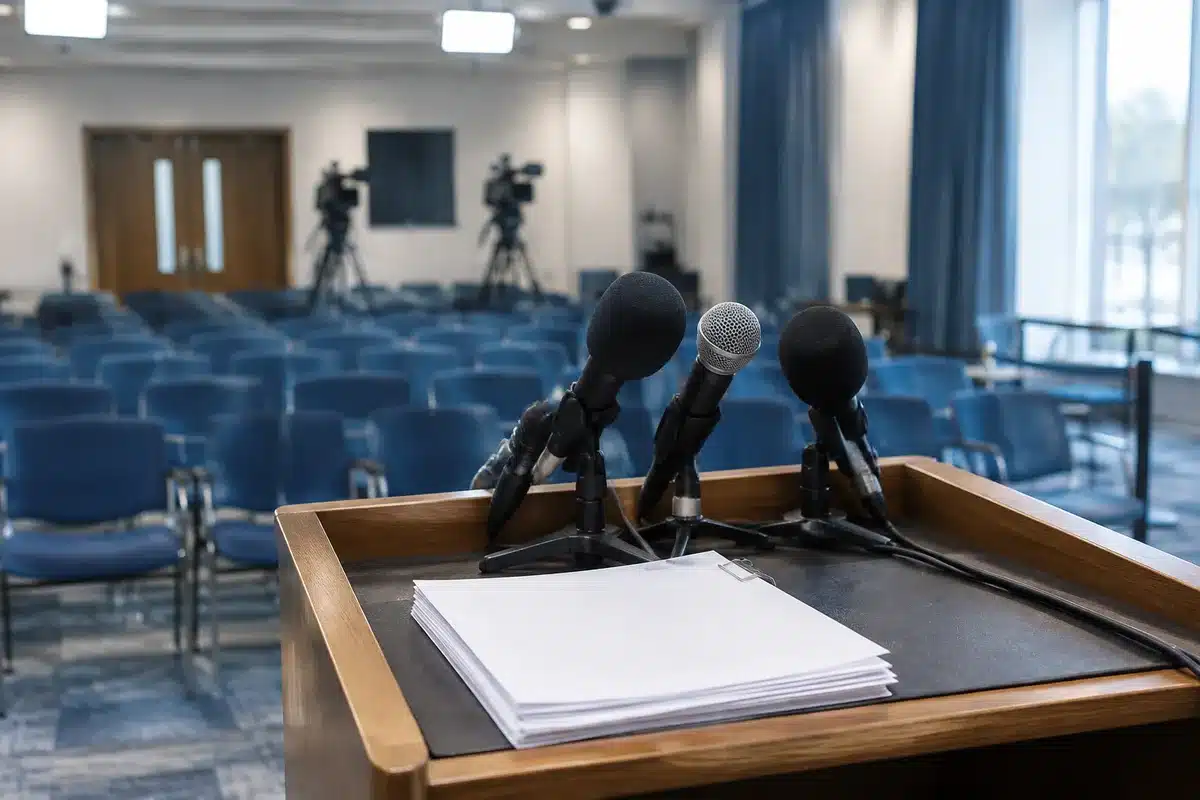
The press secretary is a senior White House official who serves as the administration’s chief spokesperson, communicating presidential actions, policy priorities and responses to events to the news media and public.
In practice, a press secretary organizes and delivers information to the White House press corps, fields reporters’ questions, and often appears at daily briefings to explain the president’s schedule and reactions to national and international developments, according to Encyclopaedia Britannica.
The Office of the Press Secretary also coordinates messaging with other White House offices and manages media logistics for travel and events. A detailed position description from the Presidential Transition Project says the press secretary “serves as information conduit,” briefs the president on media issues, prepares officials for interviews and plays a role in communications planning with the White House communications director and chief of staff.

Those duties mean the press secretary balances two audiences: the president and the press. Britannica notes the role dates back to early 20th-century White House practice and has evolved with technology as televised and online briefings expanded the job’s public reach.
Because the press secretary represents the administration, the office manages practical tasks—scheduling interviews, arranging travel for the press corps and establishing embargo rules—as well as strategic messaging, the Presidential Transition Project says. The role typically reports through the White House chief of staff to the president and may oversee a staff that supports briefings and media operations.
For readers tracking access and press relations, recent coverage of White House press activity illustrates why the role matters: disputes over media access and changes to briefing practices shape what reporters can ask and what the public learns. Local coverage has described instances where press access and briefings became court or political issues, underscoring the office’s gatekeeping function.
The press secretary remains a central figure when administrations face crises, policy rollouts or diplomatic events, because the person holding the podium translates complex actions into short public statements and fields live follow-up questions from reporters.
Sources
- Encyclopaedia Britannica — definition, daily briefings and historical role.
- Center for Presidential Transition — position description, duties and office functions.
Related reading: Todd Blanche holds White House Rose Garden briefing after Karoline Leavitt exit, Dana Bash says White House press ban is an ‘unnecessary milestone’, Laurence Tribe reacts after judge ordered end to Trump White House ban on reporters.