President Trump announced on August 28, 2026, that the United States has reached a historic deal with Venezuela to secure majority control of more than 65 billion barrels of proven oil reserves, the latest move in his administration’s push to tap into the world’s largest oil deposits and ease pressure on domestic fuel prices. Trump said the agreement was reached “at no cost to the American Taxpayer” through a partnership with private business, following weeks of negotiations with Venezuela’s interim leadership.
Under the accord, the U.S. government will hold a 55% stake in a newly formed joint venture with an experienced private operator, according to details disclosed by U.S. officials. The venture will operate 17 strategic oil fields across Venezuela’s Orinoco Belt and Lake Maracaibo regions under a 100-year concession. Venezuela’s interim President Delcy Rodríguez said the agreement would run for 25 years and target an increase in crude output to 1.5 million barrels per day.
Secretary of State Marco Rubio framed the deal as a win for both nations, saying it would bring nearly $100 billion in private investment to Venezuela, support thousands of high-paying jobs, and help rebuild the country’s economy. Rodríguez added that the deal would generate more than $209 billion in tax revenue for Venezuela and contribute to economic growth and energy security in the hemisphere. Trump has asked U.S. oil firms, including Chevron and Halliburton, to invest billions to restore Venezuela’s oil infrastructure.

Venezuela holds an estimated 303 billion barrels of proven oil reserves—the world’s largest—but production has collapsed from a peak of 3.2 million barrels per day in 2000 to roughly 1.25 million barrels per day today. The decline stems from decades of underinvestment, nationalization policies, U.S. sanctions, and political instability. Trump’s move follows his administration’s January 2026 seizure of former President Nicolás Maduro, whom the U.S. has pursued on drug trafficking charges.
Expert Skepticism and Infrastructure Challenges
Analysts have reacted with caution, raising questions about whether the deal will overcome long-standing obstacles to investment. David Goldwyn, president of Goldwyn Global Strategies, told Reuters there is “no precedent” for the U.S. government entering into a lease to operate Venezuelan oil fields and questioned whether such an arrangement would have a legal basis under Venezuela’s constitution and its hydrocarbons law. He added that “it is hard to see how this kind of arrangement would accelerate investment at any material scale,” citing Venezuela’s political uncertainty, weak power grid, and limited export capacity.
Alexander Kuiper, an oil and gas lawyer, told the BBC the deal could be significant but cautioned that “what we don’t know is whether or not those reserves turn into actual investment, and how long that investment takes to produce results.” Rachel Ziemba, from the Center for New American Security think tank, told the BBC that the agreement was “unlikely to have any material impact on global oil supplies in the next month or even the next year.”

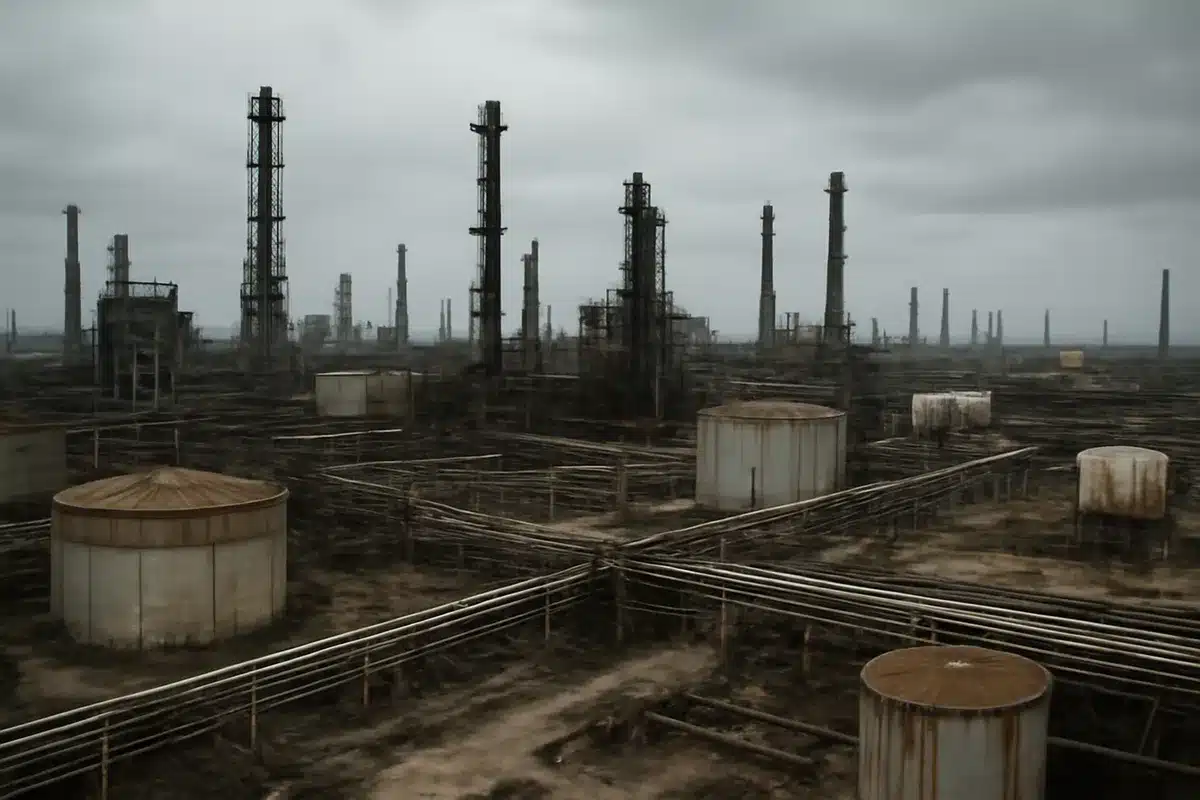
The challenge runs deeper than legal ambiguity. Venezuela’s oil infrastructure has deteriorated significantly over decades. The aging pipeline network, many sections more than 50 years old, requires extensive rehabilitation. Developing the infrastructure needed to produce, transport, and refine Venezuela’s heavy crude—used for diesel and asphalt rather than gasoline—could take years, according to energy experts and research from the Council on Foreign Relations. The country also faces power grid failures, inadequate export capacity, and significant political uncertainty that have historically deterred investment.
Trump has framed the deal as a way to lower American gasoline prices ahead of November’s midterm elections, as global oil prices have spiked due to supply constraints in the Persian Gulf. However, the timeline for any meaningful increase in Venezuelan crude reaching U.S. refineries remains unclear, and the deal itself has not been published, leaving many legal and financial details unresolved.
Sources
- Reuters — Trump’s announcement of the deal, Rubio’s statement on investment and revenue projections, expert analysis from Goldwyn on legal precedent and investment barriers, details on the joint venture structure and 17 oil fields.
- BBC News — Rodríguez’s statement on the 25-year agreement, 1.5 million barrels per day production target, $100 billion investment and $209 billion tax revenue figures, expert commentary from Kuiper and Ziemba on timeline and impact, details on the 55% U.S. stake and 100-year concession.
- Council on Foreign Relations — Information on Venezuela’s oil infrastructure decay and timeline for restoration requiring years and billions of dollars.