
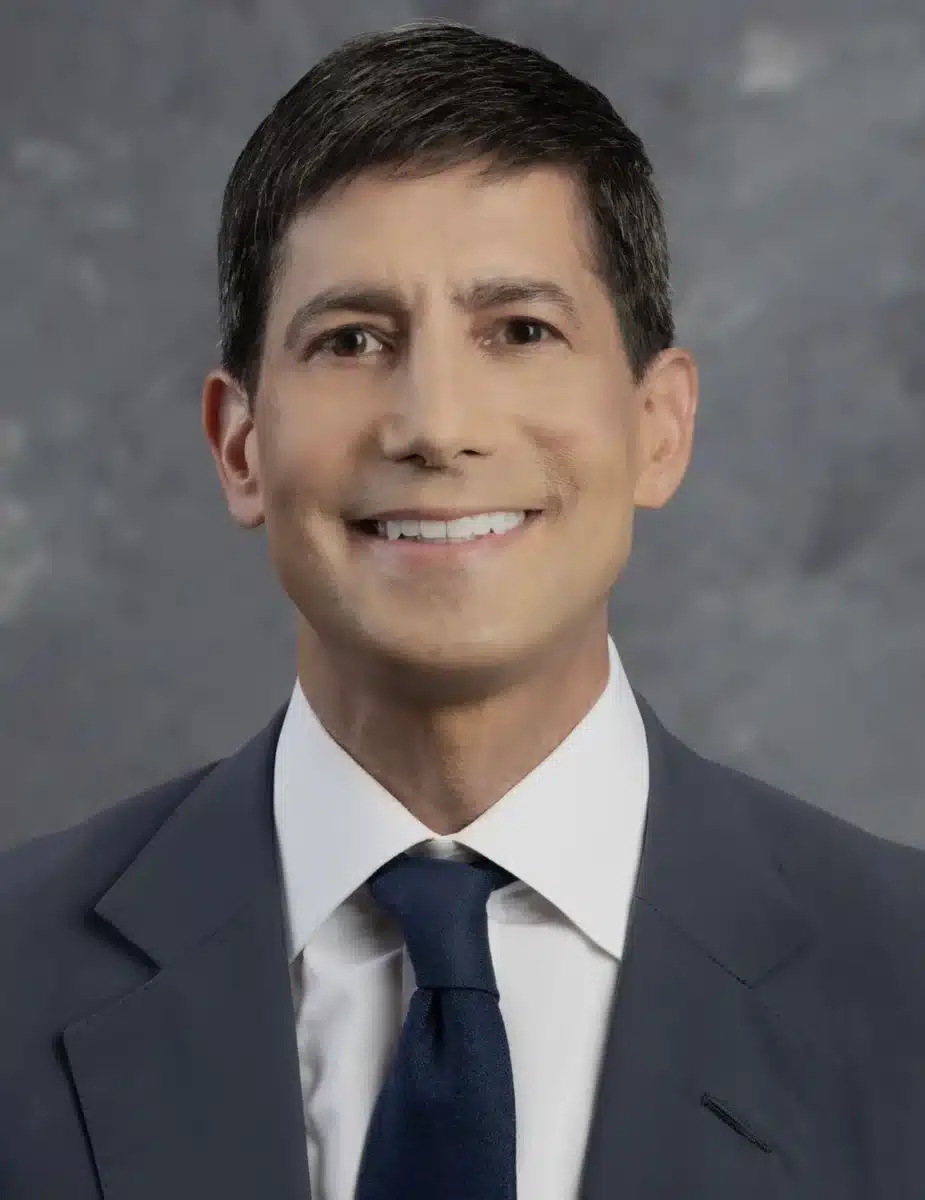
Federal Reserve Chair Kevin Warsh delivered his first Jackson Hole keynote address on Friday, warning that inflation remains too high and signaling the central bank is not ruling out interest rate hikes to bring prices back to target. Speaking at the Kansas City Fed’s annual economic symposium in Wyoming, Warsh said the Fed has “work to do” if inflation doesn’t return to the 2% objective “clearly and at sufficient speed.”
Warsh acknowledged that recent inflation readings came in better than expected but emphasized they do not demonstrate meaningful improvement in underlying price trends. “We must be confident that underlying inflation is moving to our objective, clearly and at sufficient speed. Otherwise, we have work to do,” he said in prepared remarks titled “In Our Time.” The Fed’s benchmark federal funds rate currently stands at 3.5% to 3.75% after remaining unchanged at five consecutive policy meetings.
The speech marked a significant moment for the new chairman, who was confirmed by the Senate on May 13, 2026, in a 54-45 vote—the closest confirmation in the modern era. Warsh took office in May and has since led two Federal Open Market Committee meetings before his Jackson Hole debut. His remarks came amid stubbornly elevated inflation, with the Fed’s preferred gauge—the personal consumption expenditures (PCE) index—remaining at 3.7% year-over-year in July, nearly double the Fed’s target.

Warsh took direct responsibility for the inflation challenge, stating that “the responsibility for 65 months of sustained, elevated inflation sits squarely with the central bank—and that is where it belongs.” He emphasized the Fed’s mandate to ensure inflation expectations remain anchored. At the July FOMC meeting, the committee voted 9-3 to hold rates steady, with three dissenters voting in favor of a 25-basis-point rate hike amid persistent price pressures.
A notable feature of Warsh’s approach has been his explicit rejection of forward guidance—the practice of signaling future policy moves. He told the Jackson Hole audience that forward guidance “has overstayed its welcome” and declined to outline a reaction function, the economic conditions that would trigger policy shifts. “I stand here today committed to a discipline, not to a decision,” he said, explaining that the factors relevant to monetary policy “change over time” and policymakers cannot claim sufficient certainty to follow a preset rule.
Markets reacted sharply to the speech. The 2-year Treasury yield rose to 4.28% from approximately 4.23% before his remarks, and traders quickly adjusted expectations for future rate moves. The CME FedWatch tool showed the probability of a rate hike at the September 15-16 FOMC meeting jumped to roughly 57% following the address, up from 34% on Thursday. Warsh’s hawkish tone on inflation stands in contrast to his predecessors’ recent messaging. When Jerome Powell delivered his final Jackson Hole speech in August 2025, he signaled that tariff-driven inflation was a concern but suggested the Fed was managing the situation, opening the door to future rate cuts.
The Fed faces mounting pressure from multiple directions. Treasury Secretary Scott Bessent doubled the maximum amount of long-term debt the government can repurchase, a move aimed at stabilizing the bond market as the 30-year Treasury yield approached 5.3%—a 19-year high. Warsh notably did not directly address the volatile bond market in his remarks, instead focusing on the inflation fight and the economy’s overall strength. He characterized recent softening in job gains as stemming from constrained labor supply rather than weakening demand, suggesting the labor market remains resilient.
Warsh’s Jackson Hole address signals a more hawkish Fed stance than markets had anticipated, particularly regarding the possibility of rate increases. His refusal to commit to forward guidance leaves investors and policymakers guessing about the timing and magnitude of any future moves, a deliberate strategy he has pursued since taking office. The speech underscored that Warsh intends to chart a different course from his predecessor, prioritizing inflation control and a “quieter Fed” with less frequent communication about policy intentions.
Sources
- Quartz — Warsh’s Jackson Hole remarks on inflation, the Fed’s responsibility for elevated prices, and his rejection of forward guidance.
- The Hill — Warsh’s statement that inflation remains too high, the Fed is not ruling out rate hikes, and his acknowledgment of 65 months of sustained inflation.
- Fox Business — Warsh’s confirmed appointment as Fed chair in May 2026 and context on inflation data and market conditions ahead of the speech.
- Reuters — Background on the Fed missing its inflation target for 65 consecutive months and market expectations before the Jackson Hole address.
- Chase — Confirmation that Warsh was confirmed on May 13, 2026, in a 54-45 vote, the most divisive in Fed history.










