
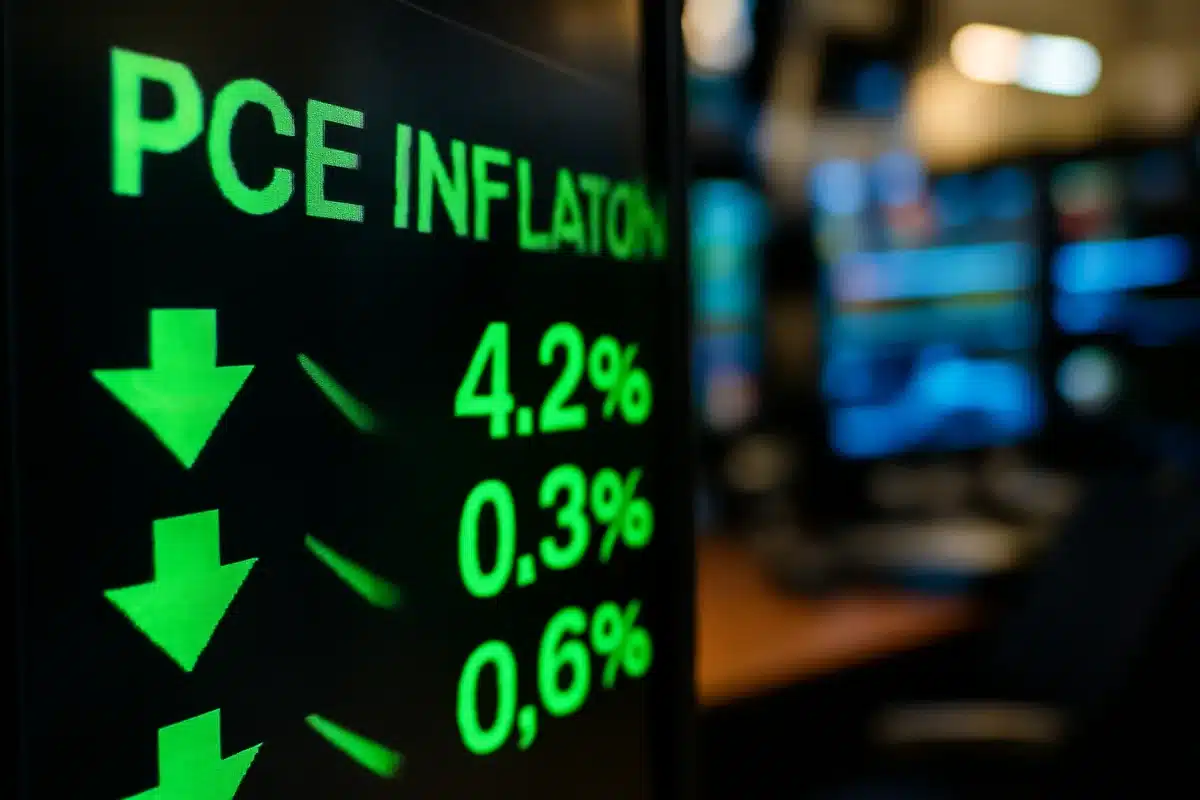
The Federal Reserve’s preferred inflation gauge cooled to 3.6% in July, down from 3.7% in June, marking continued progress in bringing price pressures closer to the central bank’s 2% target. The PCE data released today offers fresh evidence that inflation, though still elevated, is trending in the right direction after months of stubborn readings that kept rate-cut hopes on hold.
The month-over-month decline follows a sharper drop in June, when headline PCE fell to 3.7% from 4.1% in May. That earlier cooling was driven significantly by a pullback in energy prices tied to a brief Iran ceasefire, according to reporting on the June data. The latest July reading suggests the underlying disinflationary trend is persisting even as energy markets remain volatile.

Core PCE, which strips out volatile food and energy prices, held steady at 3.3% in June and is expected to remain near that level in July. This measure is particularly important to the Federal Reserve because it better reflects underlying price pressures in the economy. The Fed has set a long-term inflation target of 2%, meaning both headline and core PCE remain well above where policymakers want them.
The cooling trend matters because it shapes the Fed’s calculus on interest rates. When the year began, many economists expected the Fed to cut rates in 2026 as inflation eased. However, resurgent energy prices and sticky core inflation through the spring shifted expectations dramatically. By mid-year, nearly 70% of economists polled forecast the Fed would keep its benchmark rate in the 3.5%-3.75% range for the rest of 2026, up from earlier expectations of at least one cut.

Fed officials have signaled they are watching inflation data closely before making any moves. In June, the Federal Reserve’s policy committee projected that headline PCE would end 2026 at 3.6%—exactly where July’s reading came in. That alignment suggests the data is tracking closer to official expectations, though it remains above the Fed’s comfort zone.
The trajectory from May’s 4.1% to July’s 3.6% reflects a 50-basis-point decline in just three months, a meaningful improvement. Yet the pace of further cooling is uncertain. Energy markets remain sensitive to geopolitical shocks, and housing inflation, which had been a major driver of core prices through the pandemic recovery, is only gradually moderating. Economists caution that while the direction is encouraging, the distance to the Fed’s 2% target suggests any decision to cut rates remains months away.
Sources
- Oxford Economics — July PCE inflation forecast and analysis (Aug. 18, 2026)
- Wall Street Journal — June PCE inflation data and year-over-year trend (Jul. 30, 2026)
- CNN — June PCE decline and core PCE monthly movement (Jul. 30, 2026)
- Quartz — June PCE annual rate and energy price impact from Iran ceasefire (Jul. 30, 2026)
- House Democrats Budget Committee — June 2026 PCE inflation official data (Jul. 30, 2026)
- Yahoo Finance — Fed officials’ PCE projections for end of 2026 (Jun. 25, 2026)
- Reuters — Economist polling on Fed rate expectations (Jun. 10, 2026)










